iran talks Courtesy: IAEA Imagebank/Flickr
8 June 2012

All to play for in Moscow

Ahead of nuclear talks between Iran and the P5+1 in Moscow, the West seems confident that sanctions will induce Iran to settle on its uranium enrichment. But rather than arriving at a negotiated settlement by applying the principle of reciprocity, the West may look to anaesthetize oil markets.
Courtesy: IAEA Imagebank
9 April 2012

Iran: An opportunity for BRICS

The scope for any process on nuclear talks with Iran to founder on distrust, misunderstanding and political in-fighting in both Tehran and Washington remains formidable. Equally disturbing are the wider political realities. Can the upcoming talks in Istanbul launch a process that can, over time, lead to agreement?

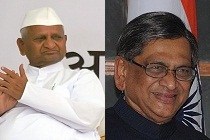
anna hazare 2 Courtesy: nazeah/Wikimediacommons - Ramesh Lalwani/Flickr
30 December 2011

2011’s Top Foreign Policy Cheers and Jeers

The year 2011 saw various events - the Arab Spring, anti- corruption protests, Europe's sovereign debt crisis - transform countries and reshape the world order. Gateway House takes a look at what these events mean for India, and presents India's top foreign policy cheers and jeers for the year.

Trans Pacific Partnership (TPP)
13 December 2011

Trans Pacific Partnership (TPP)

Amidst myriad country groupings that already exist – BRICS, IBSA, APEC, SCO and many others – a new initiative in the Pacific is looking to integrate more powerful countries to form a multilateral free trade agreement – the Trans Pacific Partnership. How important is this towards the reshaping of trade and power?

schengen spirit of openness Courtesy: FourthFloor/Flickr
23 June 2011

The Schengen spirit of openness

Despite their economic downturns, domestic tensions keep developed countries from embracing the revitalizing potential of foreign workers. Ambassador Neelam Deo argues that India should continue to leverage its history of diversity and capitalize on a world more open to the free flow of goods and services.

christine lagarde_380x270 Courtesy: WorldEconomicForum/Flickr
31 May 2011

The IMF: Emerging economies aren’t ready for prime time

With the post for the head of the International Monetary Fund up for grabs, the emerging market countries are yet to unite and provide a suitable candidate who receives formidable support for his or her candidature. China, however, may boldly question the status quo and step ahead.

Lear 21 Wikipedia Courtesy: Lear21,ThomasWolf/Wikipedia
22 April 2011

Germany: Charting its own course

Germany’s abstention on the UN Resolution on Libya heralds the mellowing of a nation blamed for last century’s most catastrophic wars. This time, Berlin may determine the history of Europe by choosing to pursue its national interests peacefully rather than subjugating an entire populace.

UN Photo Marco Castro_210x140 Courtesy: UNPhoto/MarcoDormino
12 April 2011

New trends in the management of upheaval

A new United Nations doctrine is revolutionising the manner in which Western powers achieve regime change. Under the pretext of “Responsibility to Protect” –as the doctrine is named –armed intervention does not depend on the aspirations of a populace but the facilitation of existing power equations