shutterstock_1091235845 Courtesy: Shutterstock
15 October 2020

UN: Necessary but reformed

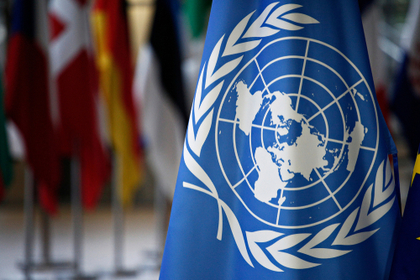
The UN turned 75 this year but instead of grand celebrations, the world witnessed an empty UNGA with world leaders addressing it via video screening because of the pandemic. The UN is under unprecedented stress and being shown up for its inability to tackle the challenges of today like the pandemics, climate change, terrorism or global peace and security. The institution's key governing structures, especially the UN Security Council, are inadequate and demand reform. India must now use gritty resolve to ensure its place in these governing structures.
shutterstock_1062335495 Courtesy: Shutterstock
5 March 2020

Shadow of debt over Mombasa port

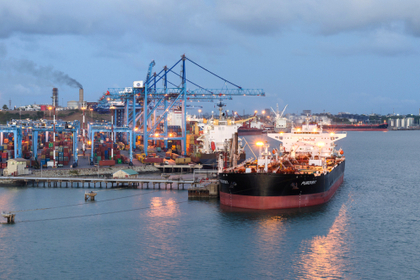
Kenya’s Mombasa port, the gateway to East and Central Africa, has enabled the Chinese to gain better access to resources in the region and export destinations within Africa through the Belt and Road Initiative. A recent visit offered insights into some of the shortcomings of increasing Chinese investments in the region – and the scope for other countries to step in

48645255438_77e7265a4b_c Courtesy: TICAD7/Flickr
3 October 2019

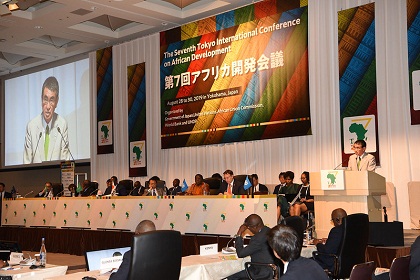
TICAD 7’s agenda: engaging private enterprise

The Seventh Tokyo International Conference on African Development was a departure from earlier editions of it. Japan, which is changing tack as a competitor to China in Africa, held back from publicising the number of heads of state present to prevent any comparisons with other such forums and made no further commitments on Overseas Development Assistance. The accent, instead, was on increasing Japanese private sector engagement

modi-768x432 Courtesy: CNBC TV18
28 May 2019

PM Modi’s foreign policy 2.0

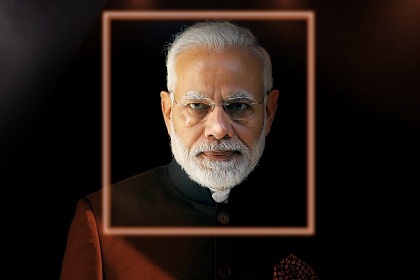
India's foreign policy under the second Modi government will take account of a turbulent world in which the old verities are disappearing and domestic political compulsions exert overwhelming influence on external postures

Indian-Ocean-Routes-IDRW Courtesy: Bharat Shakti
17 January 2019

India, Japan and the Asia Africa Growth Corridor

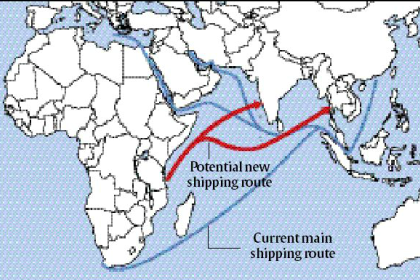
India and Japan, two countries wanting to enhance the quality of their engagement in Africa’s development, have historically taken fundamentally different approaches to the task. But now, both are being guided by geoeconomic imperatives in aligning their strategy in the region— and the Asia Africa Growth Corridor offers many opportunities for synergy at the B2B level

44462476151_09bdc8fc7f_o Courtesy: Flickr / Paul Kagame
15 November 2018

China, Africa and the art of mutual benefit

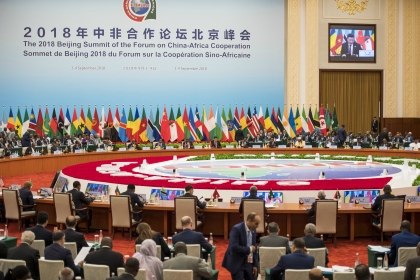
China’s footprint in the African continent is growing because it is a zealous summiteer. And now, in response to ‘debt-trap’ criticism, it also appears to be stressing private sector investment in Africa over loans and credit. Are there any takeaways for India in this?

2-8-18 CableMap-02 - Copy Courtesy: Gateway House
2 August 2018

Version 2: Mapping China’s global telecom empire

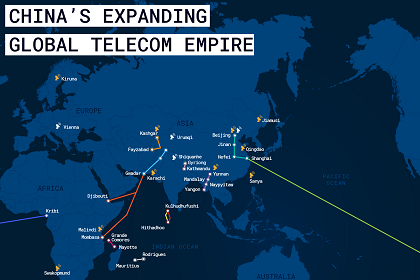
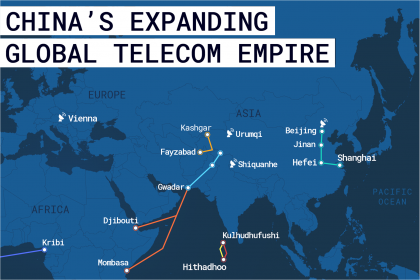
This version of the Gateway House Map on China’s Expanding Global Telecom Empire identifies some more telecommunication assets -- optic-fibre and satellite ground stations -- that Beijing is working on in South and Central America, Africa, Myanmar, the Indian Ocean Region and mainland China besides the existing ones, such as the Pakistan East Africa Cable Express (PEACE). It shows the direction China’s investment is taking, its diplomatic overtures and the larger geopolitical implications of its growing telecom empire

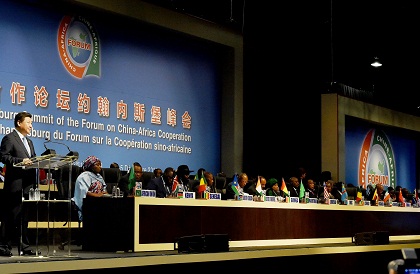
(in the pic - Chinese President Xi Jinping addressing FOCAC summit). President Jacob Zuma co-chairs the FOCAC Summit with Chinese President Xi Jinping - Sandton, Johannesburg. 04/12/2015, Elmond Jiyane, GCIS Courtesy: GovernmentZA/ Flickr
26 April 2018

The race to be Africa’s best partner

China’s judicious deployment of economic diplomacy—in sectors ranging from infrastructure and agriculture to skill development--has enabled it to develop relations with several African countries. India, Africa’s oldest partner, which is diversifying its own relationship, can replicate parts of China’s approach

CableMap-web Courtesy: Gateway House
5 April 2018

Version 1: China’s strategic edge in covert communications

China is steadily deploying state-of-the-art communications systems to connect its strategic and economic assets in Asia. It is then linkingthe Asian mainland to Africa, and Africa to South America. The investment spree is rapidly making Beijing a major player in global telecommunications – and ‘informationisation warfare’.

Djibouti - Title Card Courtesy:
3 October 2017

Djibouti’s ‘military base’ diplomacy

Indian President Ram Nath Kovind leaves for Africa on his first foreign visit as president on October 3. His first port of call will be Djibouti, which occupies a strategic location in the Horn of Africa. The country has assumed significance for hosting multiple foreign military bases on its territory, the latest entrant being China. This infographic illustrates Djibouti’s ‘military base’ diplomacy.