Conflict zones: Intentions vs. outcome
Sreeram Chaulia, Vice Dean of the Jindal School of International Affairs, talks to Gateway House’s Samyukta Lakshman about his new book titled, "International Organisations and Civilian Protection".
Courtesy: Foreign Affairs
Henry Kissinger's new book argues that the United States should yield gracefully to China's rise; Aaron Friedberg's gives the opposite advice. By focusing on intentions instead of capabilities, both books overstate China's actual power.
Courtesy: Pragati
On May 1998, as India declared itself as a nuclear weapons state, it also committed its nuclear program to the No First Use of nuclear weapons policy. Consequently, the policy has been viewed as a democratic option, but what does this say about India?
The Fukushima Daiichi nuclear disaster has sparked debate in the field of energy security all over the world. As Germany and Switzerland announce plans to phase out nuclear power, India's nuclear’s debate, and its looming water crisis, remains largely unopened.
Courtesy: FourthFloor/Flickr
Despite their economic downturns, domestic tensions keep developed countries from embracing the revitalizing potential of foreign workers. Ambassador Neelam Deo argues that India should continue to leverage its history of diversity and capitalize on a world more open to the free flow of goods and services.
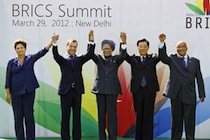
Courtesy: dilmarousseff/Flickr
As Europe stands united in its support for France's Finance Minister Christine Lagarde as a candidate to head the International Monetary Fund, many have begun to question if BRICS is truly an effective and united bloc. Will they be able to put forth a candidate all emerging countries can support?
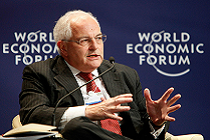
Courtesy: WorldEconomicForum/Flickr
With the post for the head of the International Monetary Fund up for grabs, the emerging market countries are yet to unite and provide a suitable candidate who receives formidable support for his or her candidature. China, however, may boldly question the status quo and step ahead.
Courtesy: Pragati
The earthquake and tsunami - not to forget the nuclear disaster - in Japan, along with the escalating Arab Spring has trigged a series of geoeconomic events. What, thus, is the bigger picture that emerges?
Courtesy: Katrina.Tuliao/Flickr
The 2008 financial collapse has economists pondering over the stability of global economies and the ability of those with financial power to maintain their wealth. If such a situation recurs, who will be held accountable?
The Navy, Coast Guard, Police and maritime companies now encounter new threats, as piracy threatens the Indian seas and our trade routes. This calls for a united approach in combating threats and even more so, for a single governing body for maritime issues.