Turkey: Europe’s new gas hub?
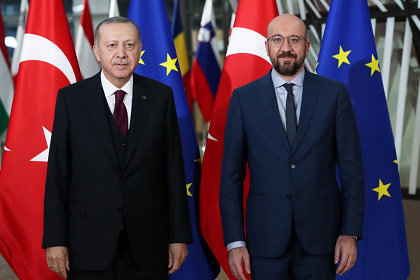
The Ukraine crisis has sent the EU scrambling for new gas supplies, generating fresh interest in gas pipelines from Central Asia and West Asia via Turkey. Practical difficulties make most of these new projects unviable.

 Courtesy: Reuters
The Ukraine crisis has sent the EU scrambling for new gas supplies, generating fresh interest in gas pipelines from Central Asia and West Asia via Turkey. Practical difficulties make most of these new projects unviable.
 Courtesy: telegraphindia.com
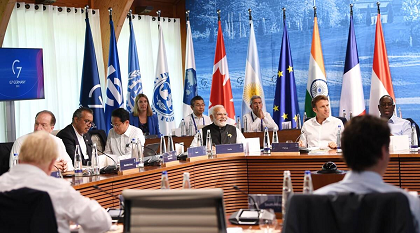
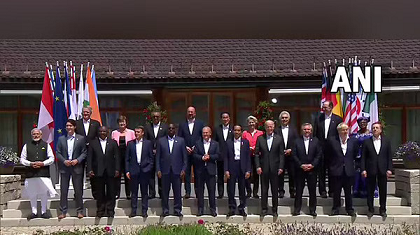
The G7 has reached out to emerging economies which have, of late, been facing challenges on the economic front, brought on by the lingering pandemic and the mismanagement of the Ukraine crisis. They are also seeking, from the global south, a broader acceptance of their world view. Will it be forthcoming?
 Courtesy: The Loadstar
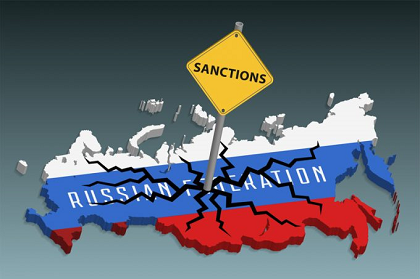
The West is using the Ukraine crisis as a watershed moment to weaponize sanctions in a volatile global setting. This infographic shows the extent and scale of Western sanctions against Russia, both public and private, across different sectors, and in a coordinated manner.
 Courtesy: The Print
The shadow of the Ukrainian war was visible at the G7 summit. Anti-Russian formations were expected, but the extensive reference to China drew attention. The leaders did their part by extensively discussing challenges relating to climate, energy, environment, health, and food security. It is now for the G7 governments to deliver, to be taken seriously.
 Courtesy: Shutterstock
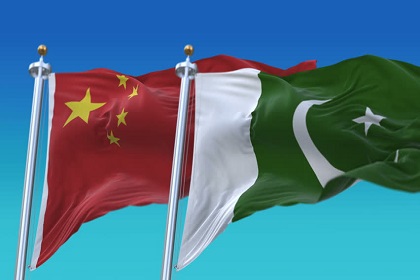
Pakistan’s latest economic survey reveals the extent of the country’s indebtedness to China. High-interest Chinese loans, reckless multilateral borrowing, and ever-increasing defence budgets have deleteriously impacted Pakistan’s finances. Any lasting solution to these problems will have to involve China.
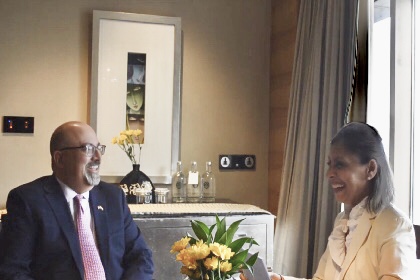
In 2021-22, the U.S. overtook China as India’s largest trading partner. This is a significant milestone, and one that Atul Keshap as President of the US-India Business Council, intends to enhance. Keshap is a former ambassador and was the popular U.S. Chargé d’Affaires for India in 2021. He is also the optimist-in-chief for the India-U.S. bilateral. In this interview, Keshap speaks to Gateway House’s Manjeet Kripalani about the changed definition of globalisation, and the unique opportunities for India and the U.S. in a transforming world order.
 Courtesy: Twitter: Digital India Archives
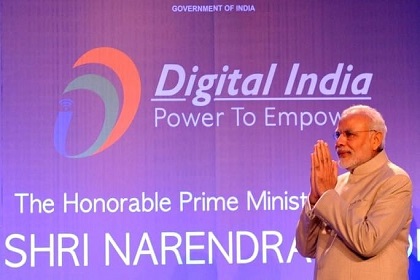
With mass digitisation, India has proved that technology is not just for the educated, privileged, and wealthy. The country's open and secure digital public platforms can be significant for the Indo-Pacific, the world's most data-rich region. The Indian model is applicable because it is open-source, interoperable, auditable, and enshrines individual rights, ownership, and empowerment.
 Courtesy: Hossain Tareque-wikimedia commons
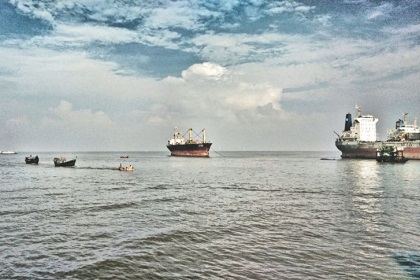
India has done considerable groundwork to turn into a blue economy nation through its maritime policies and active support of the Indian Ocean Rim Association. The time is right for the country to now focus on blue diplomacy, with an emphasis on maritime security and sustainable, equitable harnessing of maritime resources.
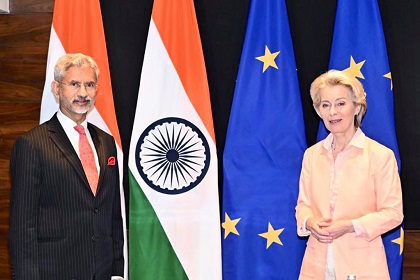 Courtesy: Twitter - Dr. S. Jaishankar
The EU has been working on an India engagement for two decades now – a strategic partnership and a free trade engagement. It is finally being realised – the outcome of the visit of European Commission President Ursula von der Leyen to Delhi this month. The upgraded, ambitious partnership Europe’s long overdue pivot to India.
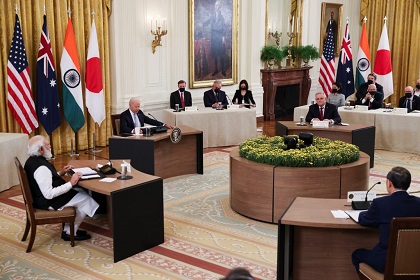 Courtesy: Atlantic Council
The Sino-U.S. contestation is a central tenet of the Indo-Pacific. In this power tussle, the EU strategy for the region provides a new way to engage with partners in the "Third Space" for a free, open, and inclusive Indo-Pacific.