Does the WTO have a future?
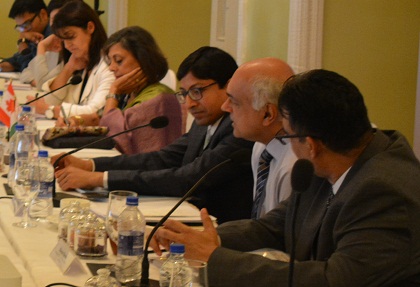
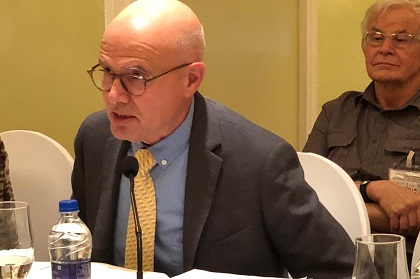
Don Stephenson, former Chief Trade Negotiator, India-Canada Comprehensive Economic Partnership Agreement, discusses how India and Canada can work together on effecting reform in the World Trade Organization

Don Stephenson, former Chief Trade Negotiator, India-Canada Comprehensive Economic Partnership Agreement, discusses how India and Canada can work together on effecting reform in the World Trade Organization
 Courtesy: MEA/Flickr
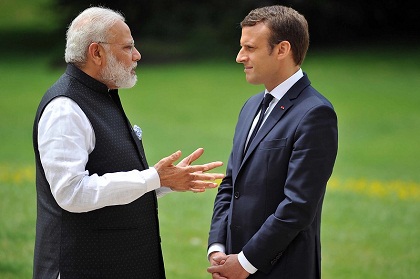
India and France have converging interests in the Indo-Pacific – diplomatic, strategic and economic. The 4th Indo-French Maritime Security Dialogue held in New Delhi in December 2019 was an example of major bilateral cooperation. By working together, the two countries became the model for fostering a rules-based, free, open and inclusive region.
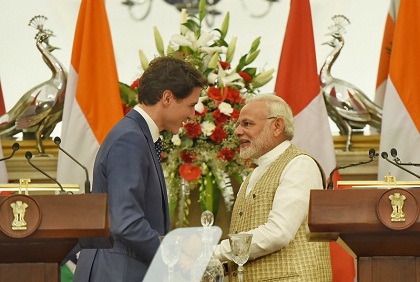
Rohinton Medhora, President, Centre for International Governance Innovation (CIGI), Waterloo, Canada, and co-host of the second edition of the India-Canada Track 1.5 Dialogue in Mumbai, spoke to Gateway House on how data management and governance around new technologies, such as Artificial Intelligence, are the issues of the future
 Courtesy: MEA/Flickr
The second edition of the India-Canada Track 1.5 Dialogue, held in Mumbai last month, drew many ideas from experts and government officials on diversifying and deepening the strategic partnership. A summary of some of the outcomes
 Courtesy:
Amb. Rajiv Bhatia, Distinguished Fellow, Gateway House was quoted by The Print. Read the article here
 Courtesy: Shutterstock
Bangladesh fulfills an important stabilising role in South Asia. It has been able to perform this function in the last decade because of Prime Minister Sheikh Hasina’s efforts to fortify the domestic scenario by first cracking down on terror outfits – and their political fronts. The clean-up was necessary, but a robust Opposition and democratic institutions need to be nourished too
 Courtesy: Flickr/MEA
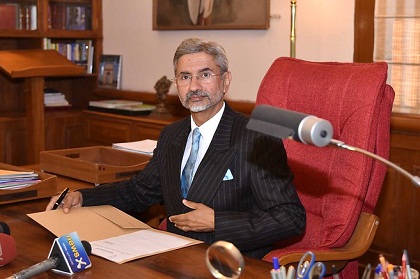
The India-Canada Track 1.5 Dialogue on Innovation, Growth and Prosperity, an initiative agreed upon in February 2018 by the two prime ministers, provides an opportunity for the bilateral relationship to grow through geopolitical convergence, greater economic collaboration and people-to-people interaction. A statement by External Affairs Minister S. Jaishankar for the second edition of the Dialogue, held in Mumbai on 22 November 2019
 Courtesy: Flickr/MEA
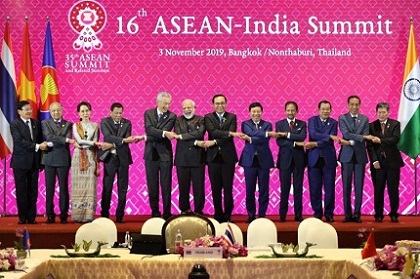
The 35th summit of the Association of South East Asian Nations, held in Bangkok early in November, showed that a shifting geostrategic landscape notwithstanding, “ASEAN centrality” in the region is a top priority with members. It also served as a backdrop for three summits that ASEAN held on November 4 with China, U.S. and India
Courtesy:
Our Distinguished Fellow, Amb. Rajiv Bhatia was quoted in the Print. Read the article here
 Courtesy:
The Economic Times did a story based on the press release on the second India-Canada Track 1.5 Dialogue. Read the article here