The Emerging Exception
The traditional label of ‘middle power’ fails to capture India’s growing status. The country’s ability to shape the international discourse is no longer in question. India sees itself as a key player the global order.

 Courtesy: The Diplomatist
The traditional label of ‘middle power’ fails to capture India’s growing status. The country’s ability to shape the international discourse is no longer in question. India sees itself as a key player the global order.
 Courtesy: X
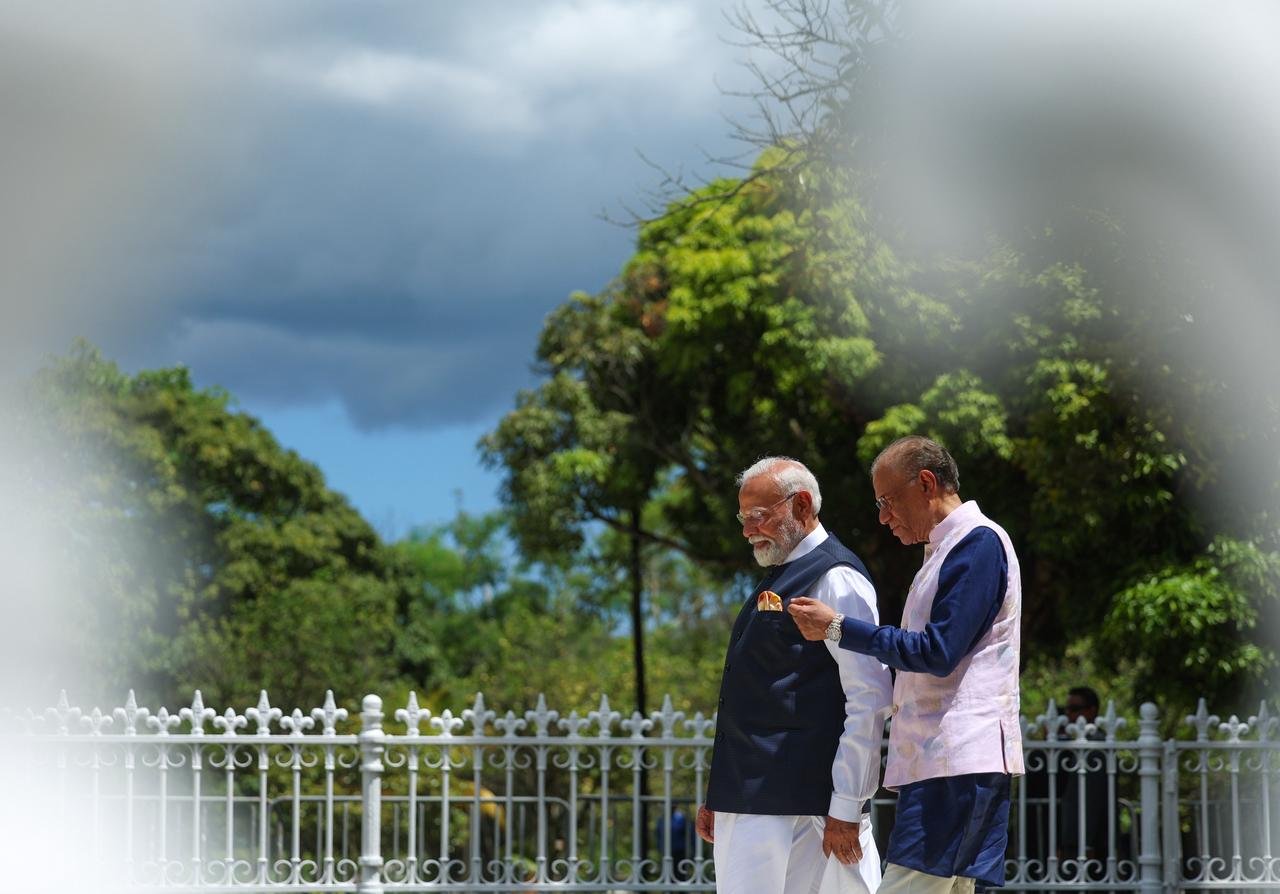
Prime Minister Narendra Modi’s state visit to Mauritius reinforced the strategic partnership between the two nations amid growing geopolitical competition in the Indian Ocean. The visit introduced the Mahasagar vision for regional security and growth while advancing cooperation in trade, defence, digital infrastructure, and people-to-people ties. With the shared historical, cultural, and economic ties, Mauritius remains pivotal to India’s Indo-Pacific strategy.
 Courtesy: Institute for Global Dialogue
The G20 and South Africa - its presiding nation - will both face a difficult year. The U.S., one of the G20’s most vital members has not yet participated, notable by its absence from two important ministerial meetings. The U.S.’ changed foreign policy stance will be a tough challenge for G20; the Global South members will have to step up and become proactive.
 Courtesy:
African National Congress (ANC) lost its long-held majority in the recent national elections in South Africa. While President Ramaphosa continues to be a pivotal actor in the new landscape, the political stakes have become higher as the new government sets about solving the dire economic issues that ordinary citizens face.
 Courtesy: The Hindu
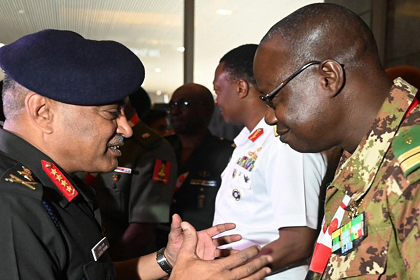
India’s rise as a global player is linked to the kind of relationship it enjoys with African countries, especially as the latter is undergoing demographic, political, and socioeconomic transitions. A new report on the India-Africa partnership recommends a resilient ‘Africa policy’ that will collectively enhance diplomatic, defense, cultural, and developmental collaboration between the two countries.
 Courtesy: DNA India
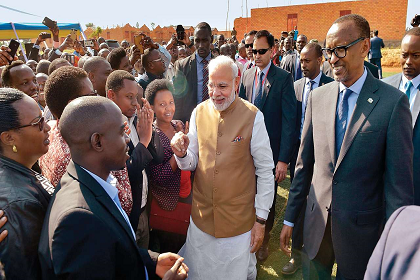
India and Africa are two of world's significant emerging powers whose relationship has been growing strong over the years. In his review of Rajiv Bhatia’s book India-Africa Relations: Changing Horizons, Peter Cozens, former Royal New Zealand Navy officer highlights why it is a necessary read for those interested in India-Africa relations as they are today.
 Courtesy: Narendra Modi/Facebook
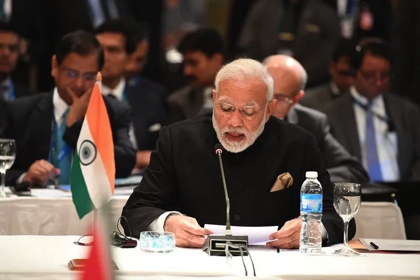
India will be president of the G20 in 2023. The world’s most influential economic governance body is facing an existential crisis, where the major powers have fallen out. With geopolitical currents redefining geo-economics, India needs to be ready to emerge as the chief global diplomat.
 Courtesy: The Print
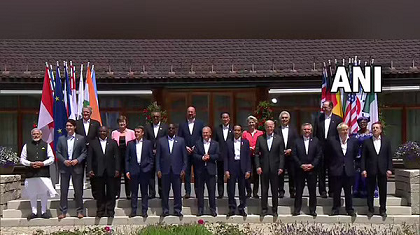
The shadow of the Ukrainian war was visible at the G7 summit. Anti-Russian formations were expected, but the extensive reference to China drew attention. The leaders did their part by extensively discussing challenges relating to climate, energy, environment, health, and food security. It is now for the G7 governments to deliver, to be taken seriously.
 Courtesy: Shutterstock
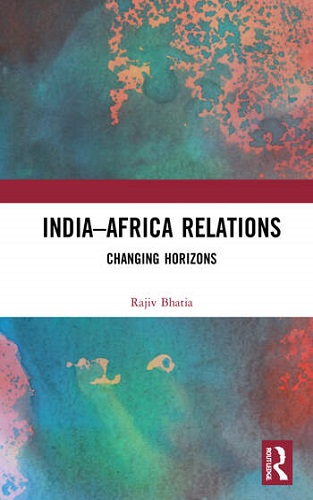
In the last two decades, there have been three India-Africa summits, a testament to the growth of bilateral relations. Rajiv Bhatia's book, India-Africa Relations: Changing Horizons, highlights Africa’s emergence as a global powerhouse, with several countries vying for a stake in the region. India’s unique political and economic development model appeals to the African, and can be used to forge an enduring relationship with the continent.
 Courtesy: Routledge India
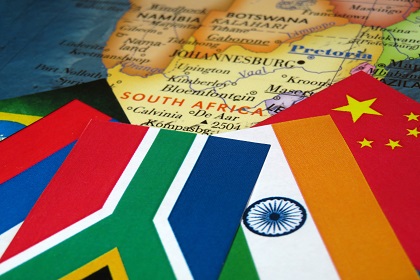
India has a long-standing and unique relationship with Africa. However, China's presence and influence has resulted in geopolitical competition, with the two Asian nations vying to expand and deepen their engagement with Africa. Beijing's footprint is considerable, with a long-term strategic objective. To strengthen ties with the continent, New Delhi must match Beijing's ascendancy and lay down mutually beneficial goals. The excerpt from this expansive book on Indo-African engagement examines the Chinese presence in Africa, African agency in external partnerships and the importance of recognising African needs to devise better policies by competing nations.