Rajiv Bhatia with Aung San Suu Kyi Naypyidaw in 2013 Courtesy: Rajiv Bhatia
14 May 2026

Leaves from my Myanmar diary

Myanmar’s latest political transition offers the illusion of closure, but little clarity. After years of conflict triggered by the 2021 coup, a new administration under Min Aung Hlaing takes charge amid continuing resistance and fragmentation. Is this consolidation or another phase of instability? Reflecting on this question, Ambassador Rajiv Bhatia draws upon his three-decade-long association with Myanmar, including serving as India’s Ambassador from 2002 to 2005.
amb HVS (2) Courtesy: Gateway House
7 May 2026

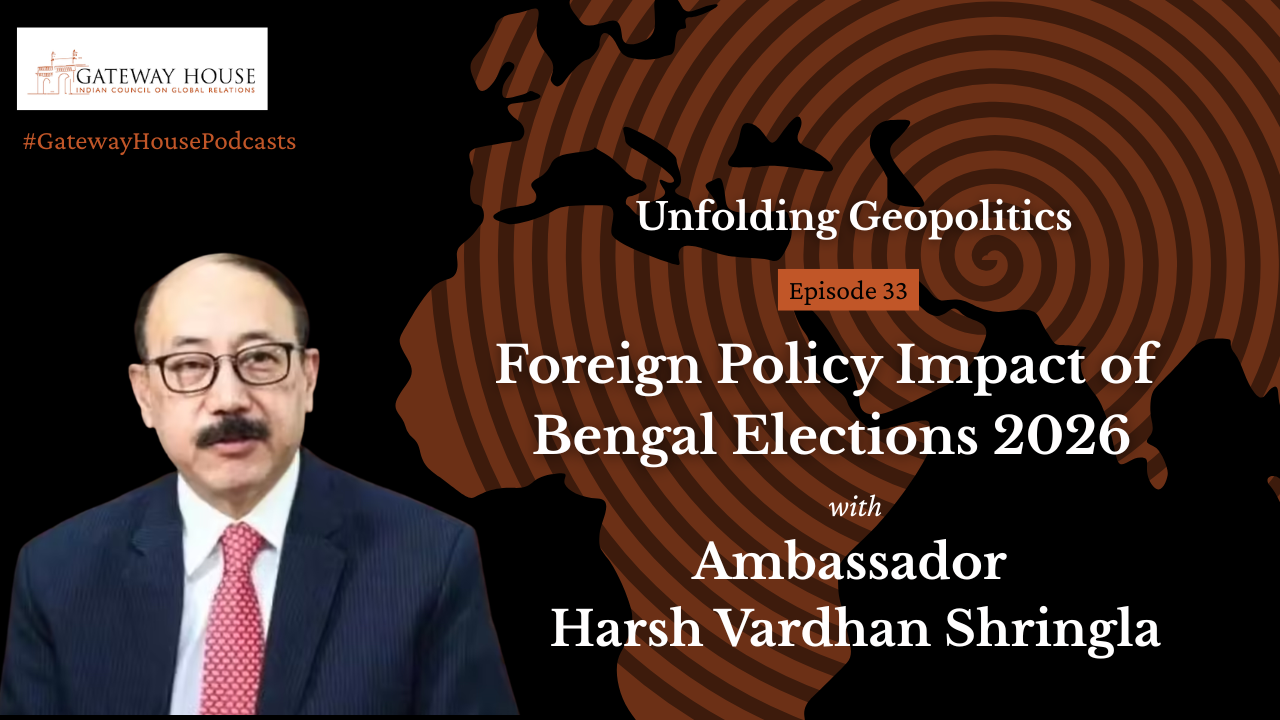
Foreign policy impact of Bengal elections

The state elections in the eastern states of Bengal and Assam have given a massive mandate to the ruling Bharatiya Janata Party. The opportunity for transformation and progress is enormous, especially as both these states are the crucial connectors to India’s Act East Policy. Harsh Shringla, Member of Parliament and former Foreign Secretary of India, says India’s foreign policy will see multiple benefits from these states.

Website articles  (90) Courtesy: Gateway House
7 May 2026

The Smackover blueprint

The Smackover Formation in south Arkansas and east Texas holds vast reserves of lithium — the critical mineral powering electric vehicles, energy storage systems, and data centres. If successfully tapped, those reserves could drastically reduce America's dependence on China. Arkansas has a stable, proven, predictable regulatory and statutory framework and familiarity with the production process. Policymakers in India would be wise to follow developments closely.

Website articles  (89) Courtesy: Gateway House
30 April 2026

Will Bengal turn inward or outward?

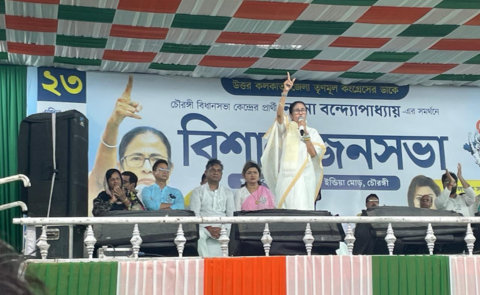
The most significant election of the five states going to the polls in India in April is that of West Bengal. The state, once India’s trading hub and entrepreneurial centre, now lags its counterparts. The big battle is between the regional Trinamool Congress and the Bharatiya Janata Party, both of which have pulled out their big guns and are wooing the state’s voters as never before.

Website articles  (85) Courtesy: FB / @The Statesman
30 April 2026

Legacy and new issues with India-Sri Lanka

India’s Vice President C. Radhakrishnan visited Sri Lanka from April 19-20, reaffirming Colombo’s importance in India’s Neighbourhood First Policy and MAHASAGAR vision. While ties remain stable, legacy issues persist: Tamil demands for devolution, illegal fishing disputes, and the stalled Economic and Technology Cooperation Agreement. The hope is for these to be resolved within Sri Lanka; till then, the unresolved challenges will continue to test the depth and durability of the bilateral.

Website articles  (84) Courtesy: Reuters
23 April 2026

India’s Neighbourhood First policy needs a reboot

Outcomes of the Neighbourhood First policy (NFP) are often mixed, shaped by actions on both sides. Recent engagements with Bangladesh, Myanmar, Sri Lanka, and Nepal suggest an opportune moment to recalibrate NFP, enhance its effectiveness, and bridge perceptions of India as an “elder brother” rather than a “big brother.”

Website articles  (66) Courtesy: Reuters
16 April 2026

Myanmar’s second shot at limited democracy

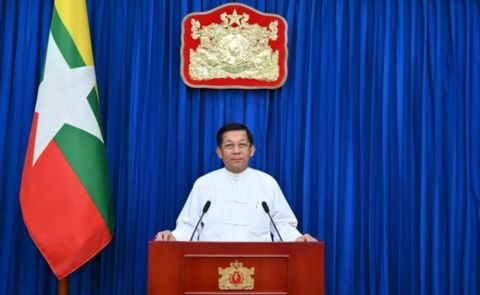
A new government will be sworn into office in Myanmar in April to run a ‘hybrid democracy’ in which military and civilian representatives will share power. It is Myanmar’s second experiment with this system. The West is rethinking its positioning on Myanmar and now seeking ‘calibrated engagement.’ India, too, should reassess its two-track diplomacy and develop a nuanced policy and an early outreach to the new leaders.

Website articles  (75) Courtesy: PTI
10 April 2026

Delhi-Dhaka make progress

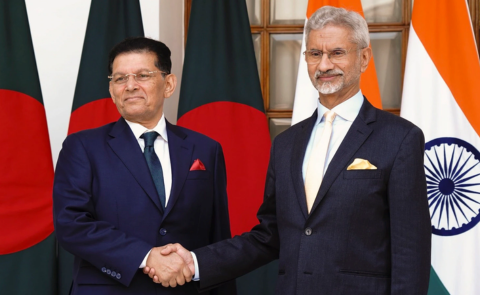
The visit of Bangladesh's foreign minister Khalilur Rahman to Delhi was an intermediate stage in the journey towards a full India-Bangladesh reset. The two countries have much to gain through deeper cooperation and more to lose if they drift. It’s time to focus on a common future by initiating bold trade and economic policies and linkages to counter vested interests that work to keep them apart.

Website articles  (71) Courtesy: Iran Front Page
2 April 2026

The siege of Iranian higher education

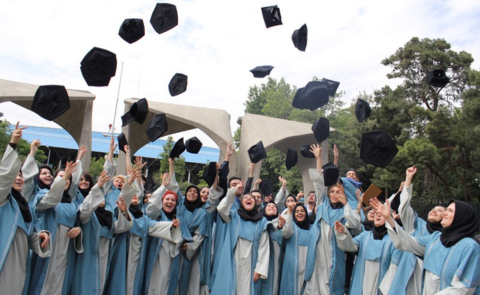
The transformation of higher education and research in Iran over the last twenty years is a cautionary tale in cultural sociology and political economy. Iran has transitioned from a global colleague with high rates of international collaboration to an isolated, ideologically purged state that has pivoted its innovation engine toward survival. The outward migration of talented Iranians is a terminal threat to the nation’s long-term prosperity.

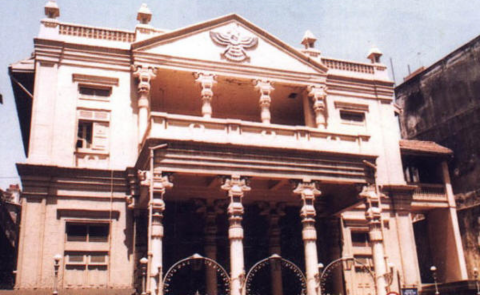
Anjuman Atash Bahram, Mumbai, with the winged Farohar symbol at the top. Courtesy: Heritage Institute
2 April 2026

The Persian-Parsi identity

Persia and India’s impact on each other go back to antiquity, but the extent of the Persian influence on the Parsi identity is more difficult to quantify. Despite their deep cultural connection, Parsis do not identify with Iran as the mother country. Reza Shah Pahlavi, impressed with their achievements in India, wanted them to return to Iran, but they could not be enticed to leave India.