Naya Kashmir, at first sight
On a week-long October visit to Jammu and Kashmir, the author found both clarity and complexity among the citizens about their new status, and that the practicalities of daily life are more compelling than ideology

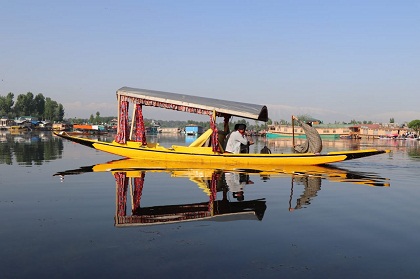 Courtesy: Sameer Patil
On a week-long October visit to Jammu and Kashmir, the author found both clarity and complexity among the citizens about their new status, and that the practicalities of daily life are more compelling than ideology
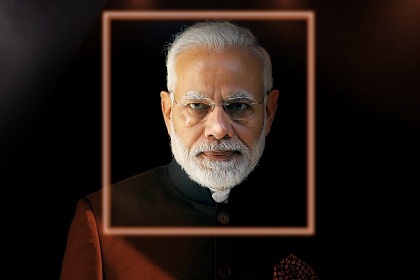 Courtesy: CNBC TV18
India's foreign policy under the second Modi government will take account of a turbulent world in which the old verities are disappearing and domestic political compulsions exert overwhelming influence on external postures
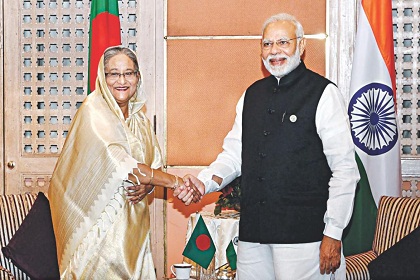 Courtesy: The Daily Star
Bangladesh faces several major challenges in its external relations. It showed humanitarianism in receiving the fleeing Rohingyas, but its diplomatic efforts to repatriate them have not succeeded. It must also maintain a balance between relations with India and China and show proactive leadership in garnering regional cooperation
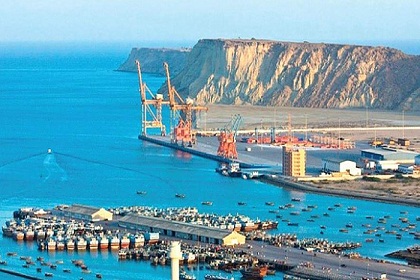 Courtesy: thenews.com.pk
Pakistan’s aspirations for oil and gas prospecting off its Makran coast, south-western Balochistan, are diverging from those of China, which has had a nearly two-decade long presence in Gwadar as an infrastructure provider. To turn Gwadar into the petrochemical hub it desires, Pakistan has sought out other benefactors, changing geopolitical equations in the region
 Courtesy: Radio Farda
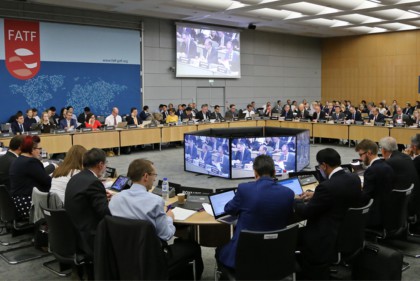
After the Pulwama attack of 14 February 2019, Pakistan has come under the international scanner for its support and financing of terrorist groups. At a meeting of the Financial Action Task Force (FATF) in Paris last week, it was pulled up for its inability to choke terrorist financing. This primer illustrates the role of the FATF in tackling terrorist financing and money-laundering, and studies its recent review of Pakistan
 Courtesy: MEA Flickr
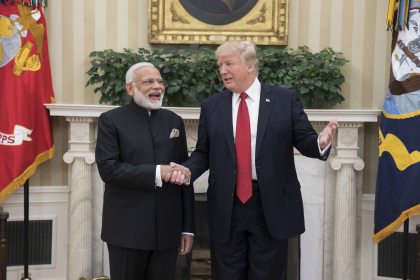
The imperative for India to move away from its non-aligned posture is now, especially if it wants to be consequential in the global reordering underway. This will play out in the contention between the U.S. on one side, and China and Russia on the other.
 Courtesy: Gateway House
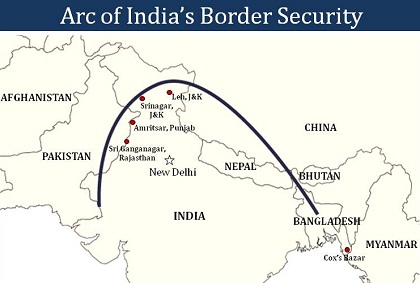
Border regions and communities, some of them far from the heartland, constitute India’s first line of defence, a critical link in its national security. India’s 15,000-km borders touch seven neighbouring countries: Afghanistan (abutting Gilgit), Pakistan, Nepal, Bhutan, China, Bangladesh, Myanmar. Border regions have their own local dynamics, often shaped by subnational and religious identities that do not necessarily align neatly with political borders. Some also serve as flourishing corridors for illegal smuggling of goods and humans. Technology plays an important role in better protecting borders, but in some cases it has made borders obsolete. Despite their importance, border regions do not receive the full attention of the Indian mainstream, except when border tensions arise.
 Courtesy: Sameer Patil
With India distracted in the Kashmir Valley, the critical border region of Ladakh has become a target of Chinese attention. Beijing appears to be exploiting Buddhist sectarian rivalries as it did in Tibet
 Courtesy: Chinanews
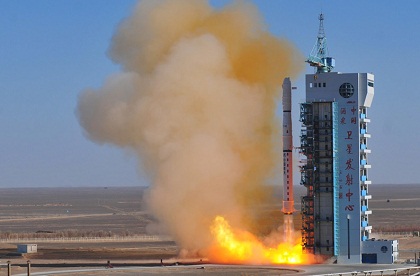
Pakistan is about to launch two military satellites in June with aid from China. It is pursuing its renewed space programme, using the same clandestine tactics it used for developing its atomic programme
 Courtesy: Gateway House
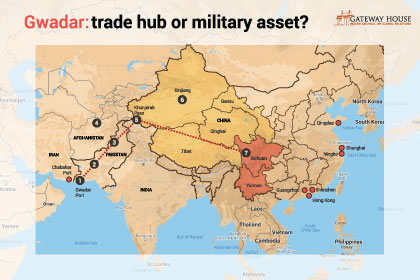
China’s ostensible intentions are to turn Gwadar port into a focal point of the China Pakistan Economic Corridor. But the geography of the region is a major stumbling block in the realisation of these ambitions and raises questions about the project’s underlying motives