Website articles  (85) Courtesy: FB / @The Statesman
30 April 2026

Legacy and new issues with India-Sri Lanka

India’s Vice President C. Radhakrishnan visited Sri Lanka from April 19-20, reaffirming Colombo’s importance in India’s Neighbourhood First Policy and MAHASAGAR vision. While ties remain stable, legacy issues persist: Tamil demands for devolution, illegal fishing disputes, and the stalled Economic and Technology Cooperation Agreement. The hope is for these to be resolved within Sri Lanka; till then, the unresolved challenges will continue to test the depth and durability of the bilateral.

Website articles  (84) Courtesy: Reuters
23 April 2026

India’s Neighbourhood First policy needs a reboot

Outcomes of the Neighbourhood First policy (NFP) are often mixed, shaped by actions on both sides. Recent engagements with Bangladesh, Myanmar, Sri Lanka, and Nepal suggest an opportune moment to recalibrate NFP, enhance its effectiveness, and bridge perceptions of India as an “elder brother” rather than a “big brother.”

indo pacific  (4) Courtesy: X / PMOIndia
31 July 2025

India-Maldives reset

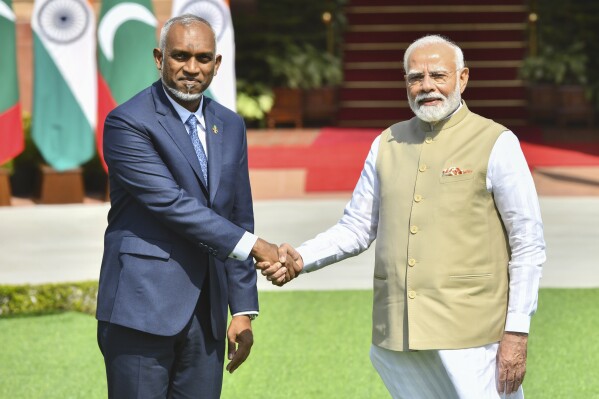
The India-Maldives bilateral, so fraught till recently, has seen a positive reset. This was evident in Prime Minister Narendra Modi’s July 25-26 visit to Male. Using patience, quiet diplomacy and a consultative process with the Maldivians, India is now on the path to achieving its bilateral and regional goals in tandem with its strategically critical neighbour in the Indian Ocean.

Gateway House Courtesy: Gateway House
3 July 2025

China Plus One and global supply chains

A slowdown of the Chinese economy, and the shift, particularly by MNCs, from China to other more competitive locations has opened up business opportunities for latecomers to supply chains in the developing world. Evidence suggests that Southeast Asia and some South Asian countries like India, Sri Lanka, Bangladesh, could be beneficiaries of the supply chain shift, particularly in labour-intensive segments.

download Courtesy:
17 October 2024

Maldives turns to India

Maldivian President Muizzu's state visit to India last week was marked by discussions on a Free Trade Agreement, a vision document on maritime security cooperation, and five MOUs. India committed to supporting the Maldives’ development goals, while the Maldives pledged to respect India's security concerns in the Indian Ocean. Hopefully, this mutuality of interests will be the principal driver in the bilateral as it implements joint visions of economic and strategic cooperation.

maldives china Courtesy: Xinhua
15 January 2024

Maldives’ pivot to China

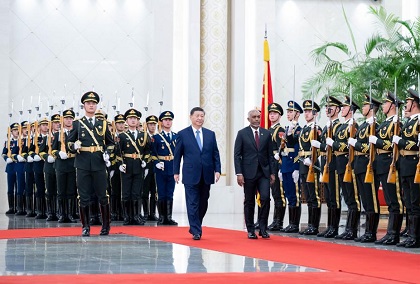
A tiny nation of half a million people, Maldives has drawn enormous attention from the media, diplomats and informed public since Muizzu’s election last September. The interest has only risen after the recent diplomatic row with India and Muizzu’s increased bonhomie with Chinese President Xi Jinping.

nawaz-modi-saarc-reuters Courtesy: The Wire
9 January 2024

India and South Asia: what to expect in 2024

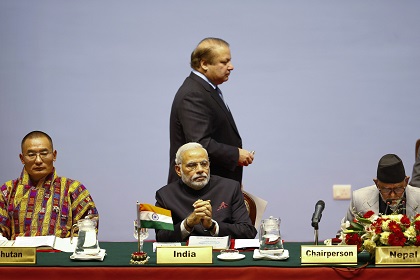
The more India enjoys cooperative relations with its neighbours, the greater its ability to exert influence in the world. Meanwhile, neighbours looking at India with a reasonable mindset may internalise that cooperating with the world’s fifth largest economy is clearly in their interest.

Screenshot 2023-10-11 at 2.20.44 PM Courtesy: Voice of America
12 October 2023

Maldives: a democracy evolves

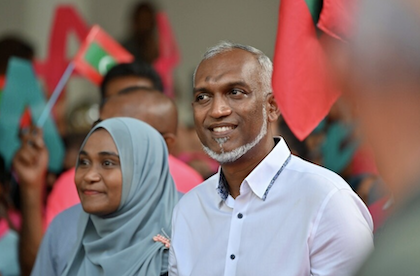
The recent presidential election outcome in the Maldives reflected a thriving democracy driven by voters' concerns for key domestic issues like employment, housing, education and healthcare. To portray the election as a football match between China and India resulting in the latter’s defeat is to ignore how South Asia's smallest state functions.

indian port Courtesy: Reuters
9 February 2023

Trading more within Asia makes economic sense

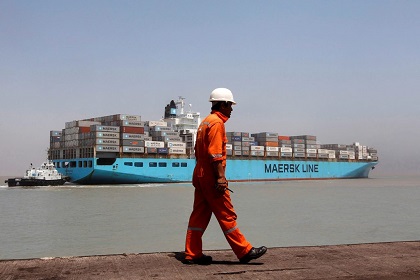
The International Monetary Fund’s recent warning of a slowing global trade comes as a sign for South Asia to reassess its regional trade within the continent. India, in its year of G20 Presidency and as South Asia’s largest economy, can use its platform to lead the way via dialogue, capacity building, and regulatory policies to encourage open regionalism in Asia.