India: an arbitration hub?
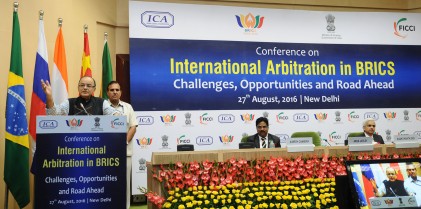
India’s goal of establishing arbitration centres for BRICS nations will not be possible without a holistic assessment of its arbitration policy.

 Courtesy: IBG News
India’s goal of establishing arbitration centres for BRICS nations will not be possible without a holistic assessment of its arbitration policy.
 Courtesy: Flickr/Times Asi
China's refusal to accept the ruling of The Hague greatly harms its international reputation and will fuel regional concerns about China's rise. Nationalist sentiments stirred up by a sustained media campaign heighten the risk of a confrontation, but there is also a possibility for the Philippines to use its new leverage to its advantage through new negotiations.
 Courtesy: Rajarshi Mitra / Wikimedia
This year’s union budget indicates a seismic shift in Indian Government thinking on agriculture, viewing it as not just as a ‘survival’ industry, but as one that generates income and growth. But to take Indian agriculture out of the time warp it is in currently, the government must entice increased engagement from the private sector.
 Courtesy: Wikipedia
India's new intellectual property rights (IPR) policy attempts to address concerns of developed countries regarding India's patent regime, while also protecting public interest, especially that of generic drug producers. However, through this effort of a balancing act, India might have landed up pleasing neither the USTR or U.S. business and disappointing many in India's domestic industry and civil society.
 Courtesy: ISRO
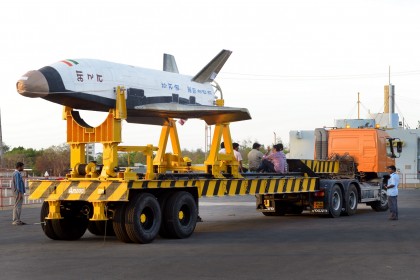
The Indian Space Programme has a mandate to focus on its launch- and earth-oriented capabilities. In the past decade, it has attempted some non-conventional experimental projects under the labels “‘low-cost” and “technology demonstrator”. However the effect of these experimental space projects on India’s techno-economic growth will be realised only if the central government gives the project greater status and funding.
 Courtesy: ustr.gov
The Trans-Pacific Partnership has dropped strong Intellectual Property Rights regulations on India’s doorstep. The implications of these regulations could affect India’s own policies, as well as her global aspirations towards the potential Regional Comprehensive Economic Partnership.
 Courtesy: Navaneeth Unnikrishnan / Wikipedia
A tectonic shift is occurring in the science landscape, wherein newly-developed nations are audaciously investing in frontier scientific research at par with developed nations. India is game to join this new wave of advancement, but its research-funding mechanisms are deficient. Can Indian philanthropy endow indigenous R&D?
 Courtesy:
Ambassador Neelam Deo, Director, Gateway House delivered a lecture at the West Bengal National University of Juridical Sciences, Kolkata on 30 January, 2016.
 Courtesy: Flickr / Robert Scoble
The controversy surrounding Facebook’s Free Basics in India highlights a key dilemma currently faced by policy makers and private entrepreneurs who wish to foster, not just ‘inclusion’, but business models which foster economic democracy.
 Courtesy: MEA
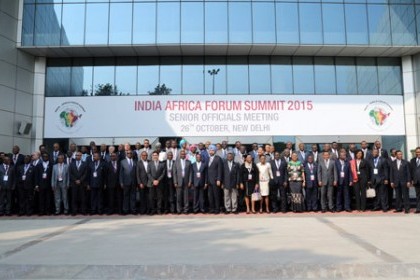
The U.S. is urging India to alter its IPR regime, and the potential impact on prices in the pharmaceuticals sector is of concern to African countries that depend on India for low-cost generic medicines. The recent India-Africa Forum Summit in New Delhi sought to address this issue, but it will be a challenge for India to balance competing pressures.