Film review: Frontier Gandhi’s Legacy
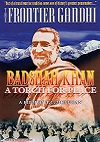
In ‘The Frontier Gandhi: Badshah Khan, a torch for peace,’ Director Teri McLuhan illustrates the life of Khan Abdul Ghaffar Khan and explains why his legacy is relevant in today’s world
Courtesy: Teri McLuhan
In ‘The Frontier Gandhi: Badshah Khan, a torch for peace,’ Director Teri McLuhan illustrates the life of Khan Abdul Ghaffar Khan and explains why his legacy is relevant in today’s world
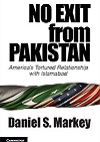
Courtesy: Cambridge University Press
In ‘No Exit from Pakistan: America’s Tortured Relationship with Islamabad,’ author Daniel Markey analyses the complex U.S.-Pakistan bilateral and suggests ways for Washington to improve the relationship.
Courtesy: Sameer Patil
Gateway House’s Associate Fellow Sameer Patil, who participated in the fifth annual Halifax International Security Forum, blogs about his inferences from the main discussions as well as his interactions with the participants at the event
26 November, 2013 will mark the fifth year since Lashkar-e-Taiba terrorists went on a rampage in Mumbai, claiming several lives. Although the only insurgent captured alive was hanged last year, the masterminds are still free. Why is it imperative to keep this incident from fading from our memories?
Courtesy: WikimediaCommons
This daily column includes Gateway House’s Badi Soch – big thought – of the day’s foreign policy event. This Badi Soch analyses the implications of France’ kowtowing to Saudi Arabia and Israel’s demands in the P5+1 talks with Iran.
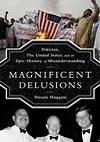
Courtesy: PublicAffairs
In ‘Magnificent Delusions: Pakistan, the United States, and an Epic History of Misunderstanding,’ author Husain Haqqani writes that the U.S. and Pakistan have few shared interests and very different political needs.
Courtesy: WikimediaCommons
Earlier in November, U.S. drone strikes killed Hakeemullah Mehsud, the leader of the Tehreek-e-Taliban Pakistan, a militant outfit in Pakistan. What does this mean for the U.S.-Pakistan bilateral relationship, and more importantly, what are its implications for Pakistan’s domestic security situation?
Courtesy: generalising/Flickr
The India-Japan alliance needs to be viewed through a prism broader than that of "containing" China, and by treating the Indian and Pacific oceans as a single entity. Such an alliance has the potential to strengthen the geopolitical security of India and Japan, along with that of all their allies and associates
Courtesy: Ministry of External Affairs, India
In the coming years, India’s greatest strategic challenge in the Indian Ocean region may not be the development of power projection but the quality of the strategic relationships that it can build in the region. The extents to which India will be recognised as a regional leader depend on these relationships.
Courtesy: Knopf
In ‘The Blood Telegram’ Gary Bass jolts us into recalling one of the most horrific genocides of the last century that occurred during the creation of Bangladesh