shutterstock_371039261 Courtesy: Shutterstock
13 August 2020

India’s Defence-Industrial Agenda

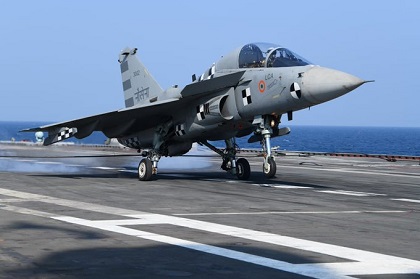
The delivery of five Rafale fighter jets last month is a big boost for Indian military capacity. The government's recent ban on the import of 101 defence items is a major step forward in building domestic defence-industrial capabilities. Partnering with like-minded diplomatic partners and adopting emerging technologies will help India in this endeavour.

shutterstock_1602065497 Courtesy: Shutterstock
13 August 2020

The importance of being Taiwan

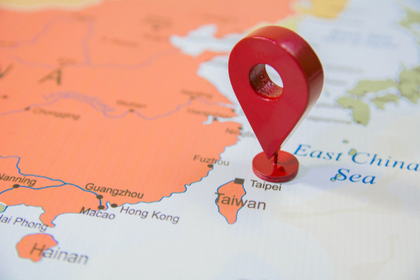
Taiwan’s stellar response in containing the spread of the virus has been appreciated globally. Taipei is now in the spotlight, as it seeks global political equality and prepares its economy to become self-sufficient in everything from artificial intelligence to defence technology. Its changing global positioning has awakened its bilateral relationships, and India-Taiwan is one of them, with significant potential. In this episode of the Gateway House Weekly Webcast, Sameer Patil, Fellow, International Security Studies Programme, Gateway House is in conversation with Dr. I-Chung Lai, President, Prospect Foundation and Prof. M.D. Nalapat, Editorial Director, The Sunday Guardian and Vice-Chair of the Manipal Advanced Research Group to discuss Taiwan’s emerging global role.

CG Courtesy: USGS/Wikimedia
6 August 2020

Geospatial shutter control for India

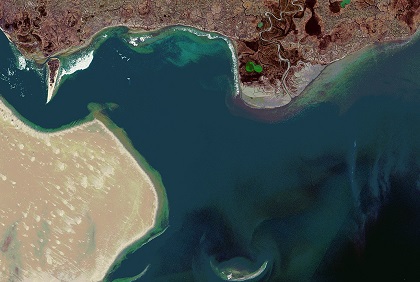
The recent use of geospatial analyses by Indian social and mainstream media for near real-time defence and military intelligence in Ladakh has been made possible because of the lower cost of earth-observation satellite construction, and thereby, easy access to satellite imagery on the internet. While independent analysis is useful, the same intelligence can be also used against the interests of a sovereign nation by an adversary, especially border imagery. India must find innovative methods to reduce this vulnerability of commercial satellite imagery.

Defense Industrial Agenda_Sameer Patil_Final Cover Courtesy: Gateway House
30 July 2020

A Defence Industrial Agenda for India

The delivery of five Rafale fighter jets this week demonstrates the continued upgrading of India’s military capabilities. A key part of this process has been the building of a domestic defence-industrial base by promoting participation of the private sector. Bringing certainty to defence procurement, monitoring emerging technologies and joining hands with like-minded countries, will play a critical role in taking this forward.

Sameer 5 Courtesy: DRDO/Twitter
18 May 2020

A defence-industrial agenda for India

Finance Minister Nirmala Sitharaman’s recent announcement of defence reforms is an appropriate opportunity for India to create a vibrant and profitable defence-industrial base by focusing on the procurement process, capitalising on emerging technologies and partnering with like-minded countries.

shutterstock_1369455998 Courtesy: Shutterstock
22 August 2019

Chief of defence staff: executive chief or staff officer?

The announcement by Indian prime minister Narendra Modi of a new position of a Chief of Defence Staff is a long-pending and vital appointment for national security, but it will be effective only if the defence apparatus is also overhauled

39886955481_b6d420f879_o Courtesy: MEA/ Flickr
14 September 2018

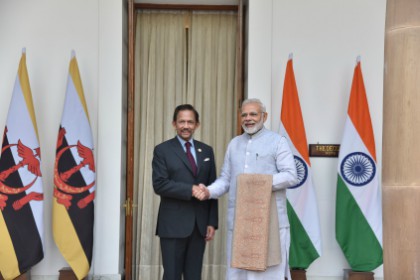
Brunei, ASEAN’s quiet, cautious player

India and Brunei have a 34-year-old diplomatic relationship; but as yet no Indian president or prime minister has paid the country a bilateral visit to strengthen these ties. The strategically-located nation is rich in its history, with a unique political system. Its foreign policy approach is non-controversial, yet noticeably pragmatic.

2-8-18 CableMap-02 - Copy Courtesy: Gateway House
2 August 2018

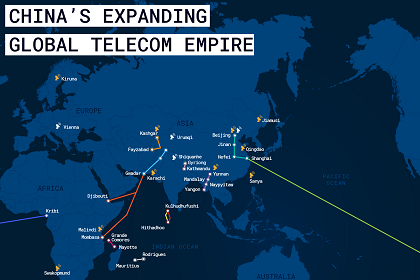
Version 2: Mapping China’s global telecom empire

This version of the Gateway House Map on China’s Expanding Global Telecom Empire identifies some more telecommunication assets -- optic-fibre and satellite ground stations -- that Beijing is working on in South and Central America, Africa, Myanmar, the Indian Ocean Region and mainland China besides the existing ones, such as the Pakistan East Africa Cable Express (PEACE). It shows the direction China’s investment is taking, its diplomatic overtures and the larger geopolitical implications of its growing telecom empire