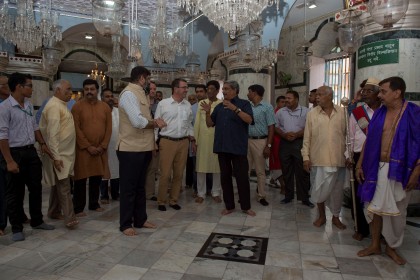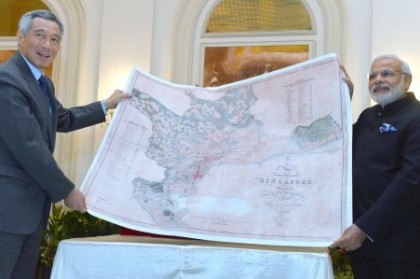
The Prime Minister, Shri Narendra Modi presenting a reproduction of a map of the island of Singapore dating back to 1849 to the Prime Minister of Singapore, Mr. Lee Hsien Loong, in Istana, Singapore on November 24, 2015. Courtesy: Wikimedia
19 April 2016

Defining & deepening India-Singapore partnership

India and Singapore elevated their ever deepening relationship to a strategic partnership last year. The two countries laid out an ambitious roadmap for expansion and diversification of bilateral ties. What drives this multi-layered bilateral relationship?
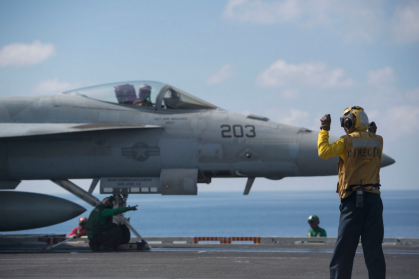
US India Navy Courtesy: Ash Carter / Flickr
16 April 2016

India-U.S.: convergence and divergence

The success of the U.S. Defense Secretary's recent visit to India is indicative of the deepening India-U.S. defence relationship. It has become clear that Indo-U.S. maritime cooperation in the Indian Ocean is steaming ahead; while other geopolitical differences, like the sale of aircraft to Pakistan, seem unlikely to disappear anytime soon.

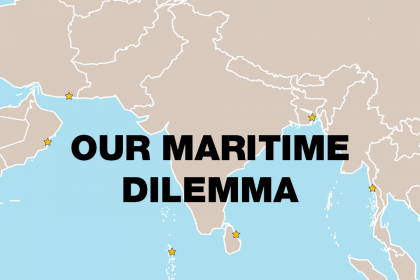
Sagar2 Courtesy:
14 April 2016

Sagarmala or SAGAR: a maritime dilemma

After decades of passivity, India is beginning to assert itself in the maritime arena. There is a whiff of salt in the usually 'sea-blind' corridors of Delhi, where the Modi government clearly sees the linkage between the possession of maritime wherewithal, both civilian and military, and the furthering of national prosperity, through ever-increasing trade.

Carter and Parikhar Courtesy: Department of Defense, U.S. Gov
14 April 2016

Carter in India: a foundational visit

The recent visit of the U.S. Defense Secretary to India has yielded significant outcomes on streamlining bilateral military interactions, deepening maritime security cooperation and defence technology collaboration. As India grows closer to the U.S., it should be clear about the objectives of this engagement

Indian_Navy_flotilla_of_Western_Fleet_escort_INS_Vikramaditya_(R33)_and_INS_Viraat_(R22)_in_the_Arabian_Sea Courtesy: Wikipedia
7 April 2016

India’s future is sea-facing

India needs a more developed strategic focus on its eastern-western seaboards. Prime Minister Narendra Modi has taken the lead, investing considerable diplomatic capital and time in his visits to Saudi Arabia, the UAE, and island nations in the Arabian Sea. In the east, he is progressively engaging with ASEAN, Japan and Australia

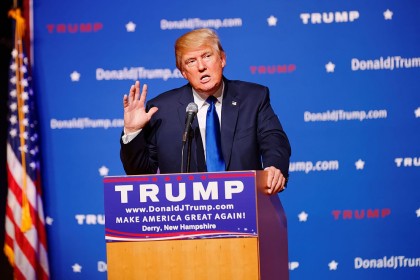
Mr_Donald_Trump_New_Hampshire_Town_Hall_on_August_19th,_2015_at_Pinkerton_Academy,_Derry,_NH_by_Michael_Vadon_02 Courtesy: Wikipedia
31 March 2016

Dismantling the geopolitical Bretton Woods

Statements by Donald Trump, the business magnate turned serious contender for the Oval Office, assert that he wants “good” political and economic deals for the U.S. - even if it means dismantling alliances, i.e. the geopolitical equivalents of Bretton Woods that underwrote the U.S .domination in Europe, Asia and Middle East for more than six decades. A new era could dawn.

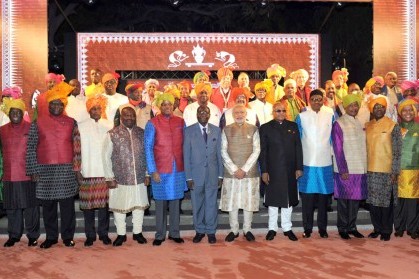
The Prime Minister, Shri Narendra Modi with the African leaders during the special dinner hosted, on the sidelines of the 3rd India Africa Forum Summit, in New Delhi on October 28, 2015. Courtesy: MEA / Flickr
31 March 2016

Africa: diplomatic flavour of 2016?

India has hosted a plethora of India-Africa conferences, expressing commitment to deepen mutual cooperation. It is further expected that the president, vice president, and prime minister may visit Africa this year, to follow up actively. Indeed, a senior official predicts Africa will even become “the diplomatic flavour in 2016”. An analysis.

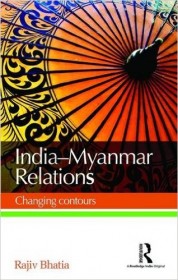
51j3clp3CgL._SX316_BO1,204,203,200_ Courtesy: Routledge India
30 March 2016

Shifting India-Myanmar relations

“Changing Countours” outlines the changing contours of a newly democratic Myanmar and prescribes the path for India to follow to foster closer links with its next-door neighbour.

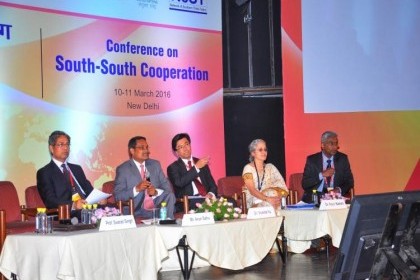
SouthSouthCooperation Courtesy: Research and Information System for Developing Countries
23 March 2016

South-South Cooperation: emerging challenges

Research and Information System for Developing Countries (RIS), hosted a Conference on South-South Cooperation in New Delhi on 10-11 March, 2016. The conference, represented by about 350 delegates representing 62 countries, demonstrated both the maturity of South-South Cooperation and the creative challenges that lie ahead.