Open Embrace Courtesy: Penguin
4 July 2019

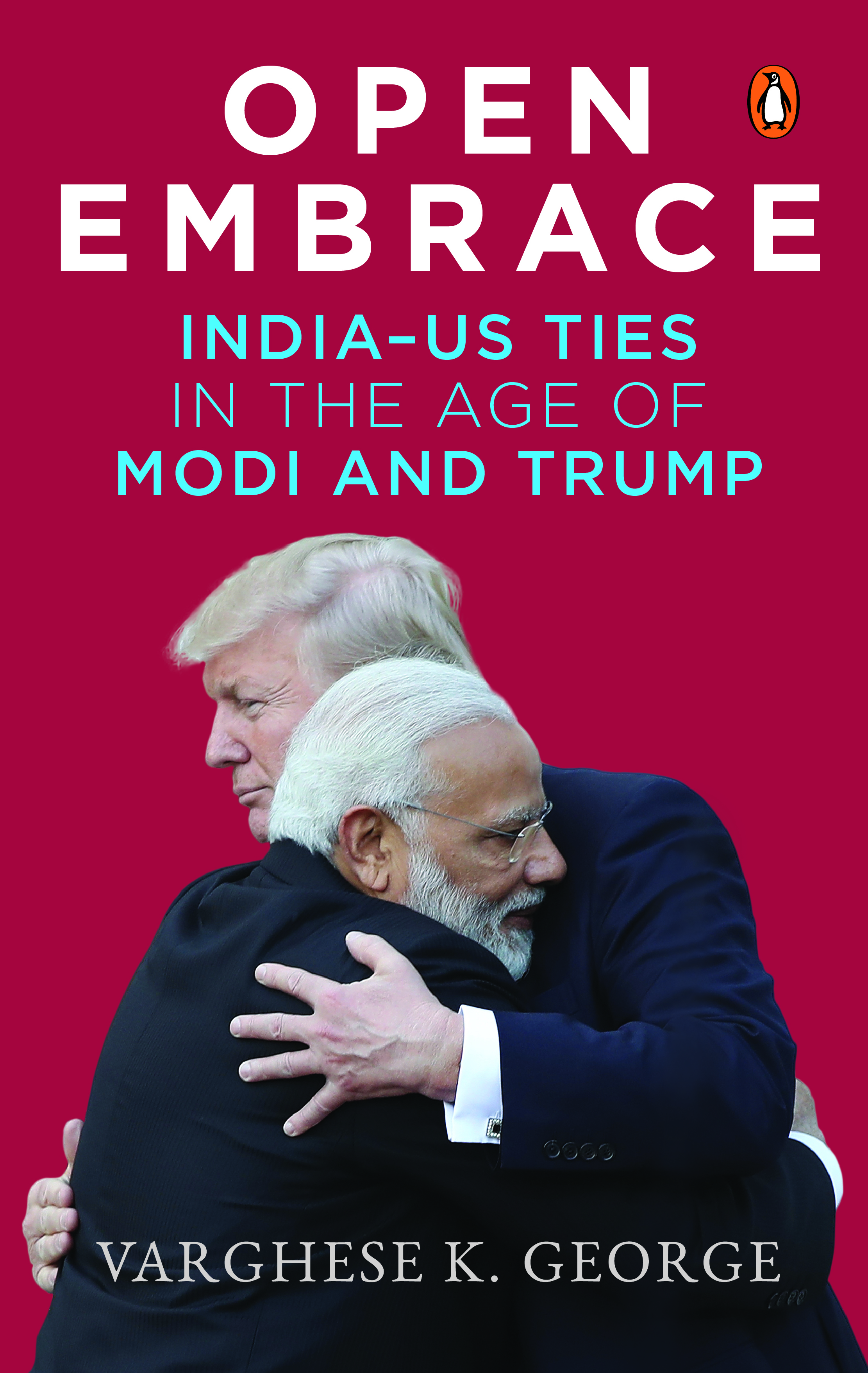
Open Embrace: India-U.S. Ties in the Age of Modi and Trump

This book offers a ringside view of evolving Indo-U.S. ties under two conservative leaders, both engaged in mixing nationalism, religion and populism to advance the global capitalist order. The title points to an interesting departure from the more orthodox view of the bilateral relationship, which is usually from the prism of discord or estrangement
shutterstock_1043745040 Courtesy: Shutterstock
27 June 2019

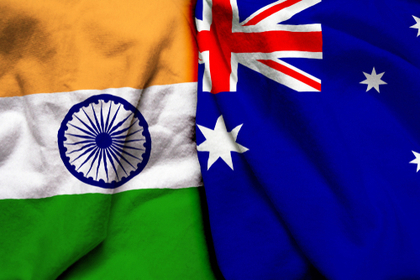
An amplified India-Australia security

The U.S.-China trade dispute and Australia’s concerns about China’s growing influence in its internal affairs and the neighbourhood present an opportunity for New Delhi and Canberra to step up their security engagement, bilaterally, and in the Indo-Pacific

merlin_155315436_159aa613-01d1-4b5e-8c01-f33ad69d0626-superJumbo Courtesy: NY Times
30 May 2019

Foreign policy continuum with the BJP

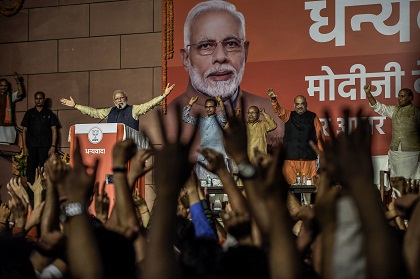
India’s foreign policy is increasingly blended in with its domestic agenda – and vice versa. Prime Minister Modi’s past proactive foreign policy has paid dividends in bringing global attention to India, a fact young voters have noticed and approved. In his second term, what will India’s foreign policy look like? A continuum of the past, but also new frameworks for the future

modi-768x432 Courtesy: CNBC TV18
28 May 2019

PM Modi’s foreign policy 2.0

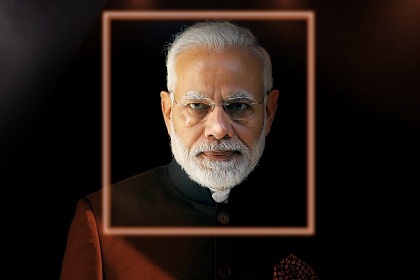
India's foreign policy under the second Modi government will take account of a turbulent world in which the old verities are disappearing and domestic political compulsions exert overwhelming influence on external postures

Maldives-618x412 Courtesy: Dying Regime / Flickr
25 April 2019

A power change in Maldives

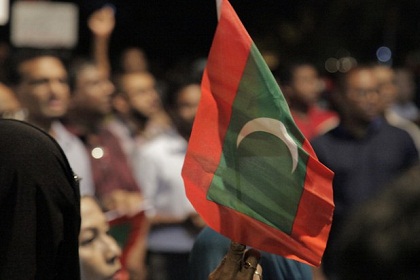
Maldives’ new president, Ibrahim Solih, has had two election wins in a span of six months – his own in September 2018 and his Maldivian Democratic Party’s landslide victory in the Majlis elections about three weeks ago. An analysis of what this win says about democratic politics in Maldives, improved relations with India and the complex equation it shares with China

IMG_6024 Courtesy: Gateway House
17 April 2019

Realising Japan’s G20 priorities

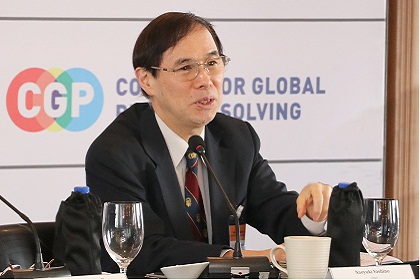
Naoyuki Yoshino, Dean, Asian Development Bank Institute, outlined some of the issues that will concern Japan, which is president of the G20 this year. He was in Mumbai for the India-Japan dialogue, organised by Gateway House recently

regan Courtesy: Pacom
11 April 2019

Canada in the Indo-Pacific

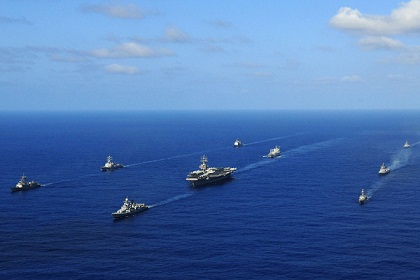
Canada, which has been slow to respond to a changing trans-Pacific neighbourhood, can join India and the ASEAN member states to embark on a trilateral dialogue on the Indo-Pacific’s importance in terms of political, strategic and other domains. An alignment in outlook can strengthen the security and prosperity of a region, currently mired in U.S.-China rivalries

buildings-china-city-50868 Courtesy:
20 March 2019

Three ways to resolve Chinese debt crisis

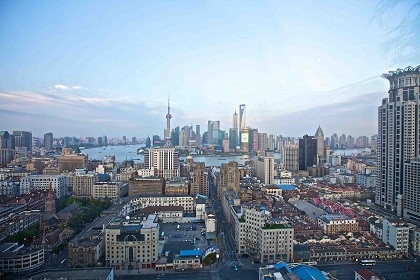
The Chinese leadership faces a range of economic problems and not very palatable solutions, says Prof Heribert Dieter, Visiting Fellow at Gateway House, Mumbai, and Senior Fellow, German Institute for International and Security Affairs, Berlin, in this wide-ranging conversation with Gateway House. He also analyses the European perspective on China, the U.S.-China trade war and the role of global forums, such as G20