shutterstock_355422692 Courtesy: Shutterstock
5 November 2020

Growing Sino-American Military Rivalry

The global world order is witnessing a substantial shift. Part of the greater tussle for strategic and geopolitical dominance is the military rivalry between the U.S. and China. The two countries together now account for over one-half of the world’s defense spending.

shutterstock_1746264761 Courtesy: Shutterstock
5 November 2020

Weekly Podcasts – U.S. Presidential Elections 2020

As part of our weekly series of podcasts in the run-up to the U.S. elections, Ambassador Neelam Deo, Director and Co-founder of Gateway House shares her insights on various aspects of the U.S. Presidential elections.

shutterstock_1330442813 Courtesy: Shutterstock
5 November 2020

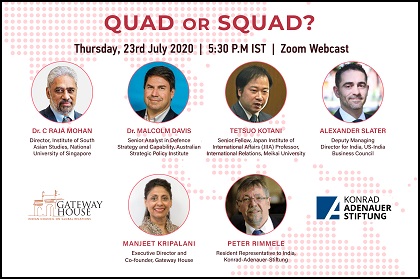
U.S elections, a China order & India’s position

The recent in-person Quad meeting attended by external affairs minister S. Jaishankar and the India-U.S. 2+2 meeting of foreign and defence ministers in New Delhi, highlights not only the big upgrade in India’s strategic relations with the U.S. but also the enhanced U.S. focus on India, the Indo-Pacific and Asia. Clearly then, the foreign policy of the next U.S. administration will impact India, Asia and the world.

GH_IndiaUScover-02 Courtesy: Gateway House
5 November 2020

Deepening India-U.S. defence partnership

The recently signed Basic Exchange and Cooperation Agreement (BECA) between India and the U.S. symbolises the strengthened defence and security partnership between the two countries and the growing interoperability capabilities between the two militaries. India-U.S. defence and security ties have flourished in the last decade, with increasing focus on defence technology co-development and co-production. The enhanced G2G engagement is also reflected in the commercial sector where American and Indian defence companies have partnered in the aerospace sector to become part of the global supply chain.

Biden-China Courtesy: Shutterstock
29 October 2020

The growing Sino-American military rivalry

On 21 October, Gateway House and the Institute of Chinese Studies, Delhi jointly hosted a webcast with Ambassador (Lt. Gen.) Karl Eikenberry, Sinologist, Deputy Chairman, NATO Military Committee; former Director of the U.S.-Asia Security Initiative at the Shorenstein Asia-Pacific Research Center, Stanford University on the Growing Sino-American Military Rivalry

shutterstock_1799297029 Courtesy: Shutterstock
21 September 2020

China wins this TikTok round

With Oracle, Walmart and U.S. venture capitalists now holding the majority of TikTok Global’s shareholding, China’s closed digital world gets a breather, and the possibility of a truly open global Internet, gets a blow. China has won this round.

35830442835_e9239714cf_c Courtesy: MEA/Flickr
20 August 2020

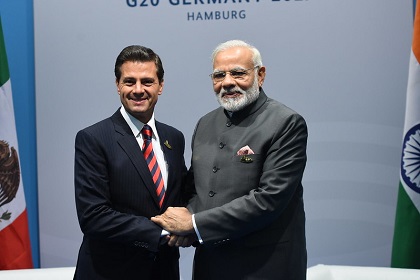
India-Mexico: new strategic partnership?

India and Mexico will both be non-permanent members at the UNSC for 2021-22. Although located on different sides of the globe, culturally, the two countries share more in common than expected. As fellow non-permanent members of the UN Security Council as well as pro-active members of G20, the two countries need to intensify their mutual dialogue and cooperation on how to overcome the current weakening and impasse in the multilateral system.

shutterstock_1752673730 Courtesy: Shutterstock
30 July 2020

A New World for India and the United States

The recent rush of U.S. capital into India’s digital future, and India’s recent structural reforms, is the impetus for an attractive collaboration between the U.S. and India. To really succeed, the U.S. will have to support India with the same kind of technical assistance and best practices in areas like regulation, distribution, and innovation, that it gave China. The alternative is for India to follow Europe’s regulatory model, which places less of an emphasis on job growth and innovation.

India-Canada_Olaf Weber Courtesy: Gateway House & CIGI
14 July 2020

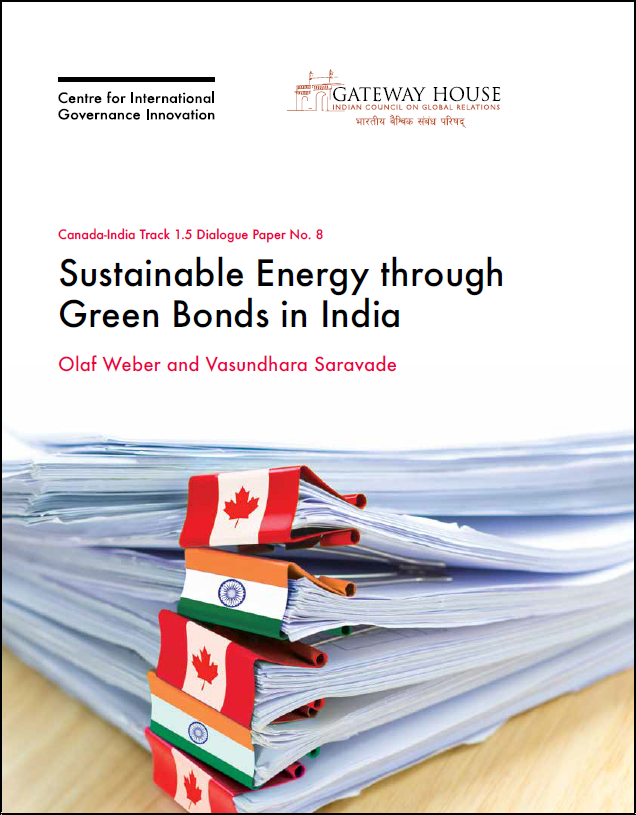
Sustainable Energy through Green bonds in India

India’s energy future needs to be low-carbon, climate-resilient and protected against price fluctuation. It can meet these needs by investing in Canadian oil companies, given the country’s political stability and rule of law. India can also attract greater foreign direct investment at home through the issuance of green bonds, a climate finance debt instrument that addresses environmental and climate-related challenges. This paper explores the regulatory perspective of the green bond market.