India-Latin America Engagements, October 2013
In 'India-Latin America Engagements', the Latin America Desk at Gateway House presents a selection of news of India’s engagement with the region during the previous month

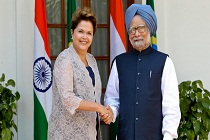 Courtesy: Roberto Stuckert Filho/Wikimedia Commons
In 'India-Latin America Engagements', the Latin America Desk at Gateway House presents a selection of news of India’s engagement with the region during the previous month
Gateway House speaks to Ujal Bhatia, Member, Appellate Body, World Trade Organisation, on the importance of economic diplomacy; India’s assertiveness during trade negotiations; the role of Indian business in the negotiation processes; the relevance of SAFTA; and on ways to boost intra-SAARC trade.
 Courtesy: millerm217/Flickr
India’s extreme dependence on imported energy often renders our economy vulnerable in the face of geopolitical changes. Given the high financial viability, India, being the world’s second-largest producer of sugarcane, should emulate Brazil by replacing petrol with ethanol as fuel.
 Courtesy: WikimediaCommons
Today, despite Indian exports to Peru expected to cross the $ 1 billion mark in 2014, we are at a disadvantage vis-a-vis the exports from Peru's free trade agreement (FTA) partners. Why is it imperative for New Delhi to initiate negotiations with Lima and address the disadvantages of our exporters to their markets?
 Courtesy: Alain Bachellier & WEF/Flickr
Jindal’s integrated mining and steel project in Bolivia was the largest contract secured by an Indian company in Latin America. The project, which ultimately became a victim of the country's domestic politics, has lessons for Indian companies venturing into Latin America
 Courtesy: Gateway House
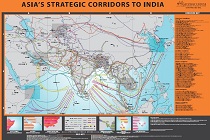
The map – Asia’s Strategic Corridors to India – has emerged from Gateway House’s study of India’s strategic links with other parts of Asia. It highlights the progress India has made in forging multiple links with six strategic regions – Central Asia, West Asia, East Africa, South-East Asia, East Asia, and our immediate neighbourhood
 Courtesy: Center for American Progress/ Flickr
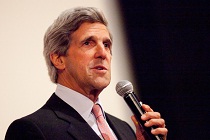
The upcoming India-U.S. Strategic Dialogue offers an appropriate platform to move past complaints both sides have against each other in the trade and economic spheres. The stage can be used to re-apply emphasis on strategic relations and reach levels of goodwill established during the time of former U.S. President George W. Bush and Manmohan Singh

This daily column includes Gateway House’s Badi Soch – big thought – of the day’s foreign policy events. Today’s focus is on the negotiations for a free trade agreement between the E.U. and the U.S.
 Courtesy: Niyantha/flickr
Keeping subsidiaries of multinational corporations publicly-listed in India exposes minority shareholders to the risk of unfair treatment by favouring the majority shareholders. In some cases, it leads to transfer pricing transactions that hurt the country’s revenue. Delisting MNCs is one way to address this problem
The annual India-Japan Prime Ministers’ summit, held recently in Tokyo, charted the path for increased Japanese assistance in India’s infrastructural arena. Gateway House interviews Soichi Yamamoto on the potential of this bilateral engagement