The race for the undecideds
A short analysis by Gateway House on the second U.S. Presidential debate and the closing window of undecided voters in the country.

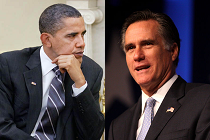 Courtesy: Pete Souza/Gage Skidmore
A short analysis by Gateway House on the second U.S. Presidential debate and the closing window of undecided voters in the country.
 Courtesy: VOA/WikimediaCommons
In a recent speech, U.S. Presidential candidate Mitt Romney criticised incumbent President Barack Obama's foreign policies, and called for U.S. supremacy. However, it seems apparent that Romney wouldn’t usher in a foreign policy revolution if elected.
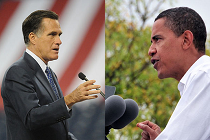 Courtesy: Rusty Darbonne/Austen Hufford
The biggest change in the first U.S. presidential debate for 2012 was the way both Barack Obama and Mitt Romney moderated differences about government and the private sector. Foreign policy came up only briefly, but it will be a theme during the next round of debates later this month.
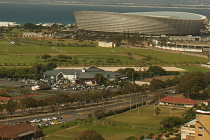 Courtesy: trendscout::/Flickr
All the major economic forces in the world have come together in Africa in a new version of the Great Game. The competition for the continent’s resources will ultimately harm Africa unless Africa uses this opportunity to its advantage and to address its own serious problems.
As India looks to diversify its sources for energy imports and grapples with food security issues, it is looking more towards Latin America. Gateway House interviews Ambassador Deepak Bhojwani to discuss India’s prospects with this increasingly significant region.
 Courtesy: Wikimedia Commons
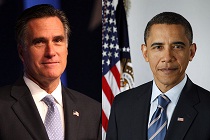
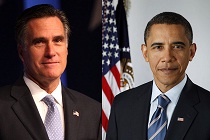
In the wake of the rapidly changing dynamics in the Arab world, and the fast-approaching U.S. presidential elections, there’s one question that dominates everyone’s mind: What kind of international leaders would a first-term Romney or a second-term Obama be as presidents?
 Courtesy: Austen Hufford/Muhammad/Flickr
Partly due to support from undecided voters, women and African Americans, incumbent U.S. President Barack Obama seems to be ahead in the polls. However, much will rest on which candidate can win over the country’s middle class. Whatever the result, it will have repercussions on markets and deregulation.
With the Free Syrian Army being supplied aid by the West and the Gulf Cooperation Council countries, the endgame for the Syrian regime has begun. Does Assad's exit guarantee the replacement of autocracy with democracy? What implications will it have on regional politics?
 Courtesy: Gateway House
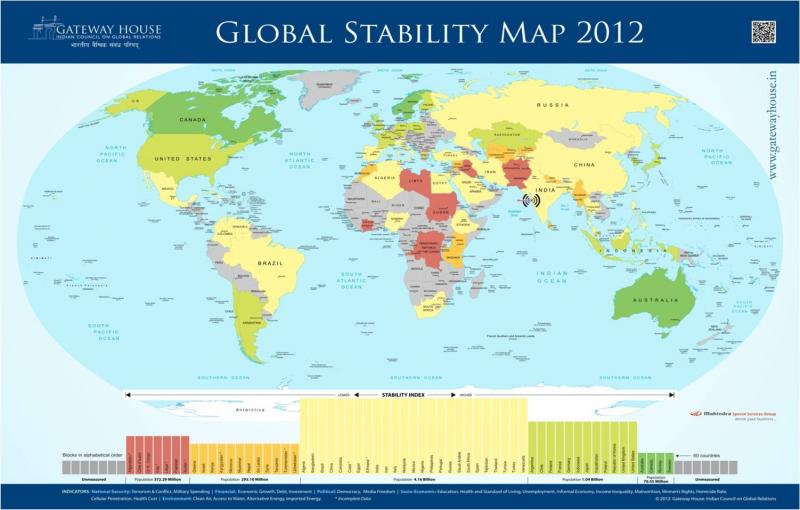
Gateway House prepared a Global Stability Map, using 20 differing indicators, to analyze the stability of 60 countries around the world. Using criteria that are important to the emerging economies of the world, the map provides an Indian perspective of the world today.
 Courtesy: United States Government Work
The Indian-American voters in the U.S. seem to be prioritising their local concerns over the larger U.S.-India bilateral relationship. The Democrats, by facilitating the group’s greater inclusion in U.S. society, politics and businesses, have thus made this huge community lean largely in their favour.