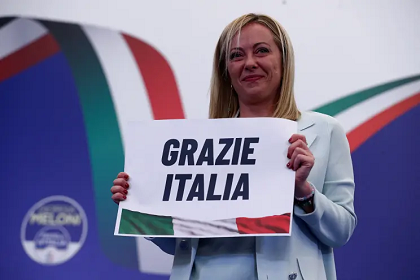
Why Italy turned right
Disenchantment with traditional parties and politics, changed constitutional organisation of Parliament and the election system, over-regulation by the EU, immigration issues. This is why Italy turned right.

 Courtesy: Reuters
Disenchantment with traditional parties and politics, changed constitutional organisation of Parliament and the election system, over-regulation by the EU, immigration issues. This is why Italy turned right.
 Courtesy: Advantour
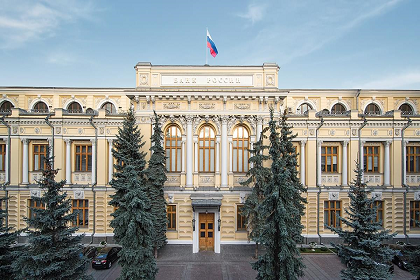
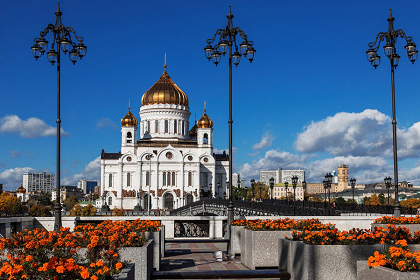
The last week of September was eventful for Russia. The partial-mobilisation was underway, the referendum of Russian-speaking regions in Ukraine took place, President Putin made a significant speech and the Nord Stream pipelines were damaged. Amit Bhandari, Energy Fellow, Gateway House, was in Moscow during this time. In this podcast, he offers his impressions of Moscow after the sanctions, compared with the city he saw before the Russia-Ukraine conflict
 Courtesy: T20 Indonesia
G20 President Indonesia, hosted the Think-20 (T20) Summit in Bali 4-6 September. The recommendations of the working groups resonate in the Leaders’ Statement released at the G20 Leaders’ Summit. The T20 Task Force on Open Trade, Sustainable Investment and Industry published its notes on multilateral trade reform, digital trade, health. Yose Rizal Damuri of CSIS, is the Lead Co-Chair of this Task Force.
 Courtesy: Economic Times
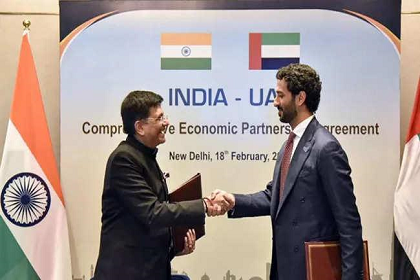
India is stepping into a new era of free trade agreements in the midst of turbulent global waters that bring both risks and opportunities. A fragile global recovery can dampen demand for India’s goods, but it can also attract medium and high-tech manufacturing sectors leaving China, benefit from technology and skill transfer from abroad and lay a strong foundation for growth.
Russia, the founding member of the Shanghai Cooperation Organisation (SCO), has been hit by Western sanctions on its energy exports and financial system. Still, Ivan Timofeev, Director of Programs at the Russian International Affairs Council, sees new opportunities to be seized. Deepening India-Russia business engagement is one, and the SCO as a constructive and accommodating force is another. K.A. Dhananjay from Gateway House spoke to Timofeev who visited Mumbai recently.
 Courtesy: PTI
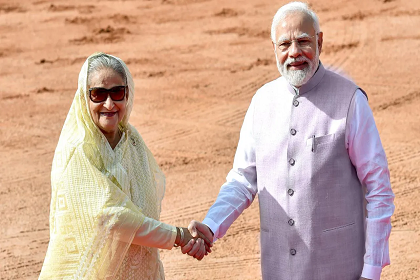
Delhi and Dhaka are fully conscious that they must get this vital equation right, constantly strengthening and deepening their cooperation and countering the challenges they face. In this, the contributions of the Sheikh Hasina government in nurturing the special ‘bonding’ is enormous and widely appreciated.
 Courtesy: Chamber of Commerce and Industry of the Russian Federation
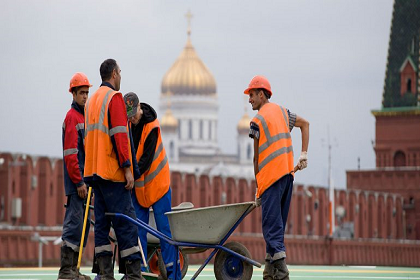
An estimated 9 million Central Asians reside and work in Russia, and almost every major city in the country is dependent on their labour. It’s a marriage of convenience but beneficial all around. Russia gets modernised infrastructure, while remittances bring in much-needed capital to Central Asia.
 Courtesy: Erkin Bolzhurov/World Bank
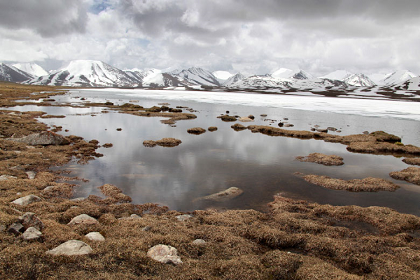
The SCO climate change initiatives to mitigate soaring temperatures, recurring droughts, and floods, glacial melts, and desiccation of the Aral Sea, are inadequate. Large swathes of Central Asia are hotspots for human migration due to a lack of freshwater resulting in pressure in a few habitable regions.
 Courtesy: Toyota Tsusho Corporation
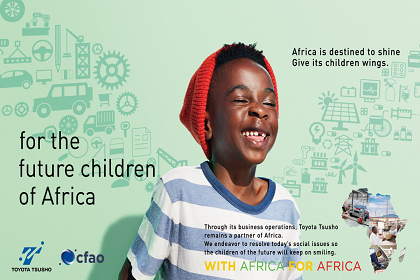
The Japan-Africa partnership continues to be emphasised. The goal is to build human capital, sustainable and high-quality growth and the security and stability of the global order in which government, business, and civil society leaders participate on an equal basis. It is an opportunity for Indian companies to work together in Africa, to achieve bilateral goals.
 Courtesy: TASS
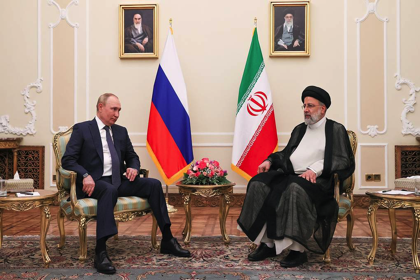
Russian President Vladimir Putin’s July visit to Iran was a geopolitical reset for both countries. The collapse of the JCPOA and the Ukraine crisis has strategically united Iran and Russia against their common adversary, the U.S. Russia is now a credible alternative to fill the investment vacuum for Iran’s defence, trade and energy sectors.