India in a changing global order
This speech was delivered at ‘Industry Meet 2018’, organised by the Indian Institute of Management, Indore, in collaboration with the Ministry of External Affairs, Government of India, on 7 July 2018

 Courtesy: IIM, Indore
This speech was delivered at ‘Industry Meet 2018’, organised by the Indian Institute of Management, Indore, in collaboration with the Ministry of External Affairs, Government of India, on 7 July 2018
 Courtesy: BBC
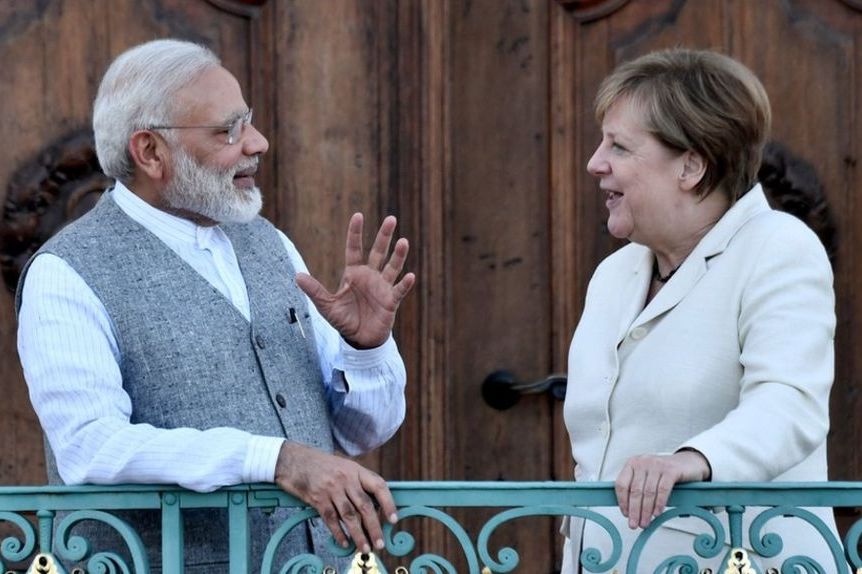
Germany and India have revealed a dual priority for Africa: creating opportunities for prosperity and promoting stability. For both, these are uncharted waters and represents a shift in the locus of global dynamism, away from an Anglo-Saxon world order to a more diverse yet potentially fissiparous one
 Courtesy: Gateway House
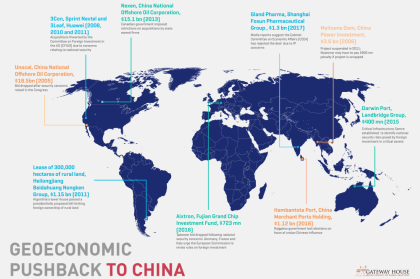
The Indian government may block the acquisition of Gland Pharma by Shanghai Fosun Pharmaceuticals, a move that offers further confirmation of how China’s opaque business model is causing concern worldwide. This infographic shows some high-profile cases of acquisitions by Chinese companies that ran into local opposition
 Courtesy: Gateway House
In his interview, Dr. Peter Wolff discusses the pillars and objectives of Germany's Marshall Plan for Africa and the need to integrate it into the global value chain. In the sphere of renewable energy, he argues that the most effective way of establishing a solid renewable sector is through market based strategies rather than government based ones. Although in some industries public private partnerships are the best measure, in others a more corporate lead approach is better.
 Courtesy: Gateway House
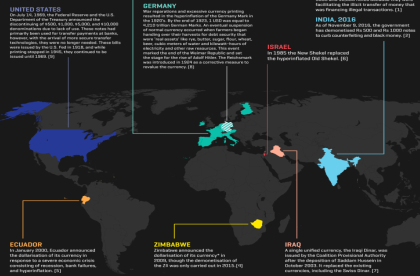
Prime Minister Narendra Modi's announcement on November 8 to demonetise notes of the denomination of Rs 500 and Rs 1000 has a precedent. This infographic traces some interesting demonetisation initiatives around the world. From discontinuation of high denomination notes due to lack of circulation, to the use of beer and water as 'real assets' in place of hyper-inflated currency.
 Courtesy: ukrep.be
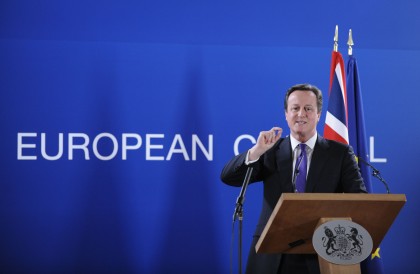
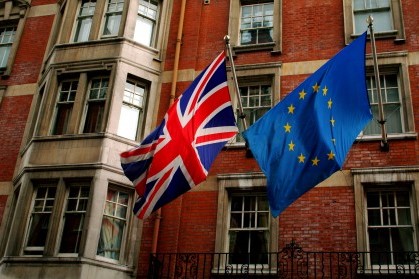
As the referendum on the UK’s membership of the EU draws near, predicting the outcome remains difficult. While the potential impact of Brexit on the UK has been discussed at length, a vote to stay in the EU could have implications for the UK’s domestic political situation as well as its future relationship with the EU.
 Courtesy: Wikipedia
On June 23, the United Kingdom will vote on whether they wish to remain a part of the European Union through the Brexit vote. The debate surrounding the vote has spurred many a heated and emotional debate. While the Indian government has not declared anything publicly - remaining in the EU would be beneficial to Indian businesses.
 Courtesy: BBC
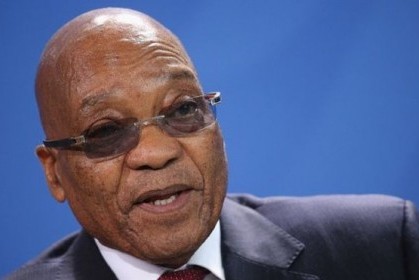
At present, South Africa finds itself charting political and economic policy uncertainties. This is not to suggest that the domestic political crisis will see different trajectories unfolding with regard to its BRICS/IBSA engagements, or on a broader foreign policy path, but it will have repercussions at the international level, in terms of investor confidence, credit ratings, and currency volatility. Pretoria will face constant pressure to be seen as a credible actor, especially when it comes to its African identity.
 Courtesy: GeenPeil
The recent referendum in the Netherlands on the European Union’s Association Agreement with Ukraine raises important questions about the EU’s ability to reconcile ostensibly popular national opinion with the principles of a multi-nation political union.
 Courtesy: wikimedia
Rajni Bakshi, Senior Gandhi Peace Fellow, was recently at Leipzig in Germany to attend the 4th International Conference on Degrowth. She writes about why Leipzig is reassuring for more than its economic growth