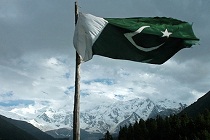
India: up-and-down on Pakistan
The U.S., post-9/11, has made large strides with their homeland security. In contrast, what has India done to counter terrorism? How have Indo-Pakistan relations unfolded?

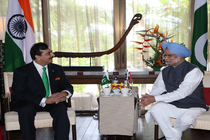 Courtesy: Ministry of External Affairs, Government of India
The U.S., post-9/11, has made large strides with their homeland security. In contrast, what has India done to counter terrorism? How have Indo-Pakistan relations unfolded?
 Courtesy: Apoorva Guptay/Flickr
Ideological differences have spawned innumerable terrorist groups around the world, but historical records show that dissidence does have a shelf-life. Can India look forward to a future free of terrorism? Only if we can craft a consistent policy on Pakistan and depoliticise our internal processes of investigation
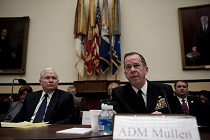 Courtesy: Chairman of the Joint Chiefs of Staff/Flickr
The 'double-dealing' of the U.S. and Pakistani army - all with the ambition of military dominance - has significantly aided various terrorist groups. After 26/11, there is no place to hide for the Mike Mullens and countless others who have been apologists for the Pakistan army and the state it controls.
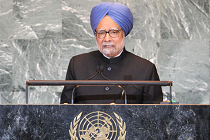 Courtesy: PMO
Indian Prime Minister Manmohan Singh’s speech at the UN General Assembly has put Indian perceptions on the record and clearly outlined India’s independent foreign policy. India came out unequivocally in support of the Palestinian struggle & reiterated its traditional stance of respecting countries’ sovereignty.
Although the U.S. has not faced another terrorist attack since 9/11, much has changed in its democratic framework. Gripped by fear, 3,984 federal, state and local organizations work on domestic counter-terrorism, spending an estimated $1 trillion.
 Courtesy: WTCTributeinLight/WikimediaCommons
A change has come about after 9/11: the ideologies grouped as “Al Qaeda” has morphed, from a group directed by a few individuals, it is now disaggregated. Due to this change, NATO is empowering it's future foes in the Arab world by its continued belief in the camouflaged jihadis.
 Courtesy:
A decade after 9/11, the U.S. has prevented further terrorist attacks - a major achievement. But with a $1.3 trillion budget deficit, a debt downgrade, and 24 million Americans searching for jobs, the U.S. needs to attend to matters at home rather than intervening in the world's affairs.
Philip Oldenburg, Professor at Columbia University, comments on the fragile relationship between India and Pakistan, and also discusses his new book "India, Pakistan, and Democracy: Solving the Puzzle of Divergent Paths".
 Courtesy: TheU.S.Army/Flickr
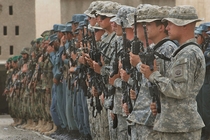
The 10-year old war in Afghanistan has reached a hazy stage as the U.S. announced a quicker withdrawal of troops, with NATO countries soon to follow. The South Asian region will undergo another makeover, hopefully opening doors for New Delhi and Islamabad.
 Courtesy: Kash_if/Flickr
Even ardent supporters of Pakistan are unable to explain to Washington, and indeed the rest of the world, how Osama Bin Laden lived in a mansion with the Pakistani military and ISI as his neighbours. The implications on US-Pak relations are likely to be heavy.