shutterstock_1540336541 Courtesy: Shutterstock
9 April 2020

Cybersecurity and privacy in the COVID-19 era

COVID-19 and remote working have resulted in a surge in demand for digital intermediaries, such as Zoom. Most of these are U.S.-based, with some having servers in China, which has aggravated privacy concerns. IT companies have responded quickly by fortifying themselves internally through a range of measures, but it is now time for India’s highly accomplished tech industry to devise secure, scalable platforms with India-based servers


IMG-20191125-WA0678 Courtesy: Gateway House
5 December 2019

Readiness for cyber warfare

India and Canada can collaborate in the realm of cybersecurity by devising a common set of rules for governing cyber space. Aaron Shull, Managing Director and General Counsel, Centre for International Governance Innovation (CIGI), spoke to Gateway House on the sidelines of the India-Canada Track 1.5 Dialogue

shutterstock_363517736 Courtesy: Shutterstock
5 September 2019

From Interkosmos to Gaganyaan

On his visit to the Russian Far East this week, Prime Minister Narendra Modi secured Russia’s assistance in training India’s human spaceflight crew ahead of the launch of Gaganyaan in 2021-2022. French assistance for India has come in the form of its specialised knowledge of space medicine. Gaganyaan has thus become an India-Russia-France megaproject, a symbol of India’s futuristic space diplomacy

Cover with black border Courtesy: Gateway House
29 August 2019

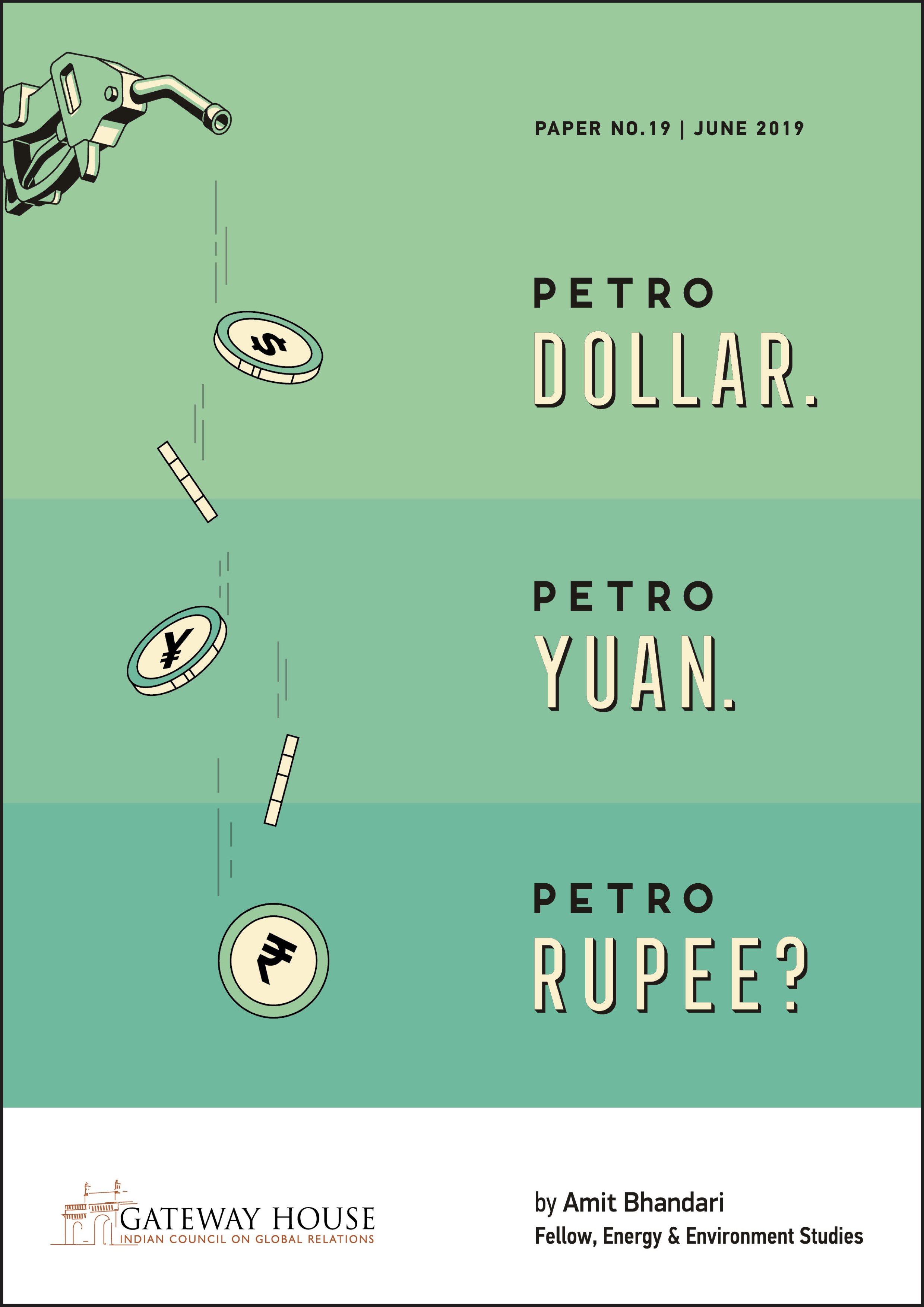
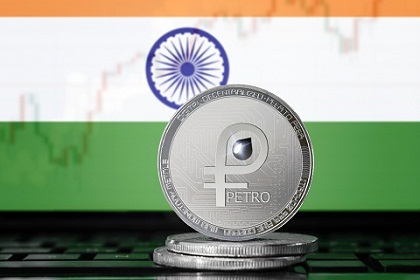
Petro Dollar. Petro Yuan. Petro Rupee?

The global energy scenario has changed in every way – be it in demand, supply or energy type – in the last two decades. The only unchanged component has been the currency of energy trade: the U.S. Dollar. Lately, though, the Chinese Yuan has emerged as a challenger. Can the Indian Rupee be a third contender?

shutterstock_1369455998 Courtesy: Shutterstock
22 August 2019

Chief of defence staff: executive chief or staff officer?

The announcement by Indian prime minister Narendra Modi of a new position of a Chief of Defence Staff is a long-pending and vital appointment for national security, but it will be effective only if the defence apparatus is also overhauled

shutterstock_1330442825 Courtesy: Shutterstock
15 August 2019

Sequencing Governance and Economic Growth

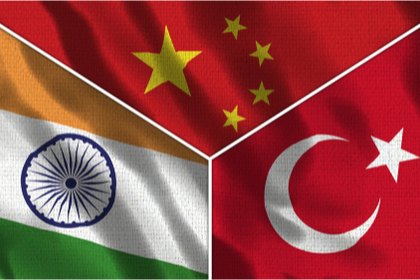
The Narendra Modi government came to power in India in 2014, promising "minimum government, maximum governance". Its roll-out of numerous government schemes meant that democracy and governance came before economic growth. But it returned Modi to power.Analysing the current debate on growth and governance the author explores how the sequencing of governance and economic outcomes is different in China, Turkey and India

image002 (1) Courtesy: Shutterstock
14 August 2019

The DMZ, between peace and hostility

The Demilitarised Zone (DMZ) is a 250-km-long militarised border that divides the Korean peninsula roughly into half. It is one of the most heavily guarded borders in the world. The author, who had a unique opportunity to visit the DMZ, narrates her experience

23072016-BlueMosque3 Courtesy: LBB
14 August 2019

The Persian merchants of Bombay

Bombay’s trade with the Persian Empire grew rapidly in the 19th century because of regular steamship services between the city and prominent Iranian ports such as Bushire. The wealthy and public-spirited Persian merchants, who settled in Bombay, endowed their community with a religious and social infrastructure, in use even today

shutterstock_703229845 Courtesy: Shutterstock
8 August 2019

Africa’s ambitious path to trade growth

The African Continental Free Trade Area, launched in July, is a landmark achievement, aiming to eliminate tariffs on 90% of products covered by intra-Africa trade and thereby spur entrepreneurial initiative and job creation. It envisages many other gains as well, but the hurdles in their realisation cannot be wished away. An analysis

shutterstock_1042231621 Courtesy: Shutterstock
1 August 2019

A case for the petro rupee

India can catalyse trading in oil on its domestic exchanges, and thereby adjust global oil prices so they reflect the changing patterns of global trade. In the process, this can help Indian companies and government reduce the risks arising from high energy prices. And in the long run, it can give India a more central position in the global financial system