 Courtesy: Shutterstock
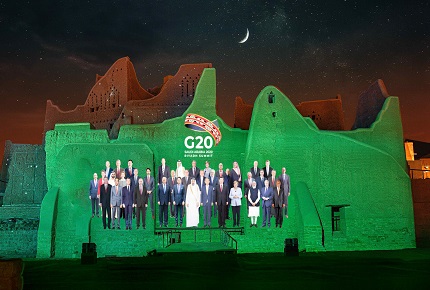
Saudi Arabia hosted the G20 Summit on 21-22 November, this year. A strategy to protect the global economy, which is the heart of the G20’s existence, was reflected in the updated G20 Action Plan, a clear by-product of the effect of the COVID-19 pandemic. Beyond the immediate, is the plan for a resilient and long-lasting recovery.
 Courtesy:
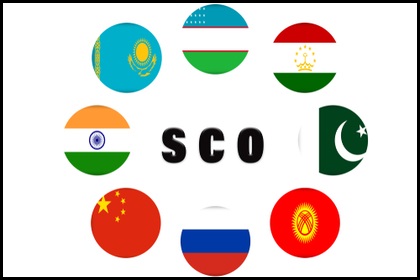
India will be hosting the Heads of Government Summit of the SCO on 30 November -the first time as host to a major SCO meeting, which it joined as a full member in 2017. The goal will be to connect the past of Central Asia and India to their present and future. The sweep of medieval history will then join the 21st century to bring prosperity to both regions.
 Courtesy: Shutterstock
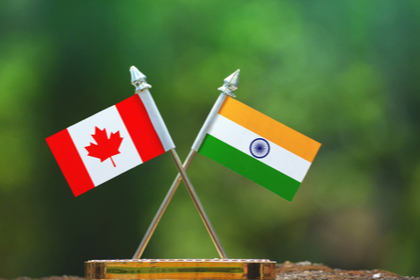
Geopolitical shifts during the Covid-era is justifying a closer convergence of national perspectives between India and Canada. It remains now to align the bilateral’s common interests and values, with common goals.
 Courtesy: Gateway House
The 20th meeting of the Council of the Shanghai Cooperation Organization (SCO) Heads of States was held virtually on 10th November, 2020. The meeting precedes the SCO Summit to be hosted by India at the end of this month, and for which preparations have been on through the year. In this compendium of three essays, Gateway House assesses the potential for deepening economic cooperation between India & SCO, asks whether the SCO Charter needs dynamism and revision, and traces the roots of the regions's Buddhist presence, back to India.
 Courtesy: Gateway House
India will host the 19th meeting of the Council of Heads of Government on 30 November 2020. This will be the first meeting of the grouping’s second highest organ, hosted by India. The significance of the event lies in the timing – India’s relations with two fellow memberstates, China and Pakistan, are at an exceptionally low ebb; yet the clear message from the SCO Secretariat and other member-states is: India’s presence in the SCO is highly beneficial to the latter and should be fully leveraged to strengthen it as an important and
upcoming intergovernmental organisation. This necessitates a fresh appraisal of options for India.
 Courtesy: Shutterstock/Gateway House
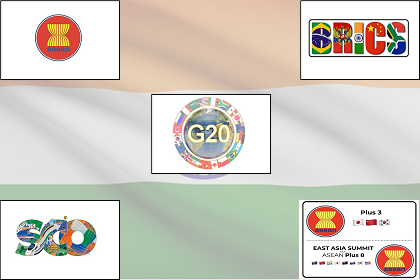
Now that the India-U.S. 2+2 meeting has ended, Indian officials are preparing for a hectic season of summiteering in November, from the SCO to the BRICS and the G20. All will give India global attention, and help the country prepare its positioning at home and abroad.
 Courtesy: Shutterstock
21 October 2020 Asia Pacific Bulletin, East-West Center, Washington, DC
The record of regional cooperation on rivers since India's independence in 1947 is one of several successes, with some contestations. In contrast to the past when governments strove to divide and share river waters, the endeavor has now shifted to thinking about comprehensive river basin development which makes the process even more complex. India’s policy on transboundary river governance must now also be aware of the increasing importance of Indo-Pacific in the global geopolitics.
 Courtesy: Ministry of External Affairs
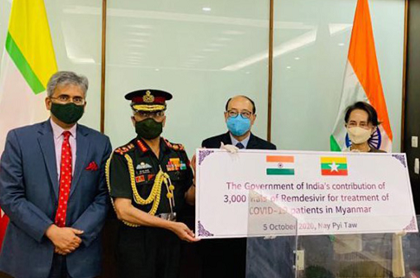
The visit of Foreign Secretary Harsh Vardhan Shringla and COAS Gen. MM Naravane to Myanmar on October 4-5 will advance this vital relationship at a critical time. As the region’s geopolitics change, India’s Neighbourhood First and Act East policy and Myanmar’s deep-seated instinct for a balanced and independent foreign policy, must ensure that the two countries journey together as companion souls.
 Courtesy: Shutterstock
The G20's agenda has expanded over the past decade to include Africa. India should use the opportunity of its upcoming presidency of the G20 in 2022 to further cement its relationship with Africa and pursue a multilateral agenda from within the G20 for a more equal partnership with Africa.
 Courtesy: Shutterstock
Ambassador Rajiv Bhatia, Distinguished Fellow, Foreign Policy Studies Programme, Gateway House delivered the opening remarks at the 2020 Asia Economic and Entrepreneurship Summit, in the lead-up to the session, - The Future of Asia Pacific Economic Cooperation in a Sustainable VUCA World – What to Expect? What Next? The Summit was jointly organised by the KSI Strategic Institute for Asia Pacific (KSI), The Pacific Basin Economic Council (PBEC) and China Daily Asia Pacific (CD), Kuala Lumpur, 8 September 2020.