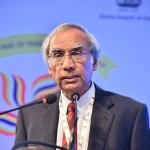
Ambassador Rajiv Bhatia is Distinguished Fellow, Foreign Studies Programme at Gateway House. He is a member of CII’s International Advisory Council, Trade Policy Council and Africa Committee. He is theChair of FICCI’s Task Force on Blue Economy, and served as Chair of Core Group of Experts on BIMSTEC. He is a founding member of the Kalinga International Foundation and a member of the governing council of Asian Confluence. As Director General of the Indian Council of World Affairs (ICWA) from 2012-15, he played a key role in strengthening India's Track-II research and outreach activities. During a 37-year innings in the Indian Foreign Service (IFS), he served as Ambassador to Myanmar and Mexico and as High Commissioner to Kenya, South Africa and Lesotho. He dealt with a part of South Asia, while posted as Joint Secretary in the Ministry of External Affairs. A prolific columnist, he is also a regular speaker on foreign policy and diplomacy in India and abroad. He was Senior Visiting Research Fellow during 2011-13 at the Institute of South East Asian Studies (ISEAS), Singapore. He holds a master’s degree in political science from Allahabad University.His first book India in Global Affairs: Perspectives from Sapru House(KW Publishers, 2015) presented a sober and insightful view of India’s contemporary foreign policy. His second book, India-Myanmar Relations: Changing contours(Routledge 2016) received critical acclaim. His third book, India-Africa Relations: Changing Horizons (Routledge 2022) has also been receiving positive reviews.
Expertise
Foreign Policy, Quad & Indo-Pacific, South & South-East Asia, Africa, Blue Economy
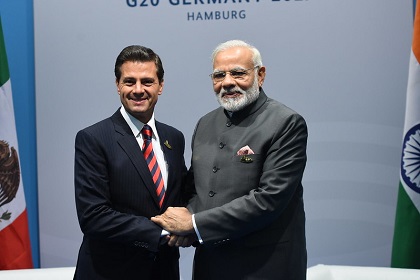
India and Mexico will both be non-permanent members at the UNSC for 2021-22. Although located on different sides of the globe, culturally, the two countries share more in common than expected. As fellow non-permanent members of the UN Security Council as well as pro-active members of G20, the two countries need to intensify their mutual dialogue and cooperation on how to overcome the current weakening and impasse in the multilateral system.
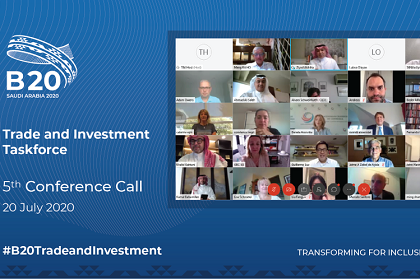
The COVID crisis compelled a change in the Business20 (B20) focus areas to reviving health, health facilities and business activity in 2020. India must start work now to give the B20 even greater responsiveness and relevance as the prospective G20 chair in 2022.
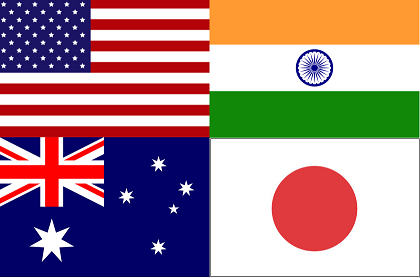
China’s escalating actions in the wake of the COVID-19 catastrophe is a calculated strategic diversion and risk. In the Indo-Pacific, tensions between China and the U.S., Australia, India and others are building momentum. As a geopolitical partnership, the relevance of the Quad is now proven. There are clear ways to empower it immediately, and make it a resilient grouping.
India is sending a message of collaborative unity during the COVID-19 world crisis through various initiatives. New regional links are being created through virtual summits by reviving SAARC and encouraging the G20. Pharmaceutical aid for 123 countries and repatriation help for neighbours and friends has been provided. This podcast covers some of the government's domestic and international measures.
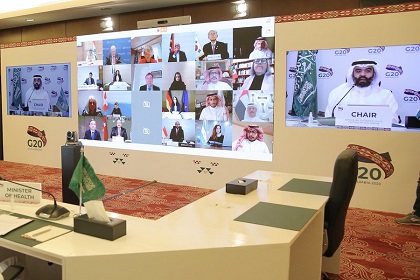
The G20 will prove vital in maintaining economic balance in the post-COVID world. The strains are many, but like the financial crisis of 2008, this could be a defining moment for its members to exercise delicate diplomacy to combat the challenges of COVID-19.
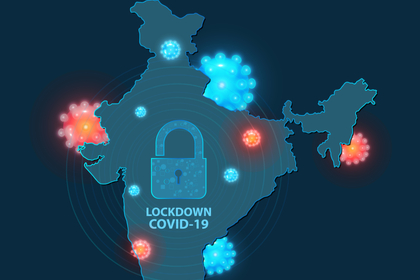
Over the last month, India’s Corona-diplomacy has been evident. The government’s two-point plan is to protect its citizens and help its neighbours and friends.
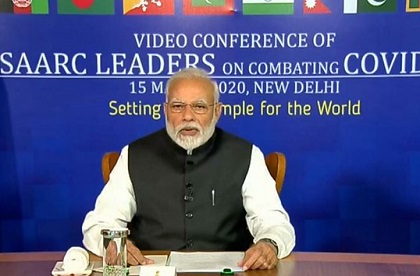
The first-ever virtual summit of leaders from member-states of the South Asian Association for Regional Cooperation on March 15 was an innovative exercise in showing solidarity in containing a pandemic. Here is an assessment of its tangible outcomes – and longer-term ways to prepare for SAARC’s revival
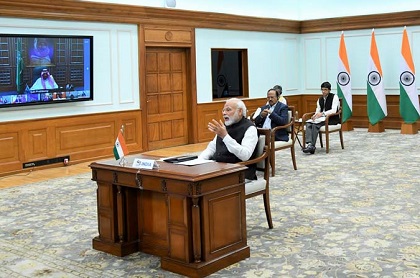
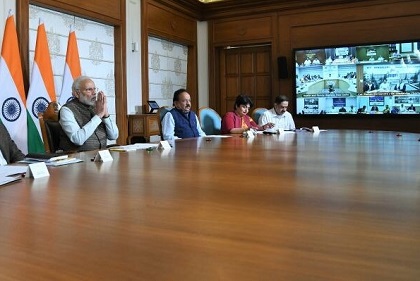
COVID-19 unified G20 leaders at an extraordinary summit last week. An idea given a nudge by Prime Minister Narendra Modi, here was an opportunity for all participants to put together a plan and make a pledge for international cooperation, focusing on four main themes. Next, will they be able to turn words into action?
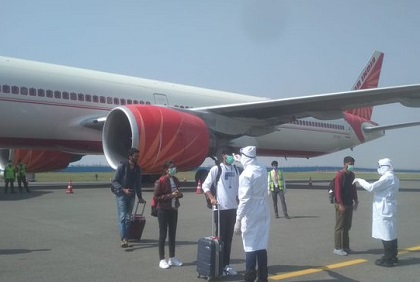
The Indian government, has, under challenging circumstances, evacuated, all through March 2020, nearly 3,000 Indian citizens, stranded in the hotspots of the coronavirus epidemic. These rescue operations, which have been performed adeptly since 1990, are a mark of a developed-country mindset with confidence-inspiring governance structures
The Coronavirus Disease (COVID-19), which has spread to more than 160 countries, is a global challenge, calling for coordinated intervention at the national, regional and global levels. Rajiv Bhatia, Distinguished Fellow, Gateway House, in this interview, outlines four aspects of the calamity