Sri Lanka PMD Courtesy: Sri Lanka PMD
20 November 2025

A Growth Budget for Sri Lanka

After a remarkable recovery from a very deep crisis in 2022, Sri Lanka’s recent budget for 2026 consolidates economic stabilisation and introduces a few markers for further growth. But more needs to be done to embed a growth strategy and transform its economy to avoid further IMF austerity programmes.

Website articles Courtesy: Warung Pintar
6 November 2025

Jakarta’s bet on India’s digital playbook

The currents shaping the relationship between the Indo-Pacific’s two largest democracies are not trade winds but terabits flowing through fiber-optic cables and the instant signals of digital payments. Jakarta and New Delhi are forging a landmark digital alliance—one that goes beyond technology. At the heart of this digital handshake lies the plan to link Indonesia’s BI-Fast with India’s Unified Payments Interface.

Gateway House Courtesy: Gateway House
3 July 2025

China Plus One and global supply chains

A slowdown of the Chinese economy, and the shift, particularly by MNCs, from China to other more competitive locations has opened up business opportunities for latecomers to supply chains in the developing world. Evidence suggests that Southeast Asia and some South Asian countries like India, Sri Lanka, Bangladesh, could be beneficiaries of the supply chain shift, particularly in labour-intensive segments.

Getty (1) Courtesy: Gateway House
15 May 2025

The New Geopolitics and South Asia’s Trade Architecture – What Next?

Geopolitics is increasingly intertwined with the economic destiny of South Asia. Even before the U.S. tariffs were rolled out, growing polycrises had hit the global economy, which has been struggling since the pandemic. South Asia seems a relatively bright spark of regional trade and growth. This paper analyses South Asia’s trade architecture in the backdrop of a sluggish world economy in the 2020s, and makes recommendations for closer regional economic integration.

PM Modi alongside other BIMSTEC leaders at 6th BIMSTEC Summit Courtesy: ANI
10 April 2025

BIMSTEC: Vision vs Reality

The 6th BIMSTEC Summit in Bangkok on April 4, 2025 saw progress for the organisation, such as the adoption of a ‘Vision 2030’ plan outlining its goals till 2030. In other areas, the grouping continues to lag. BIMSTEC must watch for potential challenges to its future as it seeks to bridge the gaps.

thediplomat_2024-03-25-060004 Courtesy: The Diplomat
2 January 2025

India’s foreign policy priorities in 2025

Managing ties with the U.S., China, Russia, and those within its South Asian neighbourhood will be India’s key foreign policy priorities in 2025. For India to be a principal player in the region and beyond, it must skillfully weave national security, economic, and diplomacy into its strategic calculations.

1_new0809c Courtesy:
10 October 2024

Unfolding Geopolitics, Episode 14 | India’s outreach in South Asia

The past week has been eventful for India’s Neighbourhood First policy, with the External Affairs Minister’s visit to Sri Lanka and the state visit of the President of Maldives to India. Rajiv Bhatia, Distinguished Fellow, Foreign Policy Studies, Gateway House and Amit Bhandari, Senior Fellow, Energy, Investments and Connectivity, Gateway House, analyse India’s regional outreach and recent economic and political changes in the subcontinent.

Screenshot 2024-08-27 134557 Courtesy:
29 August 2024

If you must win, you must make your partner country a winner too

Foreign policy in the 21st century is underpinned by economic issues, in contrast to the 20th century when global politics and security aspects dominated diplomacy. Dammu Ravi, Secretary (Economic Relations), Government of India, discusses Indian diplomacy and how it navigates the G7 and BRICS, the opportunities and challenges for strengthening the Neighbourhood First policy in South Asia, and the country’s evolving economic diplomacy.

Bangladesh-M-Yunus-Interim-Govt Courtesy:
15 August 2024

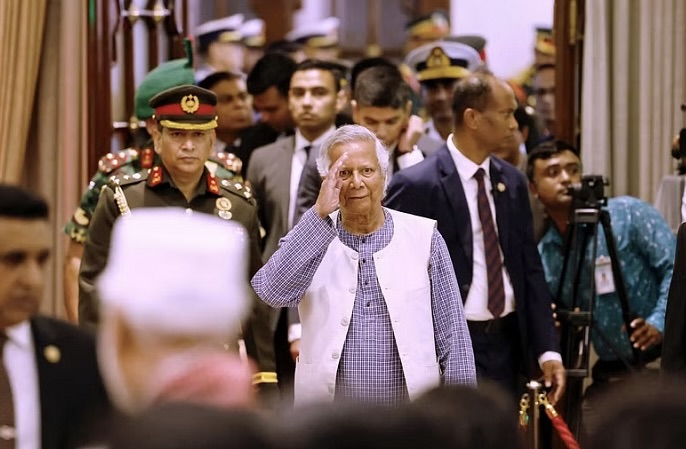
Stirring regime change in Bangladesh

The events of August 5 turned Bangladesh from a development model to unstable entity. A variety of players have been stirring trouble in the country, from within and without. Great powers and neighbours, NGOs and the diaspora, Islamist groups and armed forces. All these are entangled in the U.S.-China geopolitical rivalry that Bangladesh seems to be caught in.

Screenshot 2024-08-08 123844 Courtesy:
8 August 2024

Subcontinental upheaval

Sheikh Hasina’s recent ouster as the Prime Minister has highlighted the deep fissures in Bangladeshi society and pushed the subcontinent into political turbulence. Amb. Rajiv Bhatia, Distinguished Fellow for Foreign Policy Studies, Gateway House, speaks about the political, economic, and security implications the crisis in Bangladesh has for Indian foreign policy and geopolitics in the neighbourhood and beyond.