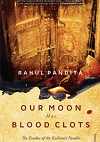
Book review: Our Moon Has Blood Clots
D. P. Satish in his review of Rahul Pandita’s latest book writes that it is a bold attempt at voicing despair about a nation that mouths lofty platitudes but does little to protect its persecuted communities.

 Courtesy:
D. P. Satish in his review of Rahul Pandita’s latest book writes that it is a bold attempt at voicing despair about a nation that mouths lofty platitudes but does little to protect its persecuted communities.
 Courtesy: Chanakyathegreat/WikimediaCommons
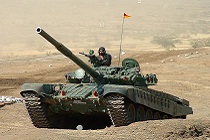
After each terror attack in india, there are strident demands for military action against Pakistan. ‘Surgical’ strikes and limited war in a bilateral nuclear age are not really options. What is needed is more decisive action on non-military fronts
 Courtesy: Matanya/WikimediaCommons
Since 2002, a large amount of U.S. funds flowing into Afghanistan has been diverted to the Taliban by local strongmen, resulting in a continued presence of the militia. The challenge post-2014 will be to reverse the West’s top-down strategy, creating a grassroots-driven incentive for peace and development.
 Courtesy:
India’s relations with Islamic nations, many of which are members of the Organisation of Islamic Cooperation (OIC), have become even more prolific over the last decade. While India does not visualise becoming a member of a religious international body, many reasons militate against our formally joining the OIC.
 Courtesy: Kukster/Flickr
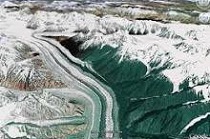
‘Sikkimisation’ is a term often used by the Chinese and Nepalese politicians to refer to India's purported Himalayan expansionism. However, Sikkim's economy has set an example that India's Himalayan neighbours would do well to follow, rather than deride
 Courtesy: WikimediaCommons
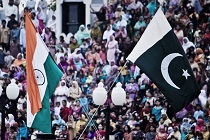
Pakistan’s recent violation of the ceasefire, by killing two Indian soldiers and beheading one of them, has triggered knee-jerk reactions by the government and armed forces, media frenzy, and public outcry. What makes this 60-year old problem tough to resolve, and how can those obstacles be overcome?
 Courtesy: Zach Zalium/Flickr
Pakistan's barbaric act of beheading an Indian soldier cannot be dealt in the same coin by a civilized country. A tactical, passive-aggressive response along a new front is the need of the hour.
 Courtesy: U.S. Department of Defense
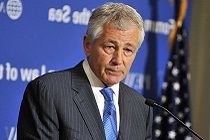
The nomination of Chuck Hagel for the post of the U.S. Defense Secretary has garnered severe criticism from Israel and the Jewish lobby. Given the geopolitical changes unfolding in the Middle East and the rest of Asia, what will Hagel’s assumption of office mean for Israel, India and the rest of the world?
 Courtesy: Officer/WikimediaCommons
U.S. Senator John Kerry will officially take office as the Secretary of State, later this month, replacing Hillary Clinton. Given his background of foreign policy, and his proven competency in related matters, what can India and South Asia look forward to, during his term in his new office?
 Courtesy: Shwkyn231/Flickr
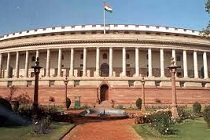
The year 2012 has been a busy one for foreign policy: from escalating disputes in the South China Sea to alternate financial instruments from the emerging world. India’s foreign policy too has its shown strengths and weaknesses. We present our top foreign policy Hotspots, Sweet spots and Blind spots for 2012.