Bhopal tragedy and the future
A tragic ‘anniversary’ this week drew attention to what it would take to ensure that the current excitement about ‘make in India’ becomes a boon and not a curse

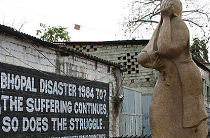 Courtesy: Luca Frediani/Wikimedia Commons
A tragic ‘anniversary’ this week drew attention to what it would take to ensure that the current excitement about ‘make in India’ becomes a boon and not a curse
2014 was celebrated as the year of India-China friendship with many joint high level diplomatic, defence and cultural events to strengthen relations. The cities of New Delhi and Mumbai will see the debut of the Chinese Kunqu Opera to mark the close of the year
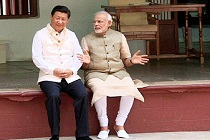 Courtesy: Narendra Modi (wikimedia.org)
A major theme at the multilateral summits this month was connectivity, with China at the forefront. India is trailing behind due to a shortfall in investment and political will, among other factors. Prime Minister Modi must follow up on his meetings at the SAARC Summit by robustly taking forward India’s connectivity agenda
 Courtesy: Andy Wong/AP/wired.com
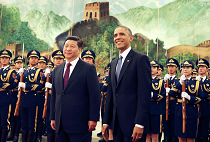
The U.S.-China deal on climate change and clean energy is too little too late. Instead of radical transformation, it is business-as-usual, setting a sub-standard benchmark for others to follow. Will the Indian government play within this framework, or challenge it?
 Courtesy: wikimedia
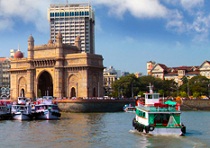
Globally, metropolitan cities are becoming powerful centres that sustain entire countries. In the case of Mumbai, the government can work backwards by stitching the infrastructure and governance together. The tried-and-tested technique is to host an international institution or event. Gateway House argues that Mumbai is most appropriate to be home to the headquarters of BRICS

Investors have welcomed the dilution in government regulations that currently require companies to seek the consent of local communities for industrial projects in tribal areas. We analyse the outcome of this development.
 Courtesy: newshence.com
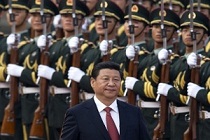
The reason behind a People’s Liberation Army (PLA) contingent intruding into eastern Ladakh around the time of Chinese President Xi Jinping’s visit to India, still needs to be decoded. It is not unlikely that domestic rivals, including possible ‘rogue’ elements within the PLA, could have decided to embarrass Xi — angry with his historic crackdown on corruption among Chinese officials
 Courtesy: Wikipedia
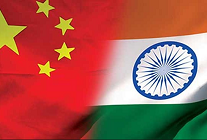
The trade deficit and border issues have usually overshadowed the public discourse between India and China. However, below this surface, bilateral business and financial engagement is growing. India will have to engage judiciously with China to ensure that the resulting geoeconomic benefits remain in our favour
 Courtesy:
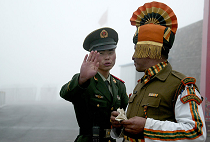
A lot was achieved in the economic arena during Chinese President Xi’s visit with China promising to invest $20 billion in India over the next five years. There is a possibility that the visit could be a game changer in the bilateral, but going by precedence India must pursue a policy of cautious optimism
Professor M.D. Nalapat, Director, Department of Geopolitics, Manipal University, talks about Chinese President Xi Jinping’s visit to India. In an interview to Gateway House, he predicts that the visit will bring in a great deal of investment and be a step towards overcoming the negativity in the relationship