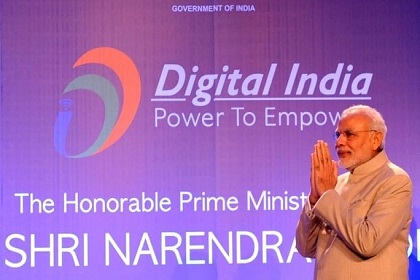
Narendra-Modi-Silicon-Valley-684x420 Courtesy: Twitter: Digital India Archives
19 May 2022

Digital public goods for the Indo-Pacific

With mass digitisation, India has proved that technology is not just for the educated, privileged, and wealthy. The country's open and secure digital public platforms can be significant for the Indo-Pacific, the world's most data-rich region. The Indian model is applicable because it is open-source, interoperable, auditable, and enshrines individual rights, ownership, and empowerment.
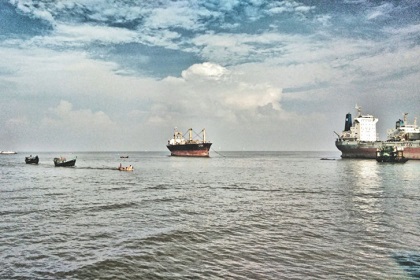
blue_economy Courtesy: Hossain Tareque-wikimedia commons
5 May 2022

A blue economy requires blue diplomacy

India has done considerable groundwork to turn into a blue economy nation through its maritime policies and active support of the Indian Ocean Rim Association. The time is right for the country to now focus on blue diplomacy, with an emphasis on maritime security and sustainable, equitable harnessing of maritime resources.

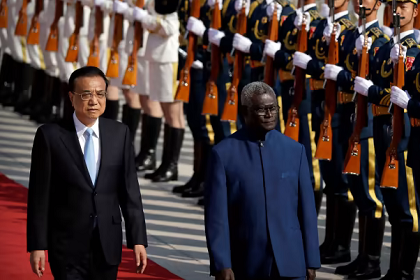
china-solomon Courtesy: Financial Times
21 April 2022

Economic and human security in the Indo-Pacific

China has established a dominant presence in the Indo-Pacific through exploitative economic engagements. This has destabilised smaller nations in the region and made them dependent on Chinese support. For a free and open Indo-Pacific, India must press its advantage in human and economic capacity building.

TDB_car_151021 Courtesy: TDB
24 February 2022

Enhancing Regional Financial Intermediation in the Indo-Pacific

Financial intermediaries are critical lubricants for business, growth and development. The Indo-Pacific countries are industrializing, but smaller nations lag behind economically. The Quad countries can aid the advancement of the financial architecture in the Indo-Pacific by helping to develop an ecosystem, modelled on the examples of Japan and India.

Bhatia article image Courtesy: Gateway House
17 February 2022

Has global geopolitics turned multipolar?

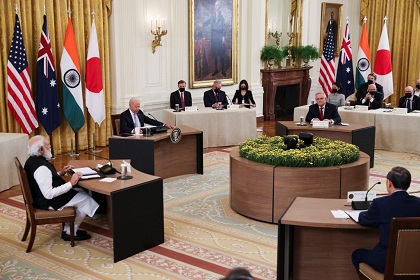
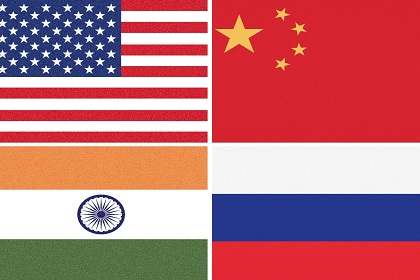
The Quad Foreign Ministers' meeting held on February 11 is the latest example of growing geopolitical cooperation. Several loci of power have emerged, indicating the end of the post-Cold War western hegemony. China's rise and alliance with Russia hints at a bipolar tendency in this nascent global multipolarity. India must ensure power distribution in Asia by sharpening its diplomacy to achieve its own interest - true multipolarity in Asia.

Untitled design (6) Courtesy: Gateway House
10 February 2022

Panel Discussion on India in the Indo-Pacific

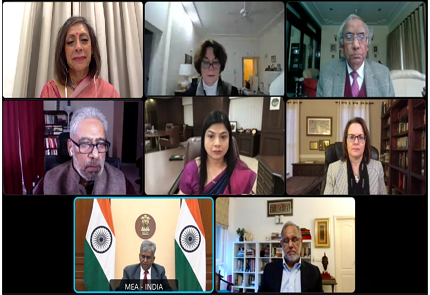
On 1 February 2022, Gateway House and the U.S. Embassy, New Delhi, co-hosted a panel discussion on India in the Indo-Pacific: Pursuing Prosperity and Security. The panelists explored the comprehensive role that India can play in the Indo-Pacific from the perspective of business, think tanks, academia and diplomacy.

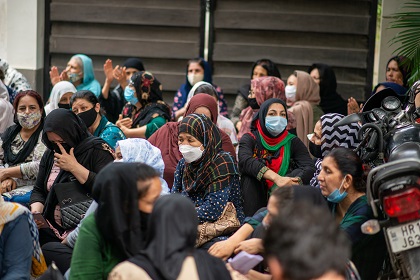
New,Delhi,,India-aug,24,2021:,Group,Of,Afghan,Women,Sitting Courtesy: Shutterstock
27 January 2022

Developing a balanced Indian refugee policy

India has seen a recent influx of refugees from Afghanistan and Myanmar. This has highlighted the absence of a concrete refugee policy in India. India must formalise its approach towards refugees. The Citizen Amendment Act of 2019, is a start. India can move this forward by learning from the examples of other democracies like the U.S., Kenya and South Korea, on how to balance international law with its national security interests.

Indian,Ocean,Military,Boat,Reunion,Island Courtesy: Shutterstock
20 January 2022

The Indo-Pacific opportunity in 2022

Nine great powers and a number of important multilaterals have vested interests in the Indo-Pacific. Given the U.S.-China standoff in the region, the role of new groupings like the Quad and AUKUS is significant. The time is ripe for India to use its position in the region, and convert its humanitarian duties into economic and strategic opportunities in 2022.