TPP Courtesy: ustr.gov
3 March 2016

A fine line: TPP and India

The Trans-Pacific Partnership has dropped strong Intellectual Property Rights regulations on India’s doorstep. The implications of these regulations could affect India’s own policies, as well as her global aspirations towards the potential Regional Comprehensive Economic Partnership.

maxresdefault Courtesy: Youtube
4 February 2016

The world in 2016

The world has witnessed a number of upheavals in the past few years, precipitating widespread global political turbulence stemming from geo-economic instability. Over the next couple of months, Gateway House experts will attempt to deconstruct these events and how India and its foreign policy can work to take advantage of these trends.

TPP Courtesy: ustr.gov
26 November 2015

TPP & ISDS: new tests for India

The U.S.-driven Trans Pacific Partnership agreement between 12 countries, which is aiming to become the new standard of world trade, impacts domestic systems globally. For India, it will skew investment and intellectual property rights, and especially the debate over the Investor State Dispute System which allows companies to challenge sovereign rights and public policy.

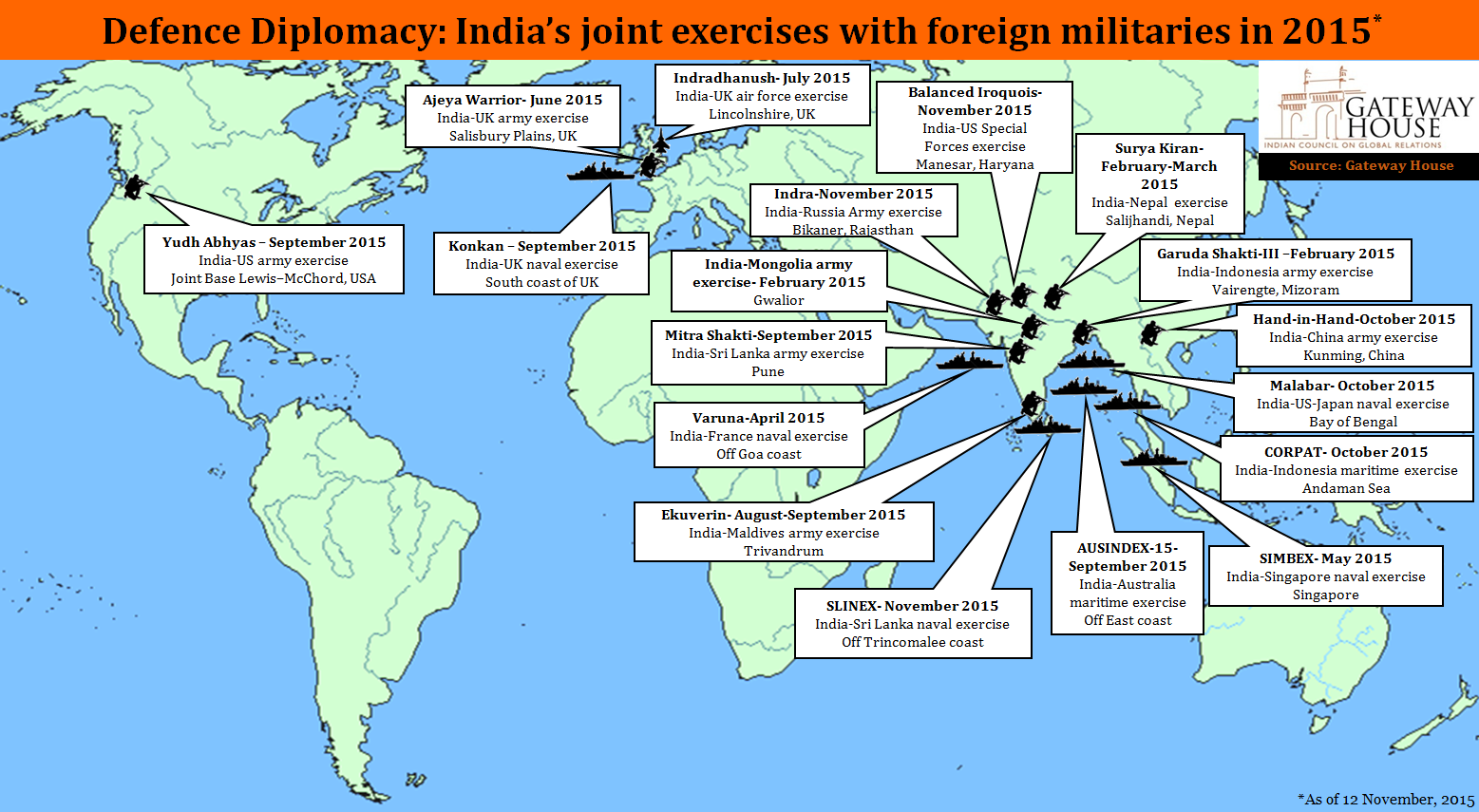
This year, India's defence diplomacy has ramped up. In 2015 alone there have been 18 military exercises- naval, army and air force- with 13 countries, among the largest engagements the country has had. Most significant is Japan joining the Malabar exercises in the Bay of Bengal and the first-ever maritime exercise with Australia. This is increasing India's presence from the Arabian Sea to the Bay of Bengal. As these exercises intensify India will be better positioned to handle regional security challenges. Courtesy:
12 November 2015

India’s defence diplomacy

This year, India's defence diplomacy has ramped up. In 2015 alone there have been 18 military exercises- naval, army and air force- with 13 countries, among the largest engagements the country has had. Most significant is Japan joining the Malabar exercises in the Bay of Bengal and the first-ever maritime exercise with Australia. This is increasing India's presence from the Arabian Sea to the Bay of Bengal. As these exercises intensify India will be better positioned to handle regional security challenges.

Backlit keyboard Courtesy: Wikipedia
21 October 2015

U.S.-China: no more spy games?

The recent U.S. and China agreement to contain cyber espionage will not only impact their bilateral relationship, it will also create norms in international cyberspace. But implementation remains a challenge, and businesses, including in India, that have faced cyber threats must proactively plug their vulnerabilities

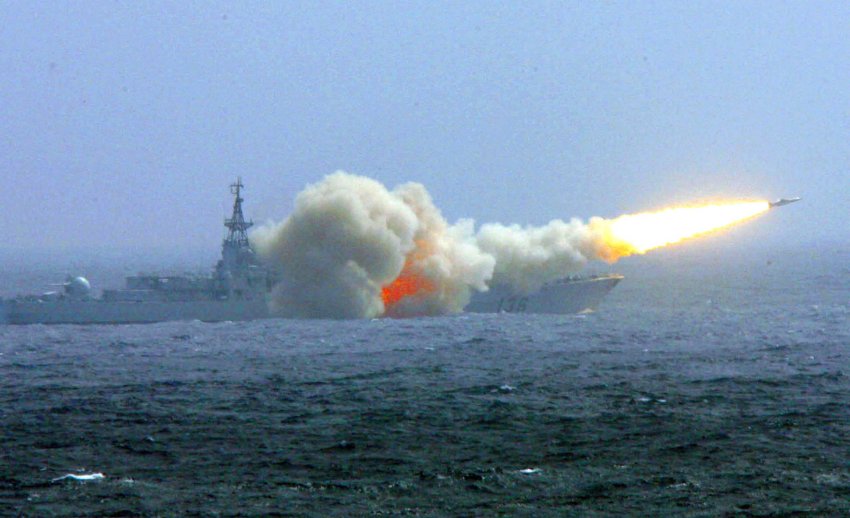
In this photo released by China's Xinhua news agency, a destroyer of the South China Sea Fleet of the Chinese Navy fire a missile during a traning in South China Sea on Saturday, Nov. 17, 2007. Dozen of warships of the South China Sea Fleet were deployed in the competitive training to improve combat capability of the fleet, Xinhua said.  (AP Photo/Xinhua, Zha Chunming) Courtesy: India Strategic
16 July 2015

Military strategies collide in the Asia-Pacific

The recent re-evaluation by the US, China, Japan, and Russia of their military strategies reflects new geopolitical equations in which the Asia Pacific is a major strategic intersection. Turmoil in this region can impact India’s trade and security interests, and to avoid this India must craft a balance between its relations with all the countries involved

Leaders_of_TPP_member_states- wikipedia Courtesy: Wikipedia
20 May 2015

TPP and RCEP: the hare and the tortoise?

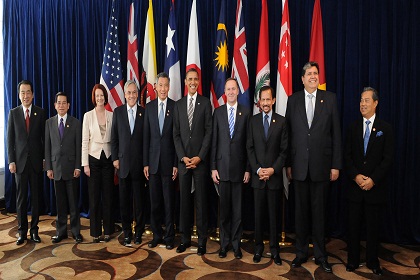
The Trans-Pacific Partnership might soon be concluded if the U.S. Congress fast-tracks it, as recently announced, while the Regional Comprehensive Economic Partnership Agreement remains on slow-track. But the TPP, although ambitious, follows an outdated template, and it is the dynamic RCEP that can be a model for a new global rules-based framework

P5+1 Talks With Iran in Geneva, Switzerland Courtesy: U.S. State department/Flickr
6 April 2015

The end of the Iran nuclear journey?

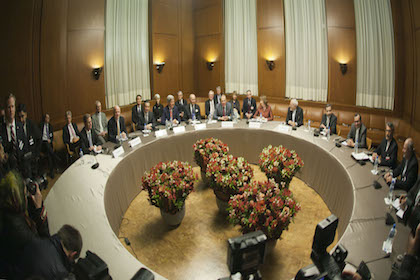
With the EU, Iran, and other entities taking decisive steps on April 2 to ensure a non-nuclear Iran, President Obama must now counter interests in the U.S. that want to stymie the final agreement. But having come this far, and considering the comprehensive benefits of an agreement, all sides are sure to deliver