Passage to India
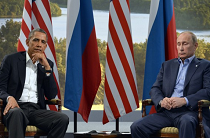
Prime Minister Modi's prompt acceptance of President Obama's invitation to meet him in Washington shows his clear intent to jump-start India-U.S. relations which gives Obama a unique opportunity to reciprocate

 Courtesy: Foreign Affairs
Prime Minister Modi's prompt acceptance of President Obama's invitation to meet him in Washington shows his clear intent to jump-start India-U.S. relations which gives Obama a unique opportunity to reciprocate
 Courtesy: U.S. Staff Sergeant Aaron Allmon
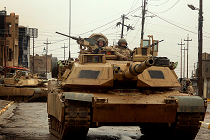
Obama’s strategy to target the IS in Syria within the framework of a U.S.-led international coalition has met with a tepid response. There are reports that the U.S may offer India a non-NATO ally status during Modi’s upcoming visit in a bid to seek greater support – a gesture that India will do well to disregard.
 Courtesy: Gateway House
Indian prime minister Narendra Modi's landmark visit to the U.S. in September 2014 was followed by U.S. President Barack Obama's historic visit to India this month. Anticipating a renewed partnership between the two countries, Gateway House, presents a research paper titled ‘The India-U.S. Partnership: $1 Trillion by 2030’ that advocates a different path for the India-U.S. bilateral from all others, one that will help deepen economic relationship with the U.S.
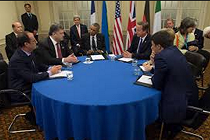
Neelam Deo, Director, Gateway House, talks about the significance of the position taken by NATO member countries at the recent summit in Wales. She says the increasingly acrimonious standoff between the West and Russia over Ukraine, and the stance on the Islamic State has implications for India.
 Courtesy:
Contrary to some current commentary, NATO has remained relevant after the post-Cold War period, largely due to the perceptions it still engenders. While its symbolic power still endures, a rapidly changing international order could make it obsolete in the near future, as new narratives take its place.
 Courtesy: wikimedia commons
Brazilian president Dilma Rouseff's bid for re-election has been ambushed in just two weeks by activist Marina Silva who is now predicted to win the October elections. If elected, Marina is likely to continue with the pro-poor policies of the current government, and she has already shown a keen interest in foreign policy. PM Modi will find Marina more proactive and forthcoming than Rouseff
 Courtesy: fcpamericas.com
The credit for significant poverty reduction achieved in the last decade in Latin America goes to the pro-poor policies of the leftist governments. The Left is expected to be voted back to power in the October elections to be held in Brazil, Uruguay and Bolivia. The increase in affordability power is good news for the Indian companies who are exporting goods to the region
 Courtesy: wikimedia
The Argentines blame the 'Washington Consensus' for the default in 2001, and the New York judiciary and vulture funds for the 'artificial default' in July this year. These are challenges not just for Argentina; they endanger the global debt restructuring system and contradict U.S. domestic laws
 Courtesy: Gateway House
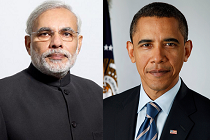
The Modi-Obama meet in Washington will be crucial to take the India-U.S. bilateral forward. The meet will test the commitment of both administrations and hence the dialogue must focus on deliverables such as defence co-operation and LNG exports to create a roadmap for concrete progress
 Courtesy: Owlpacino
Although the histories, levels of economic development, and critical issues of India and the U.S. are different, the confrontational party politics in their political systems pose similar challenges. Both countries can learn from the experience of federalism of the other to take their national agendas forward