India: up-and-down on Pakistan
The U.S., post-9/11, has made large strides with their homeland security. In contrast, what has India done to counter terrorism? How have Indo-Pakistan relations unfolded?

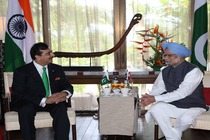 Courtesy: Ministry of External Affairs, Government of India
The U.S., post-9/11, has made large strides with their homeland security. In contrast, what has India done to counter terrorism? How have Indo-Pakistan relations unfolded?
 Courtesy: Chairman of the Joint Chiefs of Staff/Flickr
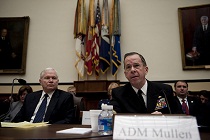
The 'double-dealing' of the U.S. and Pakistani army - all with the ambition of military dominance - has significantly aided various terrorist groups. After 26/11, there is no place to hide for the Mike Mullens and countless others who have been apologists for the Pakistan army and the state it controls.
 Courtesy: Kash_if/Flickr
In the aftermath of the Mumbai attacks, the Pakstani deep state role was highlighted. The U.S. has come to realise this reality too. Bilateral information sharing could prove to be vital to combat terrorism - both regionally and globally.
 Courtesy: isafmedia/Flickr
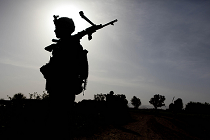
Last May, U.S. citizen David Headley confessed to being a spy for the Lashkar-e-Taiba. What no one has tackled yet is whether there are other Headleys out there whose actions threaten India, or any other country. Even with thousands of intelligence agencies scouting for terrorist activities, are we really safer?
 Courtesy: PMO
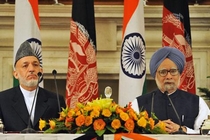
NATO’s poor strategy in Afghanistan has failed to quell the Taliban. Now, India will begin to train the Afghani military, and has proven with its light force tactics in Kashmir that it is better suited for the role than NATO forces.
 Courtesy: PMO
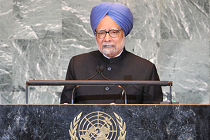
Indian Prime Minister Manmohan Singh’s speech at the UN General Assembly has put Indian perceptions on the record and clearly outlined India’s independent foreign policy. India came out unequivocally in support of the Palestinian struggle & reiterated its traditional stance of respecting countries’ sovereignty.
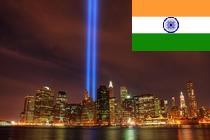
Although the U.S. has not faced another terrorist attack since 9/11, much has changed in its democratic framework. Gripped by fear, 3,984 federal, state and local organizations work on domestic counter-terrorism, spending an estimated $1 trillion.
 Courtesy: WTCTributeinLight/WikimediaCommons
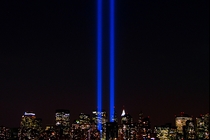
A change has come about after 9/11: the ideologies grouped as “Al Qaeda” has morphed, from a group directed by a few individuals, it is now disaggregated. Due to this change, NATO is empowering it's future foes in the Arab world by its continued belief in the camouflaged jihadis.
 Courtesy: Scott Hudson/Flickr
India's security concerns seem to grow weaker by the year. The dangerous political polarity, a paralysed ruling coalition, a fractured opposition, a popular distaste for a corrupt polity and complicit bureaucracy, and a slowing economy, has handicapped any progress towards this issue.
 Courtesy: Gateway House
Gateway House has prepared a report analysing the security system in the U.S. post 9/11, its implications on the world as we knew it, and the lessons to be learnt by India.