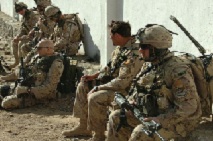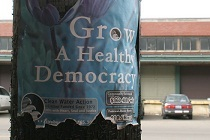
Are political parties failing democracy Courtesy: Somenametoforget/Flickr
12 April 2013

Are political parties failing democracy?

Conventional political parties around the world seem to be on the decline, and there are common factors too – precarious economies and a leaching of ideology, for example. How can countries achieve grassroots empowerment in their village republics, and those of ordinary citizens the world over?
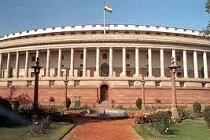
parliament Courtesy: Shwkyn231/Flickr
31 December 2012

India’s foreign policy: A year in review

The year 2012 has been a busy one for foreign policy: from escalating disputes in the South China Sea to alternate financial instruments from the emerging world. India’s foreign policy too has its shown strengths and weaknesses. We present our top foreign policy Hotspots, Sweet spots and Blind spots for 2012.

green africa Courtesy: trendscout::/Flickr
4 October 2012

A Green Agenda for Africa

All the major economic forces in the world have come together in Africa in a new version of the Great Game. The competition for the continent’s resources will ultimately harm Africa unless Africa uses this opportunity to its advantage and to address its own serious problems.

Courtesy: FREEDOM HOUSE2/FLICKR
24 August 2012

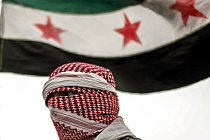
Syria: What next?

With the Free Syrian Army being supplied aid by the West and the Gulf Cooperation Council countries, the endgame for the Syrian regime has begun. Does Assad's exit guarantee the replacement of autocracy with democracy? What implications will it have on regional politics?

Global Stability Map Courtesy: Gateway House
1 August 2012

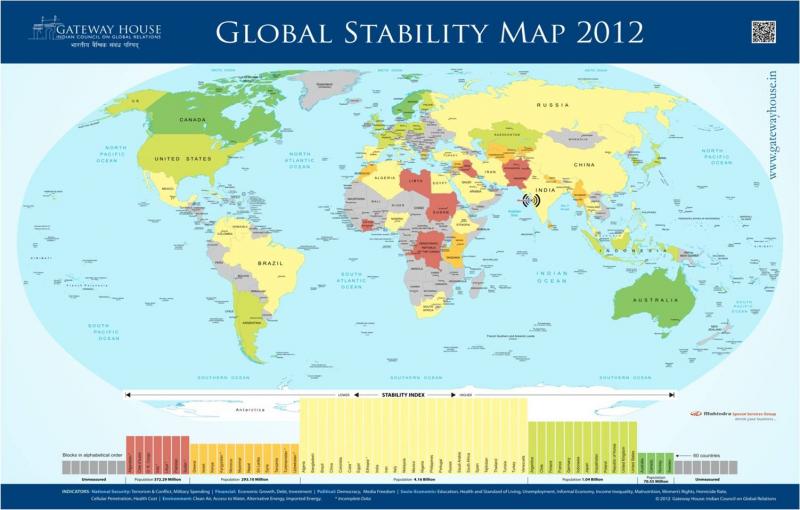
Global Stability Map 2012

Gateway House prepared a Global Stability Map, using 20 differing indicators, to analyze the stability of 60 countries around the world. Using criteria that are important to the emerging economies of the world, the map provides an Indian perspective of the world today.

wall street 2 Courtesy: Fletcher6/WikimediaCommons
23 July 2012

The shadow of LIBORgate

As the revelations pile up after the LIBOR rigging incident, it seems Europe and Britain are more committed to enforcement action than America. Real conservatives believe fully in market capitalism, that prices must come from uncorrupted market signals. Could this start a sea-change for enforcement globally?

xerxes china Courtesy: Ministry of Defence, India
12 July 2012

The spectre of China

Though India may seem to be mirroring or competing with China’s military build-up, it doesn't seem to be doing so in consonance with a long-term plan. New Delhi would be better served by avoiding an arms race; staying away from the U.S.-China rivalry and fostering stronger relations with its immediate neighbours.

Neelam on Syria Courtesy: FreedomHouse2/Flickr
6 July 2012

The unique tragedy of Syria

Simultaneous efforts to resolve the problem in Syria remain stymied even as more and more high level meetings and consultations take place. The more countries treat the situation as a proxy for political differences, the more it creates the conditions for a wider conflagration with an unpredictable outcome.

debnath shaw Courtesy: Gateway House
5 July 2012

“Russia still dominates Central Asia”

Though some countries like Russia gained a strong foothold in Central Asia and the Caucasus post-1991, India has been a late-comer. Gateway House interviews former Ambassador to Azerbaijan Debnath Shaw to discuss India’s energy interests in the region, the Shanghai Cooperation Organization and the TAPI pipeline.

NATO afghan Courtesy: Open Democracy
18 June 2012

The return of the Pashtun problem and NATO withdrawal from Afghanistan in 2014

The NATO withdrawal from Afghanistan in 2014 should be done tactically so that it doesn't destabilize Pakistan. Despite having accepted Pakistani help in the past, the Taliban might empathize with Pakistani Pashtuns and spread the very secessionist tendencies which Pakistan’s Afghan policy was designed to prevent.