Joe Biden_final Courtesy: Tim Willasey-Wilsey
31 August 2020

Biden’s ancestral Chennai connect

U.S. presidential candidate Joe Biden has an ancestral connect with India, as does his vice-presidential nominee Kamala Harris, both tracing it back to Chennai, then Madras. During the 19th century, brothers Christopher and William Biden worked for the East India company, taking the rather arduous ship route between London and India. While William died at an early age, Christopher went on to Captain several ships during his service and eventually settled down to a prosperous life in Madras.
shutterstock_777026497 Courtesy: Shutterstock
13 August 2020

We own your Face!

Facial recognition technology has emerged as an important identification tool. Big tech, social media companies and governments around the world use it and hold an unprecedented power over individuals and communities. Its use for surveillance purposes has brought it under public scrutiny. The technology has still not been perfected. Is it really ready for adoption?

shutterstock_1752673730 Courtesy: Shutterstock
30 July 2020

A New World for India and the United States

The recent rush of U.S. capital into India’s digital future, and India’s recent structural reforms, is the impetus for an attractive collaboration between the U.S. and India. To really succeed, the U.S. will have to support India with the same kind of technical assistance and best practices in areas like regulation, distribution, and innovation, that it gave China. The alternative is for India to follow Europe’s regulatory model, which places less of an emphasis on job growth and innovation.

RB_1 Courtesy: B20 Saudi Arabia/Twitter
23 July 2020

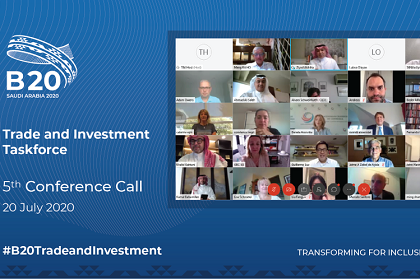
The B20: Riyadh and beyond

The COVID crisis compelled a change in the Business20 (B20) focus areas to reviving health, health facilities and business activity in 2020. India must start work now to give the B20 even greater responsiveness and relevance as the prospective G20 chair in 2022.

QUAD Courtesy: Shutterstock/Gateway House
18 June 2020

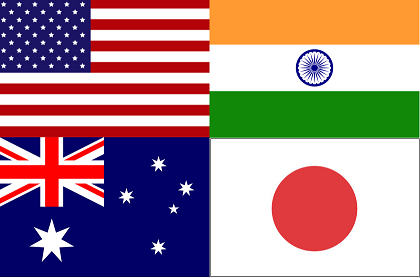
Quad, China and the Indo-Pacific churn

China’s escalating actions in the wake of the COVID-19 catastrophe is a calculated strategic diversion and risk. In the Indo-Pacific, tensions between China and the U.S., Australia, India and others are building momentum. As a geopolitical partnership, the relevance of the Quad is now proven. There are clear ways to empower it immediately, and make it a resilient grouping.

CG-Final Courtesy: rawpixel
4 June 2020

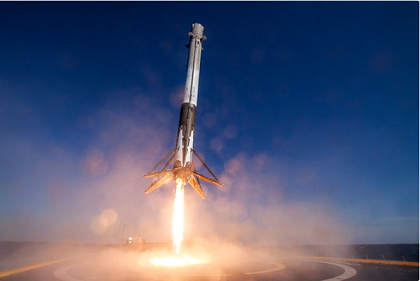
Can ISRO do what SpaceX did?

The launch of the U.S.’s Dragon-2 astronaut capsule by SpaceX has a resonance in India too. India’s future heavy-lift launchers, already under development, can be competitive if they are transformed to Two-Stage-To-Orbit and made reusable. The successors to Gaganyaan, Chandrayaan and Mangalyaan, developed in public-private partnerships, can result in a vast domestic launch market for India’s heavy-lift rocket capability.

shutterstock_132894758 Courtesy: Shutterstock
25 May 2020

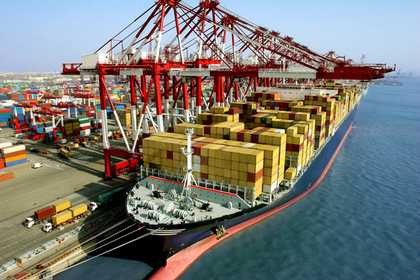
Globalisation: good-bye to the hype

Globalisation has resulted in the interdependence of nations through the largely unimpeded transmission of investment capital and information, and integrated business operations. The leading beneficiaries have been the global 1%, and China. While it is too late and not possible to roll back an interconnected world order, globalization as we know it will recede, as will China’s standing in the world.

G20 Courtesy: Ministry of External Affairs
2 April 2020

The action imperative for G20

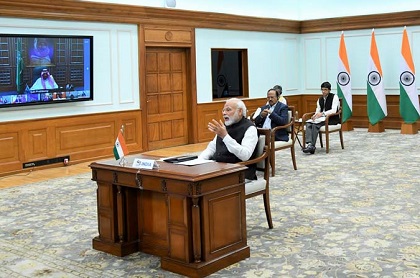
COVID-19 unified G20 leaders at an extraordinary summit last week. An idea given a nudge by Prime Minister Narendra Modi, here was an opportunity for all participants to put together a plan and make a pledge for international cooperation, focusing on four main themes. Next, will they be able to turn words into action?

shutterstock_1469502182 Courtesy: Shutterstock
27 February 2020

India-U.S. shale oil opportunity

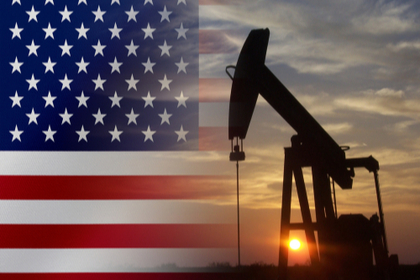
U.S. President Donald Trump's recent visit to India gave a boost to bilateral energy ties. To really benefit, India’s state-owned oil companies should consider investing in U.S. shale oil. The U.S. is politically and economically stable and investors are not subject to arbitrary action. Indian companies should only be financial investors, not operators of assets, and bet on companies with manageable debt and efficient operations rather than short-term winners