1495825684-DSC_5150 Courtesy: GLOBSEC
1 June 2017

Ignoring the writing on the wall

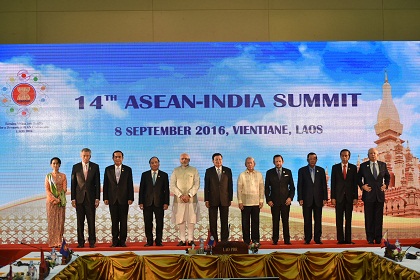
An annual important networking occasion for security experts, the GLOBSEC 2017 Bratislava Forum, had surprisingly little representation from major European countries, such as Germany and France. Russia’s misuse of cyberspace was loudly censured, but Chinese activity in the South China Sea, and the recently concluded Belt and Road Forum received little attention
IORA photo Courtesy: Gateway House
25 May 2017

Indian Ocean Rim Association Senior Officials Meeting

This speech was delivered by Rajiv Bhatia, Distinguished Fellow, Foreign Policy Studies, Gateway House and Chair, FICCI Task Force on Blue Economy, at the Indian Ocean Rim Association Senior Officials Meeting in Jakarta

Wana_Decrypt0r_screenshot Courtesy: Wikimedia Commons
17 May 2017

Ransomware attack: keeping cyberspace safe

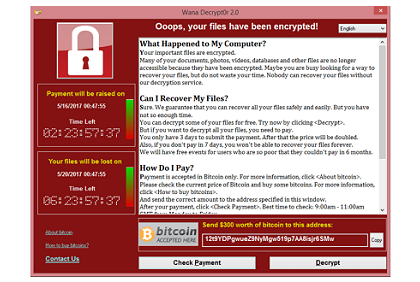
Critical infrastructure–like healthcare or the financial services industry–makes for ransomware’s favourite prey, and nation-states must unite to respond suitably to the anarchy that can be unleashed by another attack, like WannaCry

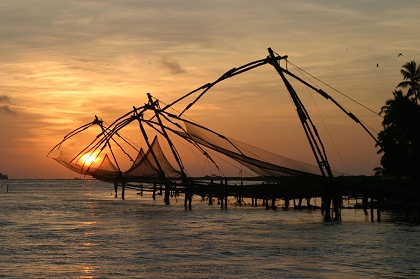
Chinese_Fishing_Nets_Cochin Courtesy: Wikimedia Commons
5 May 2017

Keeping maritime Asia on course

The Oceans Dialogue 2017, held last month in Thiruvananthapuram, devoted itself to aspects of ocean governance, such as security management, combating terrorism, depletion of marine resources and providing disaster relief, serving as a precursor to the UN General Assembly’s Ocean Conference in June

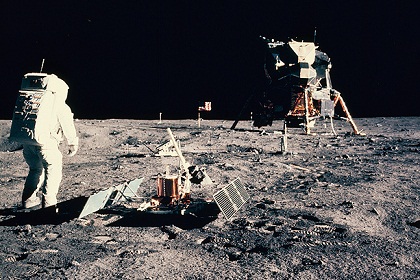
moon-rocks-615 Courtesy: ngm.nationalgeographic
28 April 2017

Looking for Helium-3: a futile moonwalk?

New Delhi’s space policy makers have been promoting the possibility of deriving Helium-3 from the Moon for Earth-based applications for over a decade—but it is not a viable proposition and it’s time they stopped placing the cart before the horse

IORA photo Courtesy: Gateway House
2 March 2017

IORA summit: sharing commonalities

The two decade-old Indian Ocean Rim Association holds its first ever summit next week. Maritime safety and security in the region is a paramount concern as also enhanced trade, but will the Blue Economy be included as a priority? Another area of concern is devising modalities for cooperation with dialogue partners, such as the United States, China and Japan

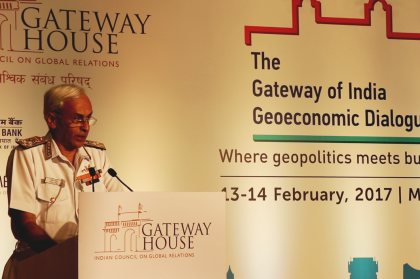
CNS At GOIGD Courtesy: Gateway House
16 February 2017

GOIGD 2017: Special Address by Admiral Sunil Lanba

Admiral Sunil Lanba, Chief of Naval Staff, Indian Navy delivered the Special Address on 'Indo-Pacific: Possibilities and Portents' at India’s second Gateway of India Geoeconomic Dialogue conference in Mumbai, organised in association with the Ministry of External Affairs.

28912263963_0b75893744_h Courtesy: MEA/ Flickr
14 February 2017

Indo-Pacific: a scenario of possibilities

The Indo-Pacific region is home to some of the largest and most rapidly growing economies as also powerful military forces. Nuclear threats, international terrorism and climate change are some of the issues that define the region. Uncertainty dogs relations among the four nations in the top league—U.S., China, India and Japan—but what is emerging is a hawkish, policy stance from the U.S. as opposed to an isolationist outlook apprehended earlier

1200px-Malabar_07-2_exercise Courtesy: Wikipedia
14 February 2017

A democratic quadrilateral in Asia?

A strategic coming together of the U.S., Japan, Australia, and India was close to fruition some years ago, impelled initially by the tsunami of 2004. The spirit of the enterprise remains alive even now, and there are many merits in India joining the quad, but such an arrangement can skew existing Asian equations, jeopardising the Act East policy