Book review: Brazil’s guided capitalism
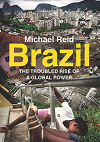
Michael Reid's book argues that Brazil, a nation that was built by a top-down elite, is now moving to a new phase of a bottom-up approach to political and economic reform

 Courtesy: Yale University Press
Michael Reid's book argues that Brazil, a nation that was built by a top-down elite, is now moving to a new phase of a bottom-up approach to political and economic reform
 Courtesy: Newscom.com
The reelection of President Dilma Rousseff means continuation of the slow growth of the Brazilian economy and a lower likelihood of much-needed, major political and economic reforms. India should lower its expectations on a global partnership with Brazil
The Green Party in Brazil is a small but significant presence, whose ideas of reform and conservation are gaining wider acceptance. In this interview, Eduardo Jorge, the party’s leader, discusses what BRICS represents, his views on India, and the response of governments and business to climate change
 Courtesy: wikimedia
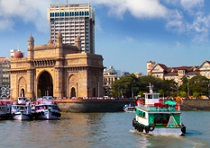
Globally, metropolitan cities are becoming powerful centres that sustain entire countries. In the case of Mumbai, the government can work backwards by stitching the infrastructure and governance together. The tried-and-tested technique is to host an international institution or event. Gateway House argues that Mumbai is most appropriate to be home to the headquarters of BRICS

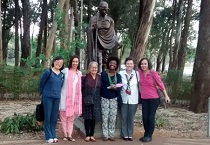
Rajni Bakshi, Senior Gandhi Peace Fellow at Gateway House, was recently invited to Brazil and Colombia to speak about Gandhi, her book ‘Bazaars, Conversations and Freedom’ and her forthcoming paper on Trusteeship. She reports on the longing for non-violence in these societies and the groups working to make it real
 Courtesy: RajniBakshi
Rajni Bakshi, Senior Gandhi Peace Fellow at Gateway House, was recently invited to Brazil and Colombia to speak about Gandhi, her book ‘Bazaars, Conversations and Freedom’ and her forthcoming paper on Trusteeship. She reports on the longing for non-violence in these societies and the groups working to make it real
 Courtesy: Wikimedia
Since none of the candidates won the required 50% majority in the Brazilian presidential elections held October 5, there will be a second round on October 26 between the centre-left President Dilma Rouseff and centre-right Aecio Neves. As of now, polls predict a Rouseff win - but like India, the Brazilian electorate is known for throwing up surprises
 Courtesy: wikimedia commons
Brazilian president Dilma Rouseff's bid for re-election has been ambushed in just two weeks by activist Marina Silva who is now predicted to win the October elections. If elected, Marina is likely to continue with the pro-poor policies of the current government, and she has already shown a keen interest in foreign policy. PM Modi will find Marina more proactive and forthcoming than Rouseff
 Courtesy: fcpamericas.com
The credit for significant poverty reduction achieved in the last decade in Latin America goes to the pro-poor policies of the leftist governments. The Left is expected to be voted back to power in the October elections to be held in Brazil, Uruguay and Bolivia. The increase in affordability power is good news for the Indian companies who are exporting goods to the region
 Courtesy: wikimedia\commons
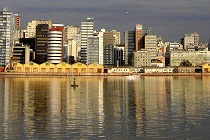
Brazil follows a more decentralised form of federalism and gives special importance to the municipalities. Porto Alegre’s successful 'participatory budgeting' is a role model for the world. India can learn from both the positive and negative aspects of the Brazilian system