Gateway House and FLAME University launch pioneering ‘Public Policy Lab’ in India
Gateway House and FLAME University have partnered to launch The Gateway House - FLAME Policy Lab

 Courtesy:
Gateway House and FLAME University have partnered to launch The Gateway House - FLAME Policy Lab
 Courtesy: Shutterstock
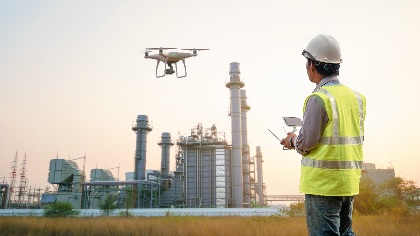
Drones have become vital to the operations of many industries and government organisations across the world. With huge economic opportunity to be derived from the use, manufacture and sale of drones, the Indian government must refine policy and address regulatory lacunae to help boost both technology adoption and drone manufacture in India.
 Courtesy: Shutterstock
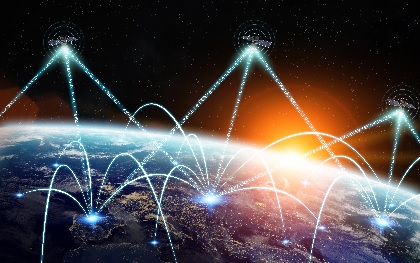
The maturing private space sector in the U.S. has learned to raise money from the market in the form of sectoral equity-traded funds. Such financing mechanisms will keep the U.S. ahead in the global space economy, which is slated to grow manifold from $430 billion now to $4 trillion by 2040. India's fledgling private space ecosystem, financiers, and stock exchanges can learn from the U.S. and do the same for India's newly reformed private space sector.
 Courtesy: Shutterstock
On February 1, the Myanmar army seized power, turning a partial democracy into a full-fledged military rule, once again. Whenever democracy suffers, India feels concerned. However, New Delhi is committed to the policy of non-interference in another state’s internal affairs. It is also guided by its national interest and will astutely balance principles, values, interests, and geopolitical realities.
 Courtesy: Wikimedia commons & gloriabyculla.wordpress
On 21 January, the Bombay Stock Exchange index crossed the 50,000 mark – the first-ever in its 146-year history. A similar stock market boom occurred in 1863. It was led by the city’s legendary stock-bullion-cotton broker, Premchund Roychand. Unlike today’s Bad Boy Billionaires, Roychand settled all his dues after which he earned back his fortune. Well-known as the sole donor of Mumbai University’s Rajabai Clock Tower, he not only met all pending philanthropic commitments made before the 1865 crash but continued giving more.
 Courtesy: Shutterstock
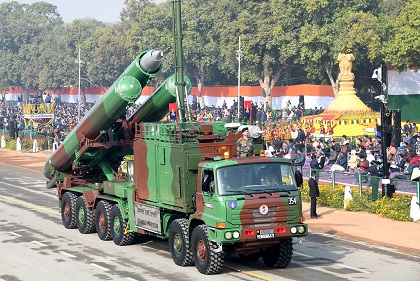
The Union Budget for FY 2021-22 is due next week. ‘Aatmanirbhar Bharat’ and the continuing stalemate with China in Ladakh will guide Finance Minister Nirmala Sitharaman to allocate financial resources for the defence sector. How will she cater to the defence services’ expectations? Will she unveil special measures to further ‘Make in India’ in defence? Listen to defence expert Dr. Bhartendu Kumar Singh, in conversation with Sameer Patil, Fellow, International Security Studies Programme, to know how the budget will shape India’s mission to achieve self-reliance in defence-industrial capabilities
 Courtesy: Shutterstock
The Jan 26 riots by the protesting Punjab farmers, is a set back both to the reform of India's domestic agriculture sector, and to the country's external agriculture trade. Nevertheless, willing farmers and communities can improve their engagement with the market, start inter-state trade, and build the farming infrastructure necessary to prepare for a fully free agriculture market. This will ready India to fulfil its commitments and find its rightful place in the international trade system.
 Courtesy: Foreign Affairs
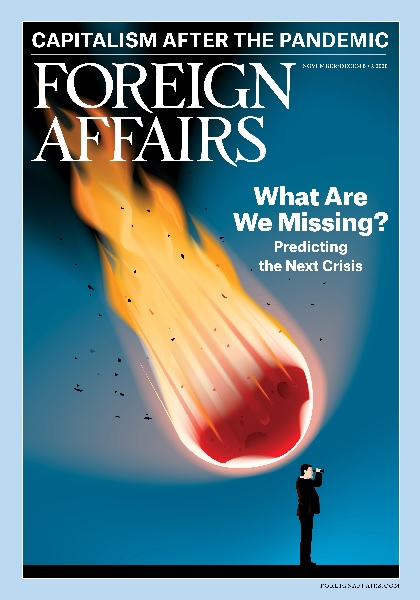
A yawning gap has opened up between what countries know about the risks of climate change and what they are doing to reduce them. In the riskier new era of climate change, the longer countries take to close that gap, the more painful and deadly the outcomes.
 Courtesy: Shutterstock
Social media platforms such as Twitter and Facebook have come under global scrutiny in recent months following their use to incite or misinform the public. For years, governments around the democratic world have not taken the responsibility to adequately regulate these platforms. Now that may be changing – and it won’t be easy.
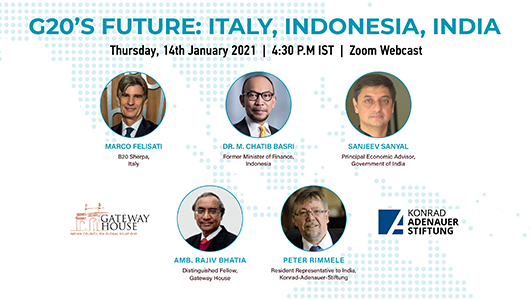
On January 14, 2021, Gateway House co-hosted a webinar with Konrad-Adenauer-Stiftung on G20’s future: Italy, Indonesia, India. The panel included Marco Felisati, B20 Sherpa, Italy, Dr. M Chatib Basri, Former Minister of Finance, Indonesia, and Sanjeev Sanyal, Principal Economic Advisor, Government of India.