shutterstock_301382870 Courtesy: Shutterstock
26 December 2019

Building an India-owned merchant fleet

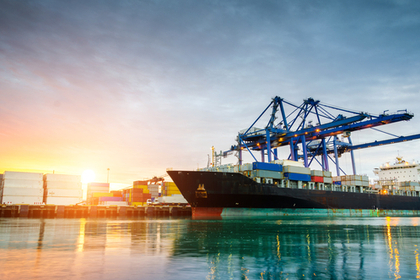
India needs its own merchant fleet to run parallel with its increasingly strong navy. The geopolitical and geoeconomic compulsions have never been greater. India’s growing imports and exports of crude oil, LPG, and coal are all carried on foreign-owned shipping vessels, depriving the country of revenue and creating a geopolitical imbalance with an increasingly strong Indian navy that is set to play a significant role in the Indo-Pacific

49140660266_899f513af1_c Courtesy: MEA/Flickr
19 December 2019

Reset in India-Sri Lanka relations

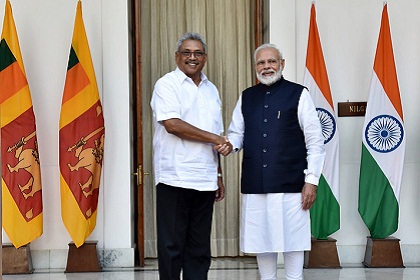
Relations between India and Sri Lanka are set to change. The expeditious manner in which the Indian external affairs minister met the newly elected Sri Lankan president, who reciprocated by making India the first foreign country he visited, raises hopes. An analysis of the factors that impede and facilitate such a shift

IMG_9756 Courtesy: Gateway House
12 December 2019

Bombay’s Pathans: living by a code

Bombay’s Pathan community was most visible from the 19th century until India’s partition in 1947. Taking to hard labour with a natural ease, they worked mostly in mills and as security staff. Others went into business. Their numbers have thinned now, but they have retained their cultural identity, holding fast to feudal codes of conduct

35066868036_ec7ea613c1_c Courtesy: MEA/Flickr
5 December 2019

India and France converge in Indo-Pacific

India and France have converging interests in the Indo-Pacific – diplomatic, strategic and economic. The 4th Indo-French Maritime Security Dialogue held in New Delhi in December 2019 was an example of major bilateral cooperation. By working together, the two countries became the model for fostering a rules-based, free, open and inclusive region.

shutterstock_233927803 Courtesy: Shutterstock
28 November 2019

Strengthening democracy in Bangladesh

Bangladesh fulfills an important stabilising role in South Asia. It has been able to perform this function in the last decade because of Prime Minister Sheikh Hasina’s efforts to fortify the domestic scenario by first cracking down on terror outfits – and their political fronts. The clean-up was necessary, but a robust Opposition and democratic institutions need to be nourished too

kcmodi0312_0 Courtesy: Flickr/MEA
28 November 2019

Assessing the 35th ASEAN Summit

The 35th summit of the Association of South East Asian Nations, held in Bangkok early in November, showed that a shifting geostrategic landscape notwithstanding, “ASEAN centrality” in the region is a top priority with members. It also served as a backdrop for three summits that ASEAN held on November 4 with China, U.S. and India

40433769731_2fb7d7bbf6_c (1) Courtesy: Flickr/MEA
27 November 2019

India & Canada: allies for strategic counter-balance

It’s time to start moving on matters in which Canada is a natural ally for India - trade liberalization, energy investments, intellectual property and the rules around e-commerce in particular and big data governance in general.

shutterstock_1420267892 Courtesy: Shutterstock
14 November 2019

6G, the new frontier

India’s status as a key geoeconomic power calls for indigenous R&D of critical information-communication-technology infrastructure at least a generation ahead of time. India must activate the exploratory R&D phase on sixth-generation (6G) network technologies immediately to safeguard its strategic autonomy in the emerging era of informationalised warfare

shutterstock_1408705082 Courtesy: Shutterstock
14 November 2019

U.S. law tackles Chinese investments

The Committee on Foreign Investment in the United States (CFIUS) is an inter-agency body which reviews in-bound foreign investments for their impact on national security. The Treasury Department recently proposed draft regulations, strengthening it. An analysis of the effect these amendments have had – and their applicability in an Indian context

shutterstock_302486273 Courtesy: Shutterstock
14 November 2019

China’s strategic tech depth in India

In India, China’s tech giant companies and venture capital funds have become the primary vehicle for investments in the country – largely in tech start-ups. This is different from other emerging markets where Chinese investments are mostly in physical infrastructure. Chinese FDI into India is small at $6.2 billion, but its impact is already outsized, given the increasing penetration of tech in India