Pritzker: pragmatic dealmaker?
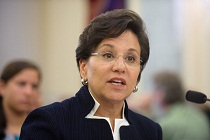
Penny Pritzker, U.S. commerce secretary is the new element in the India-U.S. bilateral dialogue. Her business skills have brought a shine to her ministry at home and perhaps she can have the same effect in Delhi

 Courtesy: Commerce department\US govt
Penny Pritzker, U.S. commerce secretary is the new element in the India-U.S. bilateral dialogue. Her business skills have brought a shine to her ministry at home and perhaps she can have the same effect in Delhi
 Courtesy: U.S. Navy photo/Journalist 1st Class Todd Macdonald
India’s invitation and the subsequent participation of the Japanese navy in the Malabar 2014 exercise is a sign of the deepening of the political-security relationship between India and Japan. However, an actual fruition of the potential requires both the administrations to be more flexible, especially on the nuclear deal and defence purchases
 Courtesy: IBtimes.com
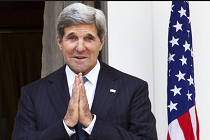
On the eve of his departure to India for the fifth India-U.S Strategic Dialogue, U.S. Secretary of State John Kerry outlined a roadmap of partnership between the two countries. While mentioning some of the ongoing concerns of the U.S government, he said this was a moment to chart a new course in the bilateral relationship
 Courtesy: wikipedia\commons
Four years ago, U.S. President Barack Obama announced that the India -U.S. relationship would be "one of the defining partnerships of the 21st century". However the relationship hasn’t matched up to the rhetoric and bilateral ties hit a low in 2013. Forthcoming high profile engagements between the two suggest the tide might be changing
 Courtesy: Rigues/Flickr
Recent developments at the WTO's two-day General Council Meeting that started on July 24 suggest that India will agree to sign the trade facilitation agreement only if the deal comes bundled with a permanent solution that will allow unhindered roll-out of welfare schemes such as the food security programme.
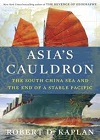 Courtesy: Random House
‘Asia’s Cauldron: The South China Sea and the End of a Stable Pacific’ is a pragmatic narrative by Robert D. Kaplan of the receding power of the U.S. and China’s growing dominance
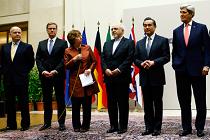 Courtesy: RT.com
Talks are on in Vienna between Iran and the P5+1 to reach a settlement on Iran’s nuclear programme. The self-imposed deadline expires on July 20. However, with the U.S. insisting that Iran cut back on operational centrifuges any possibility of a comprehensive solution in the near future seems remote
 Courtesy: Jnn13/Wikimedia Commons
The U.S. has not yet appointed a new ambassador to India. But this absence of urgency is less a ‘signal’ to India and more a result of factors such as a backlog of appointments awaiting approval in the Senate and candidates unwilling to accept the post only for the remaining period of the Obama administration
 Courtesy: dimoqrati.info
Recent geopolitical shifts has given birth to the very real possibility of a fractured Iraq. The on-going civil war in Syria and an unstable Iraq has renewed the call for a Kurdish nationhood. Although presented with a historic opportunity, rebel factions and authoritarian governments still present a hurdle to the quest for an autonomous Kurdish region
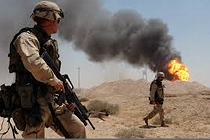 Courtesy: laprensa
Over two years after American troops left Iraqi soil, the rise of the brutal ISIS is forcing a war weary U.S.to contemplate a return to the country. Amid plummeting approval ratings and divided opinions at home, President Barack Obama will have to carefully weigh the implications of a disintegrated Iraq on the U.S. and indeed, the world.