Is this my Syria?
A former Syrian radio show host currently residing in the U.S. blogs to Syrians and world leaders alike to put an end to the crisis and to create a new and better Syria.


A former Syrian radio show host currently residing in the U.S. blogs to Syrians and world leaders alike to put an end to the crisis and to create a new and better Syria.
 Courtesy: Flickr/tao_zhyn
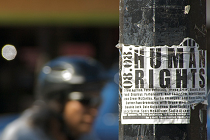
The failure of Western military interventions to bring peace raises questions about the effectiveness of human rights and calls for its redefinition. Instead of stigmatizing non-Western democracies that do not necessarily support intervention, the West should initiate an inclusive dialogue with these countries.
 Courtesy: Foreign Affairs
The Western sanctions imposed on Iran to force it to abandon its nuclear programme have succeeded in bringing Tehran back to the negotiating table, but they are a tactic, not a strategy. Any long-term policy has to aim for a democratic Iran.
Over the last few years Qatar has actively participated in world affairs by holding the Presidency of multilateral organizations, hosting international institutions and investing significantly in foreign markets. What does Qatar hope to achieve from its rising profile and its growing role in international affairs?
 Courtesy: Wikimedia Commons/Htoo Tay Zar
The West is quick to claim that their sanctions against Myanmar have forced the government to implement political and economic reforms in the country. However, such bans do not usually achieve their stated purpose of forcing regimes to change their behavior.
 Courtesy: U.S. Department of Defense
An important take-away from the preliminary pact reached by Kabul and Washington is that unlike the 1990s, the Americans are not just packing their bags and leaving. This is good news in terms of regional stability, and the upcoming NATO summit may answer some questions this draft agreement raises.
 Courtesy: LGEPR
With turmoil in the Middle East, a drawdown in Iraq and Afghanistan, the Iran-Israel-U.S. conflict, the international community has paid little attention to the democracy of a small group of people - the Bahrainis. More worrisome, however, is that politics now responds to the elite.
 Courtesy: Flickr/freeedomania
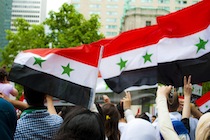
By forcing regime change in Libya, and attempting the same in Syria, and by promiscuously arming disparate groups of Wahabbis and Salafists to achieve this aim, NATO is creating more room for instability in the region. What Syria needs is engagement, not isolation; it needs dialogue and not the arming of rebels.
What are the implications for India if Iran is attacked? How effective has the response been by gulf nations to their own protests? Ambassador Talmiz Ahmad, India’s former Ambassador to Saudi Arabia, discusses the dynamics of West Asia with Gateway House’s Alisha Pinto and Azadeh Pourzand.
 Courtesy: PMO
Over the past thirty years, the U.S. and Iran have been at odds over Iran's alleged nuclear weapons programme. India too has a large stake with both countries - with the U.S. as a strategic partner and Iran for its oil imports - and resolving this conundrum will require some creative diplomacy.