India-Norway: Burgeoning Business Synergy
Rajiv Bhatia's article 'India-Norway: Burgeoning Business Synergy' was republished by Swarajya magazine.

 Courtesy: Swarajya
Rajiv Bhatia's article 'India-Norway: Burgeoning Business Synergy' was republished by Swarajya magazine.
 Courtesy: MEA / Flickr
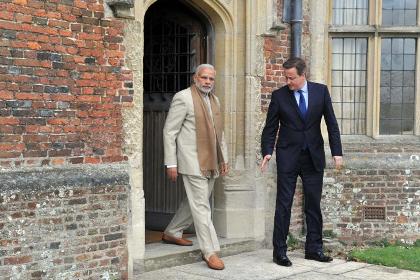
The result of the Brexit referendum is nothing less than a body blow to Bretton Woods organisations, International Monetary Fund-North Atlantic Treaty Organisation (NATO)-World Bank, that originated at the end of the Second World War. The possibility of an Asian century becomes more feasible, if India can be nimble enough to make the most of the opportunity which has presented itself in Europe.
 Courtesy: Energy Intelligence
Amit Bhandari, Fellow, Energy & Environment Studies, Gateway House, was quoted in an article on Energy Intelligence.
 Courtesy: Livemint
Rajrishi Singhal, Senior Fellow, Gateway House, was quoted by Livemint in an article on China and India's trade with Africa.
 Courtesy: Bloomberg
Rajrishi Singhal, Senior Fellow, Geoeconomics Studies, Gateway House, was quoted by Bloomberg in an article on a new credit-rating company that BRICS nations are intending to set up.
 Courtesy: Firstpost
Sifra Lentin, adjunct fellow, Mumbai History, Gateway House, wrote an article on the Jewish community in India for Firstpost.
 Courtesy: Business Insider
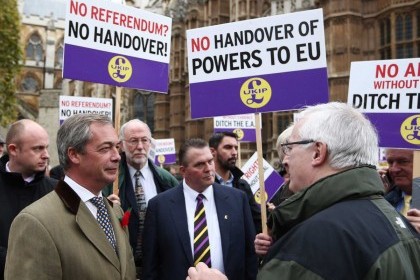
The message from Brexit is simple: the post-second world war financial, trade and industrial order and security arrangements that developed around Bretton Woods, have passed their expiry date. This is the time for countries, regional unions and global institutions to reform themselves – putting people instead of regulations and strategic objectives at the centre of their decision-making.
 Courtesy:
On 23th June, 2016, Great Britain voted to leave the European Union in an unexpected twist in the Brexit debate. Manjeet Kripalani, Executive Director of Gateway House and Ambassador Neelam Deo, Director of Gateway House examine the result, its unlikely origin, and its wider implications on India and the world.
 Courtesy: sarkarairtel
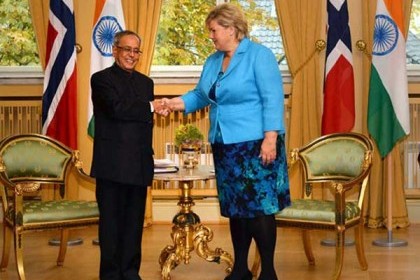
A recent visit to the capital of Norway---Oslo---offered the opportunity to study the country’s economic success story and note its increasing interest in Asia’s emerging economies, especially India, and immense scope for deepening cooperation for mutual benefit.
 Courtesy: MEA / Flickr
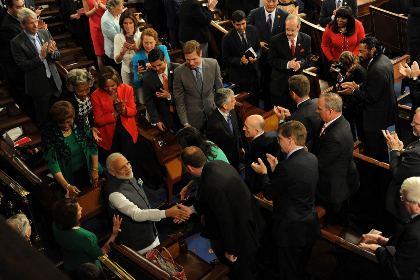
Prime Minister Narendra Modi's fourth visit to the United States has been met with hails of success and with comments of 'too little, too late'. While Modi's friendship with President Obama is often credited for improving bilateral relations, the U.S. leader is currently nearing the end of his term. The new President will have their own geopolitical demands, which will invariably result in India being relegated to a second-term priority.