Human rights in Iran
While the lifting of economic sanctions after Iran’s recent nuclear deal with the P5+1 countries may improve socio-economic conditions, will it also positively impact human rights in the country?

 Courtesy:
While the lifting of economic sanctions after Iran’s recent nuclear deal with the P5+1 countries may improve socio-economic conditions, will it also positively impact human rights in the country?
 Courtesy: Livemint
Amit Bhandari, fellow for energy and environment studies, Gateway House, was quoted from his press statement on 'ONGC’s Purchase of Stake in Rosneft' by Livemint.
 Courtesy: openDemocracy / Flickr
If the Transatlantic Trade and Investment Partnership moves ahead after further negotiations were held in July, Indian exporters could be disadvantaged. Instead, India must be ready to use the further opening up of huge markets across the Atlantic, and adopt trade policies that mix regionalism and multilateralism.
 Courtesy: The Political Indian
Seema Sirohi's article, 'US-Pakistan: A new nuke normal,' was republished on The Political Indian and on Indian American Times.
 Courtesy: Eurasia Review
Jivanta Schöttli's article 'Germany’s Energy Model For India?' was republished by Eurasia Review, Worldpress.org and The Political Indian.
 Courtesy: The Express Tribune
Sameer Patil, National Security Fellow, Gateway House, was quoted by The Express Tribune on his views on 'Stateless: Myanmar's Rohingya Muslims.' The quote appeared in various other publications.
 Courtesy: The Diplomat
Neelam Deo, Director, Gateway House, wrote an article on 'Pakistan's denial game.' This article was republished on The Diplomat and on Eurasia Review.
 Courtesy:
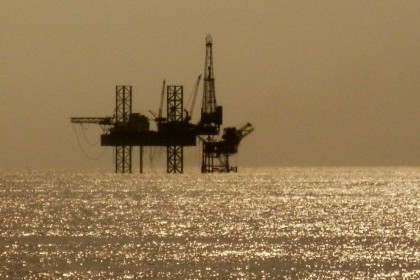
ONGC’s purchase of a 15% stake in Russia’s Vankorneft presents the road ahead for India – by acquiring oil and gas fields today, India has a chance to lock in the price of imported energy at the current low level for the long run.

Amit Bhandari, fellow for energy and environment studies, Gateway House, comments on the significance of the deal between Rosneft's Vankorneft and ONGC Videsh Limited.
 Courtesy: Wikipedia
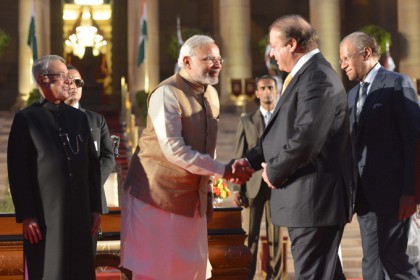
The cancellation of the August 23-24 meeting of the national security advisors of India and Pakistan follows a pattern of unrealistic expectations raised and then quickly dashed. This is compounded by Pakistan’s long history of denial on numerous issues. It may be time for both countries to abjure high-profile diplomacy and turn to small confidence-building measures.