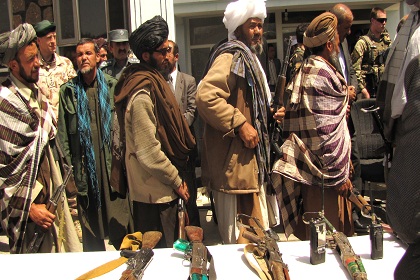
Former_Taliban_fighters_return_arms Courtesy: Wikipedia
23 July 2015

No peace in Kabul without Delhi

The recent meeting between the Taliban and the Afghan governments– brokered China– holds promise to bring peace to Afghanistan. However, the absence of India at the table notable. Given India's investments in Afghanistan and geopolitical importance, China must seek to bring India to the table, otherwise peace will remain elusive
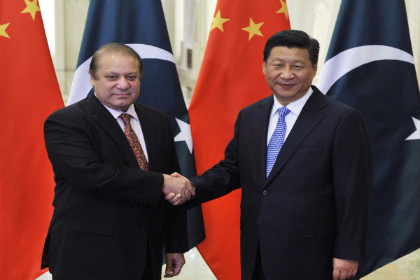
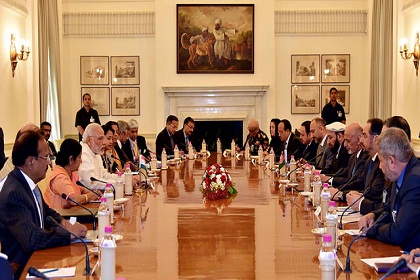
Sharif-Xi jinping Courtesy:
14 May 2015

OBOR and India’s security concerns

While China will seek India’s cooperation on its ambitious ‘One Belt, One Road’ project during Prime Minister Modi’s visit this week, Indian policy makers must soon articulate a definite stand on this transnational corridor by bridging the country’s security concerns and the benefits of such an engagement with China.

17111184050_a38f69f6cb_z Courtesy: MEA/Flickr
29 April 2015

Ghani and India: circles of separation

Afghan president Ashraf Ghani visited India from April 27-29. Ghani accords a very different priority to India than his predecessors – both the timing and the outcome of his visit reflected this. He is choosing to play to Pakistan, by keeping India out of Afghanistan's security sector

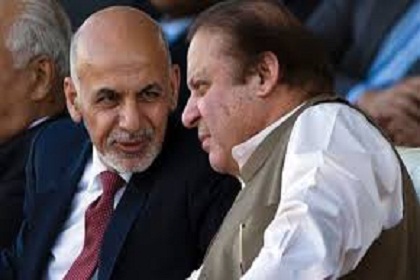
Ghani-Sharif Courtesy: Arya News
29 April 2015

India’s game of patience with Afghanistan

Afghanistan president Ghani has placed his eggs in the Pakistani basket and is waiting to see whether its actions match the plentiful words. However, New Delhi knows it enjoys a depth of support in Afghan society and can bide its time while Ghani tests the waters, as he will likely reach the same conclusions as most others

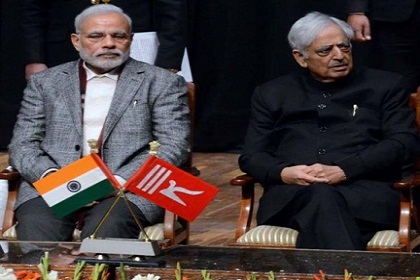
BJP-PDP Courtesy: South Asia Media
26 March 2015

Coalitions of opposites

Representative democracy has resulted in coalition governments, comprising parties with opposing agendas, gradually being formed across the world. The Afghan unity government and the BJP-PDP coalition in Jammu and Kashmir are two such coalitions that share numerous similarities, not least of which is the role of Pakistan.

SAARC Courtesy:
2 March 2015

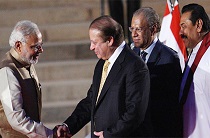
An Indian democracy template for SAARC?

Indian foreign secretary S. Jaishankar’s visit to SAARC countries from March 1 is an opportunity to examine the political trajectories in the region. While democracy in some countries like Sri Lanka is on an upswing, in others, like Bangladesh, it is in decline. With China’s growing economic influence in South Asia, can Indian democracy be an effective counterpoint?

Jaishnkar Courtesy: Saddahaq.com
26 February 2015

SAARC sojourn: surmounting the entropy

The SAARC Yatra to be undertaken by foreign secretary S. Jaishankar from March 1 is an opportunity for India to improve relations, resurrect stalled projects and create new synergies with its neighbourhood. An initiative like this could hold the key to India shedding the ‘hegemon’ tag and pursuing mutually beneficial policies with its neighbours

burdwanblast_6 Courtesy: wikimedia
25 November 2014

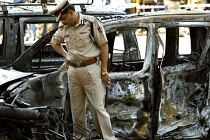
Combating terror financing through SAARC

Despite an early regional consensus on counter-terror, SAARC’s record in tackling terrorism remains dismal. With the widening network of terrorist groups in the subcontinent, it is imperative that India takes the lead in forging substantial counter-terrorism cooperation, particularly on the issue of financing

SAARC Courtesy: pmindia.nic.in
21 November 2014

Will SAARC embark on a new path?

The 18th SAARC Summit in Kathmandu next week is an opportunity for member countries to start shaking off the shackles of distrust. Instead, SAARC must robustly move forward on such issues as regional connectivity, SAFTA, climate change, and security—and India can be the prime mover in building this renewed cooperation

SAARCsummit1 Courtesy: Wikimedia commons
21 November 2014

A primer on SAARC

The 18th SAARC Summit will cover a wide range of issues, including connectivity, climate change, and SAFTA. A number of similar issues were discussed at the last summit—what’s been the progress since then? Given its constraints, does the association have a future? Gateway House asks and answers five questions on SAARC