Maritime India’s Global Destiny
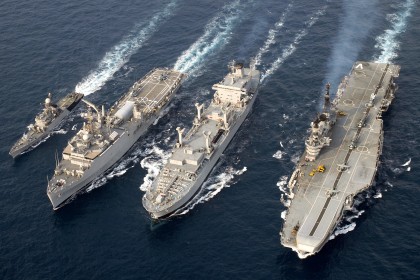
With the 21st century being heralded as the 'century of the seas', there is much need for India to reclaim its historically dominant maritime position in civilian and military endeavours.

 Courtesy: http://nausena-bharti.nic.in/
With the 21st century being heralded as the 'century of the seas', there is much need for India to reclaim its historically dominant maritime position in civilian and military endeavours.
 Courtesy: ISRO
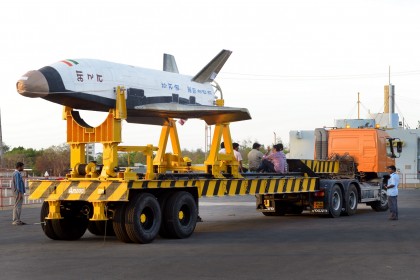
The Indian Space Programme has a mandate to focus on its launch- and earth-oriented capabilities. In the past decade, it has attempted some non-conventional experimental projects under the labels “‘low-cost” and “technology demonstrator”. However the effect of these experimental space projects on India’s techno-economic growth will be realised only if the central government gives the project greater status and funding.
 Courtesy: Wikipedia
Does India plan to remodel its Andaman & Nicobar Islands as a launching pad for future security operations to check growing Chinese inroads in the Indian Ocean Region? Development of the islands has long been ignored to India’s detriment, and their strategic position in the Indian Ocean, underutilised.
 Courtesy: Narendramodi.in
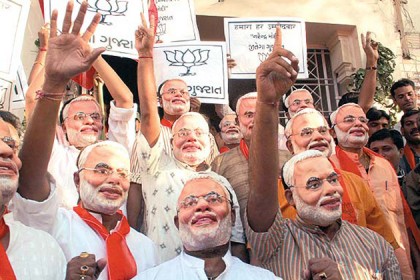
Narendra Modi’s landslide victory in India's 2014 general elections, despite his hardline nationalist image, was viewed as a localised phenomenon. But two years later, voters across the world from Europe to Philippines seem to be tilting towards leaders with the same nationalist tag.
 Courtesy: Ash Carter / Flickr
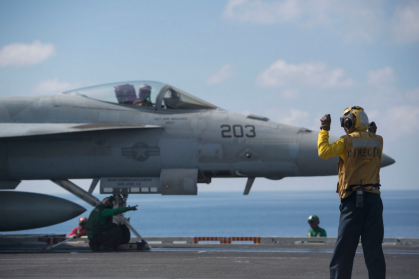
The success of the U.S. Defense Secretary's recent visit to India is indicative of the deepening India-U.S. defence relationship. It has become clear that Indo-U.S. maritime cooperation in the Indian Ocean is steaming ahead; while other geopolitical differences, like the sale of aircraft to Pakistan, seem unlikely to disappear anytime soon.
 Courtesy:
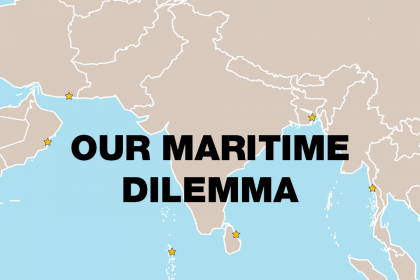
After decades of passivity, India is beginning to assert itself in the maritime arena. There is a whiff of salt in the usually 'sea-blind' corridors of Delhi, where the Modi government clearly sees the linkage between the possession of maritime wherewithal, both civilian and military, and the furthering of national prosperity, through ever-increasing trade.
 Courtesy: Wikipedia
India needs a more developed strategic focus on its eastern-western seaboards. Prime Minister Narendra Modi has taken the lead, investing considerable diplomatic capital and time in his visits to Saudi Arabia, the UAE, and island nations in the Arabian Sea. In the east, he is progressively engaging with ASEAN, Japan and Australia
 Courtesy: Navaneeth Unnikrishnan / Wikipedia
A tectonic shift is occurring in the science landscape, wherein newly-developed nations are audaciously investing in frontier scientific research at par with developed nations. India is game to join this new wave of advancement, but its research-funding mechanisms are deficient. Can Indian philanthropy endow indigenous R&D?
 Courtesy: Wikipedia
Instead of inviting foreign corporations to India to create a manufacturing base, Modi can use his Silicon Valley experience to build a similar research and development foundation in India for indigenous high-tech companies. A strategic space megaproject could be the start of this much-needed push.
 Courtesy: India Strategic
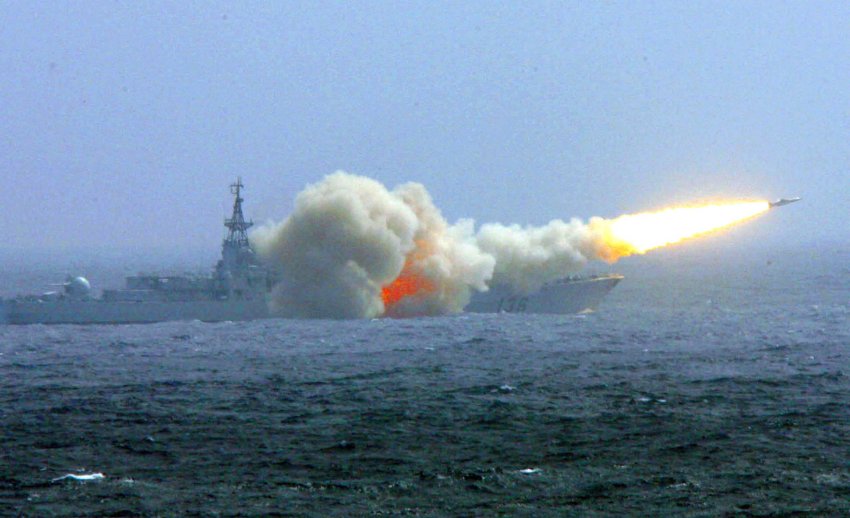
The recent re-evaluation by the US, China, Japan, and Russia of their military strategies reflects new geopolitical equations in which the Asia Pacific is a major strategic intersection. Turmoil in this region can impact India’s trade and security interests, and to avoid this India must craft a balance between its relations with all the countries involved