Presentation at India-ASEAN Partnership@25
Ambassador Rajiv Bhatia, Distinguished Fellow, Gateway House gave a presentation on ‘Regional and Bilateral Co-operation’ at the Conference on India-ASEAN Partnership@25, New Delhi

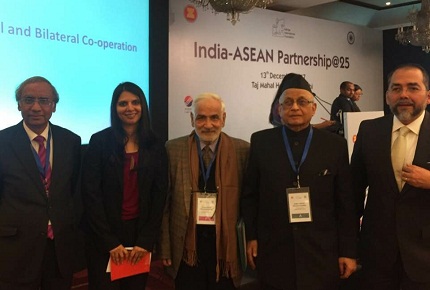 Courtesy:
Ambassador Rajiv Bhatia, Distinguished Fellow, Gateway House gave a presentation on ‘Regional and Bilateral Co-operation’ at the Conference on India-ASEAN Partnership@25, New Delhi
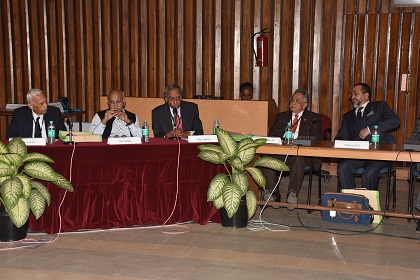 Courtesy:
Ambassador Rajiv Bhatia, Distinguished Fellow, Gateway House gave the Keynote Remarks on ‘ASEAN Today: Introspection and Prospects’ at the Regional Conclave on ASEAN@50 and India-ASEAN Relations in Bengaluru
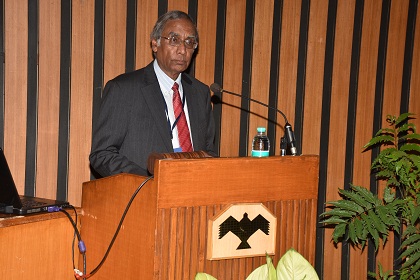 Courtesy:
Ambassador Rajiv Bhatia, Distinguished Fellow, Gateway House gave the Chairman’s Remarks at ‘Regional Conclave on ASEAN@50 and India-ASEAN Relations’ in Bengaluru
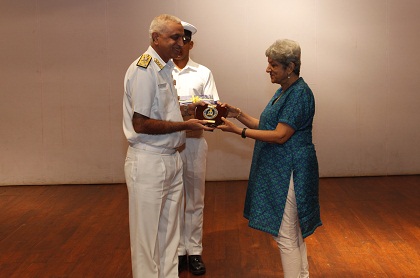 Courtesy: Western Naval Command
China has expanded its presence in the Indian Ocean Region. President Xi Jinping has abandoned Deng Xiaoping’s conciliatory posture for an aggressive, money-fuelled search for super power status
 Courtesy: Arjun Chawla
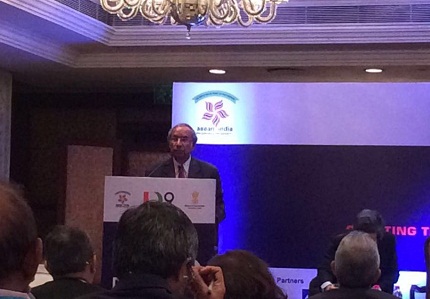
This speech was delivered by Rajiv Bhatia, Distinguished Fellow, Foreign Policy Studies, Gateway House, at the Delhi Dialogue 9, for the session on Regional Geopolitics: Great Power Politics in Asia -Pacific in Delhi on 4 July
 Courtesy: Deutsche Welle
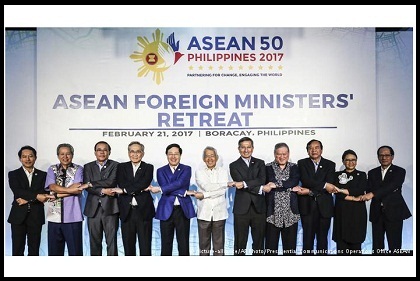
This regional grouping of 10 nations, which observes its golden jubilee year in 2017, has come a long way from the Cold War era when it was founded, making a significant contribution to peace, security and prosperity. Now, its future prospects and “centrality” look uncertain amidst the region’s changing geopolitics
 Courtesy: MEA/flickr
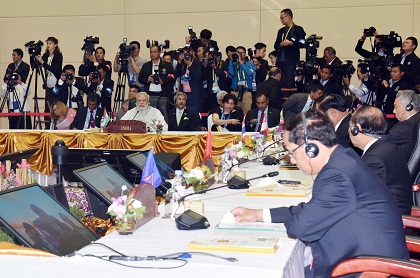
The year 2017 may change some equations in the East Asian region. Will the near parity that the U.S. and China currently share turn into a keener contest? Will strained relations between India and China persist? Donald Trump’s election as the next U.S. president casts the spotlight squarely on these inter-state relationships
 Courtesy: Russian Government
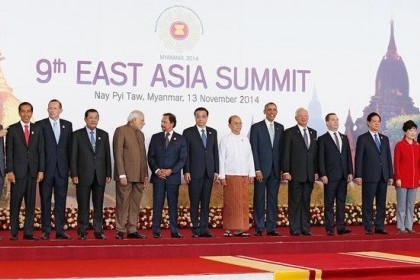
At a time when New Delhi is beginning to not just ‘Look East’ but also ‘Act East’, and when parallel integrative processes are underway globally, including the ASEAN-led process, the incipient China-led process and the U.S.-led TTP, India and ASEAN could together produce a brilliant new era of Asian integration
 Courtesy: Flickr / MEA India
India’s East Asia policy has been a bedrock of the country’s foreign policy, and the Modi government has deepened ties with ASEAN and extra-ASEAN powers in a significant way. As India turns 70, it is worth assessing the few key bilaterals that will now become more important for regional security and prosperity.
 Courtesy: Flickr/Times Asi
China's refusal to accept the ruling of The Hague greatly harms its international reputation and will fuel regional concerns about China's rise. Nationalist sentiments stirred up by a sustained media campaign heighten the risk of a confrontation, but there is also a possibility for the Philippines to use its new leverage to its advantage through new negotiations.