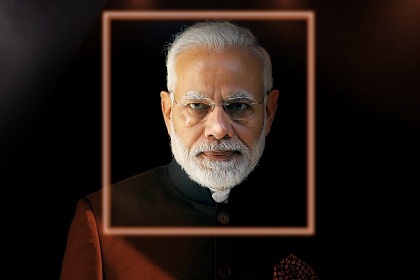
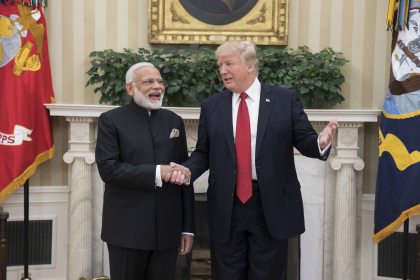
India's foreign policy under the second Modi government will take account of a turbulent world in which the old verities are disappearing and domestic political compulsions exert overwhelming influence on external postures
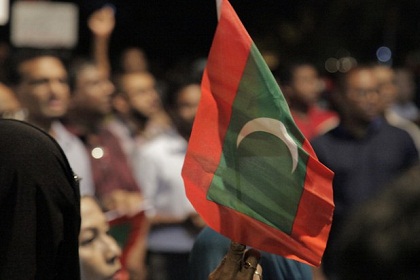
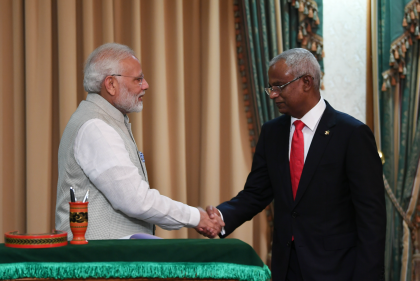
Maldives’ new president, Ibrahim Solih, has had two election wins in a span of six months – his own in September 2018 and his Maldivian Democratic Party’s landslide victory in the Majlis elections about three weeks ago. An analysis of what this win says about democratic politics in Maldives, improved relations with India and the complex equation it shares with China
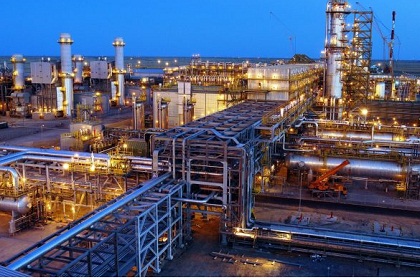
The main objective of the Shanghai Cooperation Organisation’s (SCO) Energy Club, when Russia formed it, was to market its member states’ substantial oil and natural gas reserves. This map shows some of the important natural gas pipelines, originating from Russia and its neighbouring countries that are not members of the SCO. What can India do to secure supplies from these abundant but currently inaccessible natural gas reserves?
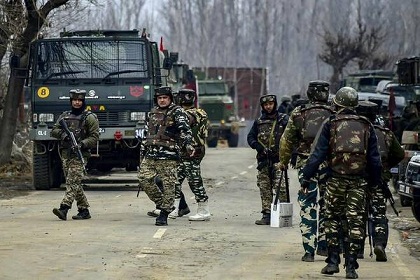
India has used military and diplomatic offensives against Pakistan as a response to the February 14 terrorist attack in Pulwama, Jammu and Kashmir. There are two more options available - legal, through sanctions, and economic - to curb Pakistan's dangerous adventurism. Gateway House explores both in the infographic below
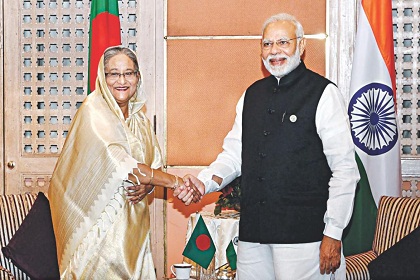
Bangladesh faces several major challenges in its external relations. It showed humanitarianism in receiving the fleeing Rohingyas, but its diplomatic efforts to repatriate them have not succeeded. It must also maintain a balance between relations with India and China and show proactive leadership in garnering regional cooperation
This vivid portrait of socialist India, by giving primacy to the political background that determined Indira Gandhi’s responses, is different from the yearly ritualistic denunciations of her and the Emergency. It also has a story-teller’s flair, making it accessible to readers born well after 1975
The imperative for India to move away from its non-aligned posture is now, especially if it wants to be consequential in the global reordering underway. This will play out in the contention between the U.S. on one side, and China and Russia on the other.
Maldives president Mohamed Solih comes to India this week, fresh from his election win and with a host of good intentions. His aim is to recast the bilateral and restore balance in Maldives’ external relations after the previous president’s China-centric leanings. Such a reversal may not emerge instantly
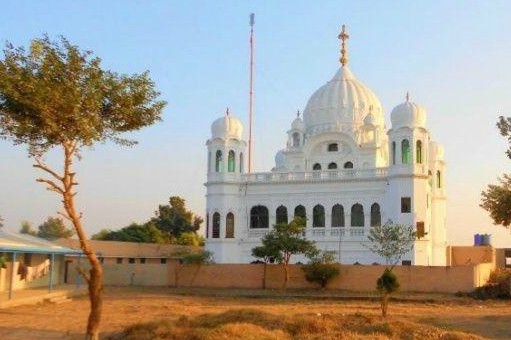
The recent opening of the Kartarpur corridor in Punjab and the release of a Canadian parliamentary report on the security breach during Prime Minister Justin Trudeau’s India visit are important developments. They present a good opportunity for New Delhi to step up cooperation with Ottawa on countering terrorism and violent extremism
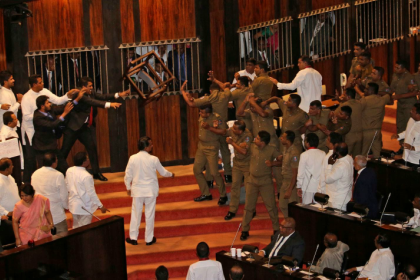
China’s large investments in Sri Lanka, Pakistan and the Maldives and the economic dependence this creates make it impervious to the internal political upheavals in these countries. This blog explores how it will retain its influence in Sri Lanka regardless of how the turmoil is resolved