Gateway House (2) Courtesy: Gateway House
24 December 2025

Bangladesh economy spirals downwards

Bangladesh’s economy, already weak at the time of the August 2024 coup, has been on a downward spiral since. Banks are insolvent and cannot lend, business confidence is low, and investors are staying out. These issues will worsen the ongoing radicalisation, extremism and violence in the country. 

US Embassy and Consulates in Italy Courtesy: US Embassy & Consulates in Italy
18 December 2025

U.S.’ National Security Strategy 2025

It is customary for every U.S. president to release a National Security Strategy (NSS) early in their tenure. President Trump published the NSS for his second term in November 2025. It’s a contrast from his 2017 NSS, which addressed broad threats. The 2025 version is narrower, emphasising trade over security, with the Western Hemisphere being the primary area of focus. Is the U.S.’s global role shrinking?

Sri Lanka PMD Courtesy: Sri Lanka PMD
20 November 2025

A Growth Budget for Sri Lanka

After a remarkable recovery from a very deep crisis in 2022, Sri Lanka’s recent budget for 2026 consolidates economic stabilisation and introduces a few markers for further growth. But more needs to be done to embed a growth strategy and transform its economy to avoid further IMF austerity programmes.

Website articles  (7) Courtesy: Gateway House
13 November 2025

India China relations in the near future

India-China relations move in waves of hostility and stability. The bilateral may be re-entering a period of stability, last seen in 2018. If the caveats of security, mutual sensitivity and a level playing field are respected, then much can be achieved by reviving the initiatives begun after PM Modi’s visit to China in 2015 and two informal summits in Wuhan in 2018, and Mahabalipuram in 2019.

Website articles  (6) Courtesy: Global Times
6 November 2025

China’s Military Modernisation: Implications for India

Chinese President Xi Jinping set two centennial goals and a 2027 target for the People’s Liberation Army’s (PLA) modernisation. This is in line since its founding in 1927, when the PLA has undergone continuous technological, doctrinal, and manpower transformation. Guided by Xi’s goals, it is adapting to evolving warfare trends drawn from experience and observation. For India, the implications arise not only from the PLA’s modernisation but also from emerging military and geopolitical dynamics.

Gateway House Courtesy: Telegrafi
6 November 2025

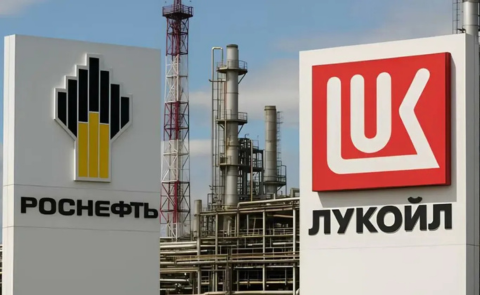
U.S. Sanctions on Russian oil giants

On October 22, 2025, U.S. President Donald Trump imposed sanctions on Russia’s oil giants, Rosneft and Lukoil. The move has clear geopolitical motives—to remove a major supplier from an oversupplied oil market. Indian oil companies, key buyers of Russian crude, now face pressure to cut imports, undermining India’s energy diversification and shaking global oil markets, including the U.S. economy.

Koerber Stiftung (4) Courtesy: Gateway House
23 October 2025

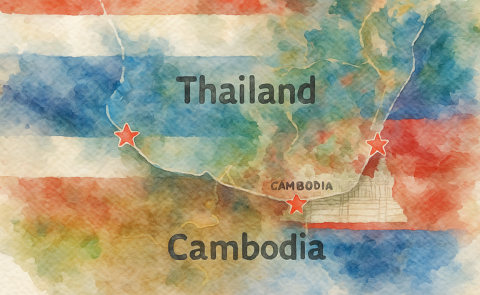
Thai-Cambodia border resolution eludes ASEAN

The Thai–Cambodia border dispute, which erupted anew in July, is 70 years old, and there’s no resolution in sight. Both nations have differing political ambitions: Thailand seeks to reclaim former territories while Cambodia aims to retain its sovereign rights. This contestation requires a regional political resolution, but Malaysia’s ASEAN chairmanship failed to forge consensus. Can the new chair, the Philippines, resolve it?

AFP (1) Courtesy: ANI
16 October 2025

Uncertainty around the Quad

The Quad summit is expected to be hosted by India in the second half of 2025, possibly in November. However, the grouping faces turbulence that transcends the current flow of India-U.S. relations. The relevance of Australia and Japan, too, needs to be factored in. Beijing considers the Quad as “the Asian NATO” that aims to contain China. Since the commencement of Trump 2.0, the grouping has been struggling to redefine its role and mandate.

Screenshot 2025-10-13 103335 Courtesy: Körber-Stiftung
13 October 2025

Bandung at 70: Multilateralism in a New Era of Multi-Alignment

The world is facing multiple crises which are shaking the foundations of multilateralism. The West’s structures are faltering, and the need for effective and equitable cooperation is greater than ever. Seventy years after the 1955 Bandung Conference, its principles of sovereignty, territorial integrity, cooperation and solidarity remain vital. This report revisits Bandung’s relevance for today’s reform efforts, urging renewed Global South–Europe collaboration for a sustainable global future.