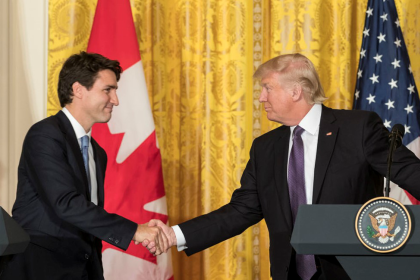
President_Donald_Trump_and_Prime_Minister_Justin_Trudeau_Joint_Press_Conference_February_13_2017 Courtesy: Wikimedia Commons
25 October 2018

Three pillars of Canada’s worldview

The United States, Europe and the Asia Pacific today form Canada’s tripartite foreign policy priorities. The ASEAN is its sixth largest partner, which was not so 20 years ago, but economic engagement with India – still small, compared to China and Japan – has scope to grow
39886955481_b6d420f879_o Courtesy: MEA/ Flickr
14 September 2018

Brunei, ASEAN’s quiet, cautious player

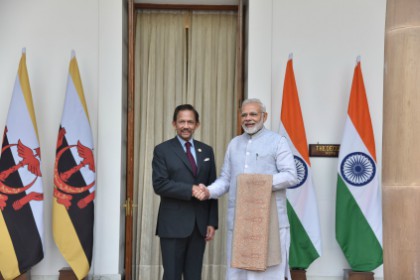
India and Brunei have a 34-year-old diplomatic relationship; but as yet no Indian president or prime minister has paid the country a bilateral visit to strengthen these ties. The strategically-located nation is rich in its history, with a unique political system. Its foreign policy approach is non-controversial, yet noticeably pragmatic.

30362033555_a558fdf2cd_o Courtesy: Mea/ Flickr
23 August 2018

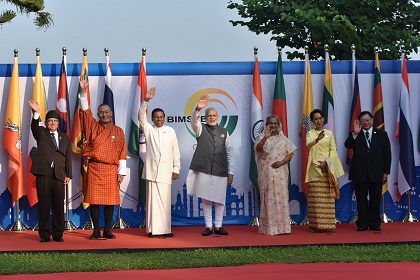
Boosting BIMSTEC’s visibility

The 21-year-old regional organisation, which will hold its fourth summit on August 30-31, was formed because of the opportunities to make headway in economic and social development through cooperation, but it has achieved modest success. It has a relevance independent of SAARC or ASEAN and goals of its own to pursue

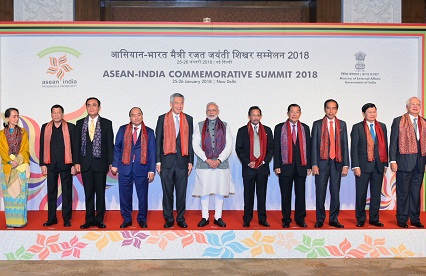
India-ASEAN Zee News Courtesy: Zee News
26 July 2018

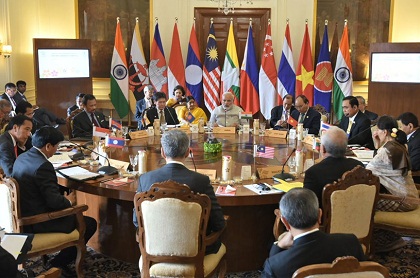
Locating India-ASEAN in the Indo-Pacific

Indonesia and Malaysia appreciate India’s leadership role in the Indo-Pacific, but are also aware of all that keeps it from delivering on its commitments. A policy visit to the two countries enabled a closer look at some key issues, such as ASEAN’s centrality, the Quad and India’s stand on the Regional Comprehensive Economic Partnership

39193431214_e3dd4eff86_o (1) Courtesy: MEA/ Flickr
28 June 2018

Indo-Pacific in flux

Change and uncertainty have marked geopolitical equations in the East Asian segment of the Indo-Pacific in the last six months. India-China relations changed visibly for the better while the U.S.-China trade war became more polarised. The Quad remained inert as did negotiations on the proposed Code of Conduct for the South China Sea. An analysis of some of the major trends