India in Central Asia: Time for a New Strategy
This paper introduces the dilemma of both India and Russia, whose state-owned energy companies are forced to operate in a region where Chinese government corporations have been dominant.

 Courtesy: Gateway House
This paper introduces the dilemma of both India and Russia, whose state-owned energy companies are forced to operate in a region where Chinese government corporations have been dominant.
 Courtesy: Michael Trolove/WikimediaCommons
Growing instability in the region make the planned Turkmenistan-Afghanistan-Pakistan-India (TAPI) gas pipeline seem more like a burden than a solution to India’s hunt for alternative energy sources. Is it wise for India to move ahead with the $7.6 billion project?
 Courtesy: UN Photo/Paul Banks
After the crass misuse of Responsibility to Protect (R2P) in Libya, the broader question is: where is R2P headed? Do the events in Libya herald a more explicit assertion of this doctrine in other parts of the world? And should India rethink its viewpoint towards this ambiguous doctrine?
 Courtesy:
The completion of the Turkmenistan-Afghanistan-Pakistan-India (TAPI) pipeline is significant to secure a constant supply of natural gas to India. Since this pipeline passes through Afghanistan and Pakistan, both restive regions, security concerns have triggered wide debate on its viability.
India’s relations with Russia have to be set against the broader strategic landscape of India’s security issues and geopolitical priorities, especially in Central Asia and Afghanistan, where Russia is a key player. An increase in private sector initiatives can also ensure greater cooperation in the years to come.
 Courtesy: PMO
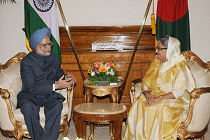
Indian Prime Minister Manmohan Singh’s visit to Dhaka was, by and large, a success; but poor internal coordination hampered the greater possibilities of the visit. India and Bangladesh can now explore new prospects, on maritime issues, oil and gas and environmental concerns in the Sundarbans.
Former Indian Ambassador to Syria, Rajendra Abhyankar, speaks to Gateway House’s Samyukta Lakshman about the developments in Syria, the impact on India-Syria relations and the future of the region.
 Courtesy: Rex/WikimediaCommons
While the fractious Indo-Bangladesh relationship has made progress over the past few months, both sides must engage in environmental diplomacy in the vulnerable Sundarbans region to ensure bilateral prosperity.
In the global hunt for energy security, nuclear energy has grown increasingly relevant as countries struggle to find sustainable sources of energy. The ambitious plans to build the world’s biggest nuclear plant in Jaitapur may prove to be the litmus test that defines the role of nuclear energy in India's future.
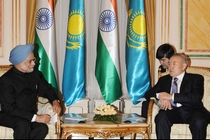 Courtesy: PMO
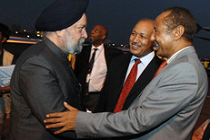
Indian Prime Minister Manmohan Singh met with Kazakh President Nazarbayev to strengthen ties and announced a Joint Action plan for 2011-14. Should the countries enhance their “arms-length transactional” relationship, a deeper alliance can be forged to include untapped sectors with immense potential

