Website articles  (3) Courtesy: AFP
13 November 2025

Pax Fragilis in Gaza: rupture and repair

The arc of revolutions has two acts: rupture - upending the status quo - and the craft of repair. Often, the second is as hard as the first. Today's Pax Fragilis in Gaza is narrow, given the continuing humanitarian crisis, regional reactiveness, limited scope of de-escalation channels, multiple actors' motivations for a permanent ceasefire, and the capabilities of Israel and Palestine to build a pathway with certainty.

indo pacific  (7) Courtesy: Daily News Egypt
31 July 2025

Egypt positions its foreign policy

Egypt sits at the intersection of three continents and two seas, and its foreign policy is a geographic, historic and strategic consequence. From Tripoli to Kortum, Addis Ababa to Brussels, New Delhi to Moscow, Beijing to Washington, Cairo employs diplomacy as a key national security tool, positioning itself as a cornerstone of geopolitical stability within an increasingly multipolar world.

ADEM ALTANAFP via Getty Images Courtesy: Adem Altan/AFP via Getty Images
3 July 2025

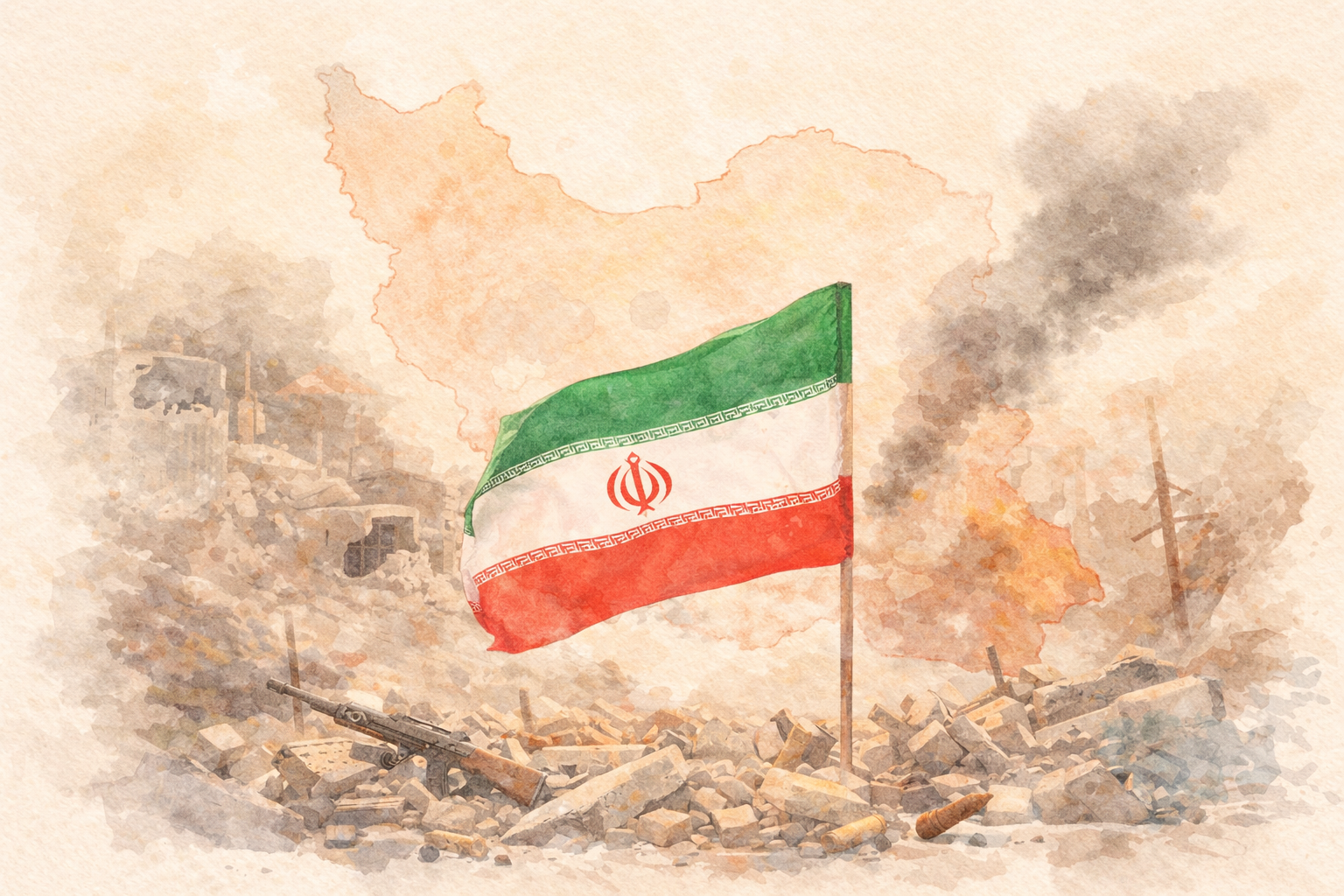
Iran’s second chance to transition

Iranian foreign policy must move toward strategic autonomy and internal concord. As witnessed after the 1988 ceasefire with Iraq, such moments can mark an inflexion point - one that prioritises national reconstruction, resilience, and welfare; strategic recalibration, strengthening of confidence, and finding a geopolitical identity. Iran has been there before, and can apply those experiences again.

Website articles  (18) Courtesy: Reuters photo
28 May 2025

Strategy meets statecraft: Trump in Riyadh

Presidential visits abroad are high-level instruments of statecraft and, more often than not, signals of geopolitical priorities. The recent visit of U.S. President Donald Trump to the United Arab Emirates, Saudi Arabia, and Qatar, exemplified this, indicating the administration's policy orientation.

Leibniz Association Courtesy: Leibniz Association
27 February 2025

Israel in its own image

A recent workshop on “Israel in Its Own Image: From 1948 to the Present” explored Israel’s history, society, and foreign policy through discussions led by Israeli and Indian experts. The week-long session held in India helped to sift the fundamentals from the narratives. It provided, a nuanced understanding of Israel’s challenges, political shifts, and diplomatic strategies in a rapidly evolving global landscape.

Biden-Middle-East-peace-deal-Israel-Palestine-GettyImages-1731160260 Courtesy:
27 June 2024

The hanging Hamas Deal

The May 31 ceasefire deal proposed by U.S. President Joe Biden is the best on offer for Hamas and Israel. Hamas has delayed its response to the deal, demanding Israeli withdrawal from Gaza first. This absolutist and maximalist position allows Israeli Prime Minister Benjamin Netanyahu to conveniently evade his responsibility towards the U.S., a ceasefire deal, and his own people.

IMG_2549 Courtesy: The Times of Israel
2 May 2024

Diplomacy in Middle East grey zones

Grey zones have blurred the frontiers of conflict and peace worldwide, creating ambiguous wars of complex scenarios and labyrinths that have transformed strategic foresight and the international and national security landscape. In these arenas, multiple options are available, where regional powers' ascertainments converge with the poker game of political, diplomatic, economic, and military interests, as well as the operations of state and non-state actors.

The geopolitics of Middle Eurasia (Feb. 15) Courtesy: ET Insights
15 February 2024

The geopolitics of Middle Eurasia

The geopoliticisation of the Israel-Hamas war has given birth to a new era of ruthlessly pragmatic and overlapping interests of multiple powers and actors. This is visible in the region of Middle Eurasia, the centre of the ongoing rearrangement of the world order.

israel-hamas Courtesy: CivisDaily
17 January 2024

Israel-Palestine: two states … or one?

The Oslo Accords’ two-state solution for Palestine-Israel, visualised Gaza and the West Bank as self-governing entities under the Palestinian Authority. That political hope existed in an expanding global economy led by the U.S. and secured by American armies, with the promise of capital flows and investments to develop Palestine on its way to statehood. All this changed in the 2000s, as both Israelis and Palestinians became significant regional actors.

Screenshot 2023-11-29 at 6.07.50 PM Courtesy: The Indian Express
29 November 2023

Hamas’ ideology minus trust

Hamas faces an existential crisis in Gaza now that the Israeli army has captured its military headquarters and operating tunnels in northern Gaza. So far Israel has successfully ignored international pressure to limit its ground operation. In between are the Gazans, caught within an ideology they don’t trust.