Neelam Deo has served as the Indian Ambassador to Denmark and Ivory Coast with concurrent accreditation to Niger, Guinea, and Sierra Leone. She has also served in the Indian embassies in Rome, Bangkok and Washington D.C., where she liaised with the U.S. Congress, the State Department, and the National Security Council on strategic issues. Her last assignment was as Consul General in New York from 2005 to 2008.
During the course of her assignments in the Ministry of External Affairs, she held the position of Joint Secretary for the divisions dealing with Bangladesh, Sri Lanka, Myanmar and the Maldives. At different times over the course of her career, she has dealt with Bhutan, South East Asia and the Pacific, as well as countries in West Asia and North Africa.
She is an invited speaker on strategic issues and India-U.S. relations at numerous think tanks and universities, in India, Europe and the United States.
Apart from her articles and commentaries written exclusively for Gateway House, Neelam occasionally writes for mainstream publications, and is a frequent commentator for television news channels.
She has a Master’s degree from the Delhi School of Economics and serves on the Editorial Advisory Board of the Indian Foreign Affairs Journal.
She is also a member of the board of Oxfam India and is a trustee of Breakthrough (a human rights organization).
She is an independent director on the boards of Mahindra CIE Automotive Limited and Mahindra Defence Systems Limited.
Expertise
Africa, Foreign Policy, India's Bilateral Relations, USA
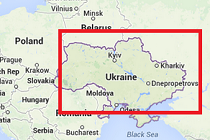
Neelam Deo, Director, Gateway House, talks about the potential economic impact of the ongoing crisis in the Ukraine. In this interview, she also examines the aid packages offered to Ukraine by Russia and the West, and assesses how the situation will affect India’s trade relations
Neelam Deo, Director, Gateway House, talks about the ongoing crisis in Ukraine and its possible outcomes. In this interview, she also discusses the issues at stake for Russia and the West, the credibility of assertions made by both sides, the EU’s interests in the region, and how India should respond
German President Joachim Gauck’s visit to India this week is a reminder of how Germany is addressing inequality, with better wages, benefits for the poorest, and other measures. When the gap between the rich and poor is growing globally, it is time for India’s prime ministerial aspirants to also focus on this issue
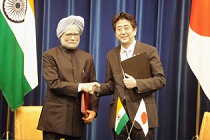
Japan’s reaching out to India, as demonstrated by the upcoming visit of Prime Minister Shinzo Abe, reflects the urgency with which Japan sees the threat of a rising China. India too has experienced Chinese aggression and must work with other democracies towards creating a multi-polar Asia
The Pioneer published Gateway House's Neelam Deo and Manjeet Kripalani's article on the recent moves by the U.S. which is alienating countries in South Asia
Following Indian diplomat Devyani Khobragade’s expulsion, ties between India and the U.S. have hit a new low. This comes at a time when the two countries should be working closely to address the changing security matrix in Asia
As 2013 draws to a close, Gateway House examines the tumultous year and the significant developments that affected foreign policy globally. Below is our geopolitical forecast for 2014
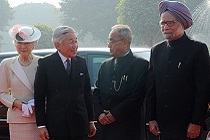
The ongoing visit to India by Emperor Akihito of Japan is a strategic milestone that can have long-term implications for the bilateral economic relationship and geopolitical engagement in a rapidly-changing Asia. Both countries must now work to sustain this momentum
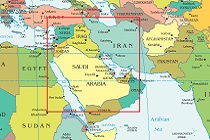
Whether backdoor geopolitics rather than careful negotiations brought about the interim agreement on Iran’s nuclear programme, the next six months will determine its fate. Reactions have ranged from a furious and mistrustful Israel to collective relief by many countries, and a worried India welcoming the agreement
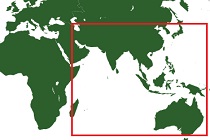
There are many ideas about how Asia can be re-imagined as a whole even though it is still coming to terms with colonial era map-making and the intellectual domination of the West. Can India, situated at the heart of Asia, promote connectivities and draw the Asian economies together?