Neelam Deo has served as the Indian Ambassador to Denmark and Ivory Coast with concurrent accreditation to Niger, Guinea, and Sierra Leone. She has also served in the Indian embassies in Rome, Bangkok and Washington D.C., where she liaised with the U.S. Congress, the State Department, and the National Security Council on strategic issues. Her last assignment was as Consul General in New York from 2005 to 2008.
During the course of her assignments in the Ministry of External Affairs, she held the position of Joint Secretary for the divisions dealing with Bangladesh, Sri Lanka, Myanmar and the Maldives. At different times over the course of her career, she has dealt with Bhutan, South East Asia and the Pacific, as well as countries in West Asia and North Africa.
She is an invited speaker on strategic issues and India-U.S. relations at numerous think tanks and universities, in India, Europe and the United States.
Apart from her articles and commentaries written exclusively for Gateway House, Neelam occasionally writes for mainstream publications, and is a frequent commentator for television news channels.
She has a Master’s degree from the Delhi School of Economics and serves on the Editorial Advisory Board of the Indian Foreign Affairs Journal.
She is also a member of the board of Oxfam India and is a trustee of Breakthrough (a human rights organization).
She is an independent director on the boards of Mahindra CIE Automotive Limited and Mahindra Defence Systems Limited.
Expertise
Africa, Foreign Policy, India's Bilateral Relations, USA
The debut of the Aam Aadmi Party must not cloud the reality that even after a movement transitions into a party, it still has to play the game of hard politics. Anti-party parties such as the AAP make coalition-building more difficult, as was recently evident in Germany and Italy, and is now the scenario in Delhi
Ahead of the Indian Prime Minister’s meetings with his counterparts from Nepal, Bangladesh and Pakistan on the sidelines of the UNGA, Ambassador Neelam Deo and Manjeet Kripalani blog about why India will only be able to conduct its foreign policy overseas, away from its raucous media and opposition parties
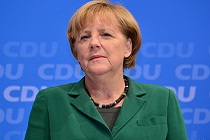
It may take Chancellor Angela Merkel weeks to negotiate a new coalition, but the vote for stability means that change will only be at the margins of current domestic and foreign policy. Still, the fallout of the election in the EU and beyond, including in India, should not be underestimated
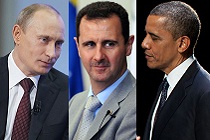
Can the world aspire to a future where the use of force is not seen as leadership? Can the U.S. and former colonial powers like France and UK, think differently and reject the use of force as first resort? Can China and India craft alternatives?
German foreign policy can be described as one anchored in the European and NATO alliance while being the economic centre of Europe. Yet, any government that comes in after the September 22 elections will be challenged by rapid developments in West Asia and elsewhere in a politically and economically turbulent world
The opposition People’s Democratic Party in Bhutan won the National Assembly elections held on July 13 taking another large step towards democracy. However, India became the unwitting subject of campaign discourse after the government abruptly halted fuel subsidies to the country
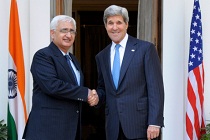
The visit of U.S Secretary of State John Kerry should not be viewed as an avenue for India and U.S to dwell on the existing set of complaints. Rather, it should be seen as a time for both nations to affirm that they have a lot to learn from each other, notably in the banking, security and infrastructure areas
Livemint published Gateway House's Neelam Deo and Manjeet Kripalani's article on the India-US bilateral ties. They argue that both India and the US should build broad global regulatory institutions to strengthen their strategic and economic partnership.
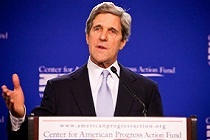
Firstpost published Gateway House's Director Ambassador Neelam Deo's article on the U.S. Secretary of State John Kerry's visit to India. She argues that since India and US will be preoccupied with their economic and strategic challenges, the bilateral talks will not produce any major announcements
Courtesy: Center for American Progress Action Fund/Flickr
The U.S. Secretary of State’s visit to India comes at a time when India is witnessing significant realignments in its domestic politics while the U.S. is busy tackling its cyber-spying allegations. Amidst these preoccupations, will the upcoming India-U.S. talks churn out substantive outcomes?